



Imagine your body sending tiny packages to repair damaged cells, encourage healing, and restore youthful function. These microscopic messengers, called exosomes, are now emerging as key players in regenerative medicine and anti-aging therapies. Unlike traditional treatments that often focus on symptoms, exosome-based approaches target cellular communication, opening the door to deeper, more natural healing.
For anyone curious about maintaining wellness, slowing the visible effects of aging, or supporting recovery from injuries, exosomes for wellness and regeneration offer an intriguing path. But what exactly are they, and how do they work? Let’s take a closer look.
Understanding Exosomes: Tiny Messengers with Big Roles
Exosomes are tiny vesicles, so small that they can only be seen under powerful microscopes. They are released by cells and carry essential information in the form of proteins, RNA, and other molecular signals. Think of them as biological letters that cells send to one another, instructing them on how to repair, regenerate, or communicate.
Unlike stem cells, which replace or create new tissue directly, exosomes work behind the scenes, influencing cell behavior without needing to become a part of the tissue themselves. This makes them particularly appealing in therapies where safety, minimal invasiveness, and natural processes are priorities.
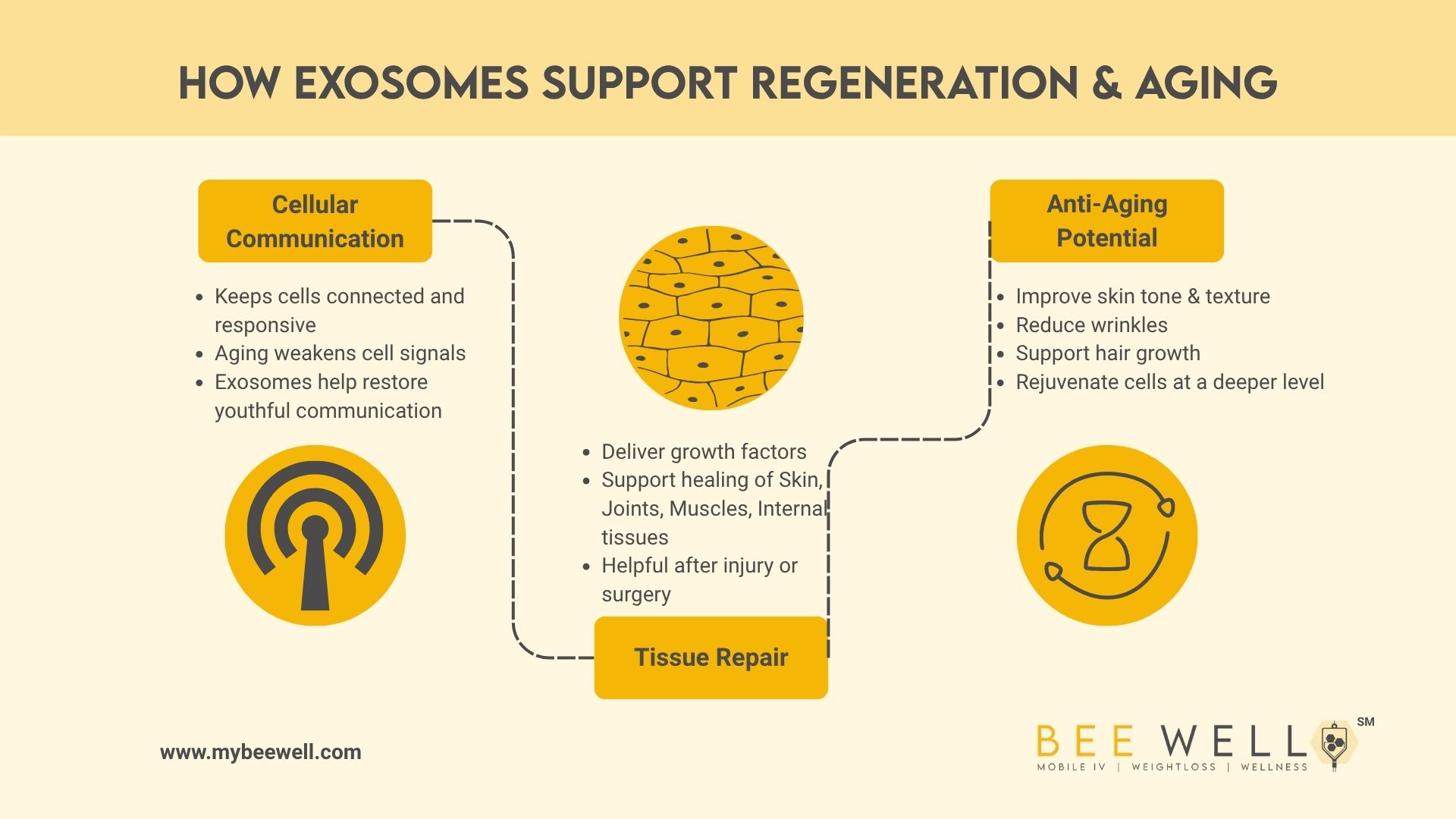
Cellular Communication
Our bodies rely on constant messaging between cells to maintain balance. As we age, these messages can weaken, leading to slower healing, reduced skin elasticity, and decreased tissue function. Exosomes restore some of this communication, encouraging cells to act more like they did when we were younger.
Tissue Repair
Exosomes carry growth factors and other signals that stimulate tissue repair. Studies show they can promote healing in skin, joints, and even internal organs, making them valuable in recovery from injury, surgery, or chronic wear and tear.
Anti-Aging Potential
In the world of aesthetics and wellness, exosomes are making waves for their potential to reduce wrinkles, improve skin tone, and support hair growth. By sending precise instructions to cells, they can help rejuvenate tissues at a deeper level than surface treatments alone.
Applications in Wellness and Anti-Aging
Exosome therapies are no longer confined to experimental labs; they’re becoming part of wellness and aesthetic treatments in clinics worldwide. Here’s how they are being applied:
Skin Health
Exosomes can improve collagen production, enhance hydration, and encourage the regeneration of healthy skin cells. Treatments often complement microneedling or PRP (platelet-rich plasma) therapies, adding an extra layer of cellular messaging that supports youthful skin.
Hair Restoration
For individuals experiencing thinning or hair loss, exosomes can help stimulate dormant follicles and strengthen existing hair. The molecular signals they carry encourage hair growth and improve scalp health.
Joint and Musculoskeletal Care
In sports medicine and orthopedics, exosomes are being used to promote cartilage repair and reduce inflammation in joints. Patients often report faster recovery times and improved mobility after exosome therapy compared with standard interventions alone.
Post-Injury Recovery
Exosomes can enhance healing after injuries by modulating inflammation and supporting tissue regeneration. Their role in cell-to-cell communication makes them a promising tool in rehabilitation protocols.
Comparing Exosomes with Other Regenerative Options
Stem Cell Treatments
While stem cells replace damaged tissue, exosomes guide existing cells to repair themselves. This indirect approach can reduce risks like immune rejection and unwanted cell growth.
PRP and Platelet Therapies
Platelet-rich plasma injections stimulate healing by providing growth factors directly to damaged areas. Exosomes take this a step further by carrying more complex messages that can influence multiple cellular pathways simultaneously.
How Exosome Therapies Work in Practice
Exosome therapy typically involves isolating vesicles from donor tissues or specialized cultures. After purification, these exosomes are administered via injection, topical application, or infusion, depending on the target area.
Clinics follow strict protocols to ensure safety, including screening donors, testing for contaminants, and maintaining precise storage conditions. Patients usually notice gradual improvements, reflecting the subtle yet powerful role of exosomes in supporting natural cellular activity.
Safety and Considerations
While exosome therapies are generally well-tolerated, they are not entirely free of risks. Mild reactions like temporary redness or swelling at the injection site are possible. More importantly, treatments should always be performed in certified medical facilities to ensure purity and proper handling.
Unlike some medications, exosomes don’t typically cause systemic side effects. They rely on the body’s own repair mechanisms, which makes them inherently compatible with many wellness programs.
Current Research and Evidence
Studies are still ongoing, but early findings indicate that exosomes can:
- Reduce inflammation in joints and soft tissues.
- Improve skin texture and elasticity.
- Support recovery after surgeries or injuries.
- Aid in hair follicle stimulation.
Clinics offering exosome therapy often track patient outcomes and adjust protocols based on observed improvements, contributing to a growing body of real-world evidence.
Addressing Common Questions and Misconceptions
Do Exosomes Replace Stem Cells?
Not exactly. Exosomes influence cells rather than becoming new tissue themselves. Think of them as coaches giving instructions rather than players on the field.
Are Results Immediate?
Improvements usually appear gradually. Skin texture may show changes in weeks, while joint or hair results can take months.
Are Exosome Therapies Right for Everyone?
Most adults in good general health may benefit, but individual assessment by a medical professional is essential, especially for those with autoimmune conditions or ongoing treatments.
Integrating Exosomes into a Wellness Routine
Exosome therapy works best alongside healthy lifestyle practices. Maintaining balanced nutrition, regular exercise, stress management, and proper sleep all contribute to the body’s ability to respond to cellular messages.
This combined approach ensures that exosomes enhance natural healing rather than attempting to substitute for fundamental wellness habits.
Future Perspectives
The potential of exosomes extends beyond aesthetics and joint care. Researchers are exploring applications in cardiovascular health, neurological recovery, and even metabolic regulation. While much remains experimental, the progress so far suggests a long-term role for exosome therapies in comprehensive wellness strategies.
A Step Toward Smarter Healing
Exosomes are opening a new chapter in regenerative health and anti-aging. By supporting cellular communication, enhancing repair, and working alongside the body’s natural systems, they offer a subtle but powerful tool for wellness.
For anyone seeking to maintain vitality, improve skin quality, or support recovery after injury, exosome therapies represent a promising option. Clinics like Bee Well℠ are helping bring these advanced therapies to local communities safely and responsibly, combining medical oversight with modern science.