



Most people on a GLP-1 program in Texas notice appetite changes in the first week or two, with the scale usually starting to move around weeks three to four. Reported averages land near 5 to 10 percent of starting body weight by month three and roughly 10 to 15 percent by month six, though results vary a lot person to person. The early weeks are mostly about slow dose increases and managing side effects, not fast numbers. Plateaus around months four to six and again near months nine to twelve are normal, not a sign the medication stopped working. A supervised program adjusts the plan around those patterns rather than chasing a target on a fixed schedule.
Here’s What the First Year Actually Feels Like
Starting a GLP-1 medication is less like flipping a switch and more like a slow, steady recalibration of how hungry you feel. The first month rarely delivers dramatic numbers, and that trips people up when they expect the before-and-after photos they saw online. Below we walk through what tends to happen month by month, why the middle stretch gets bumpy, what a doctor-supervised weight loss plan checks along the way, and a few things that matter specifically if you live and work in North Texas. Ranges here are averages pulled from published data, not promises. Your body, your starting point, and your medication all move the timeline.
What GLP-1 Weight Loss In Texas Looks Like In The First Month
GLP-1 medications like semaglutide and tirzepatide work by slowing how fast your stomach empties and quieting the appetite signals that usually push you toward a second helping. The dose starts low on purpose. Providers step it up gradually, often over four to eight weeks, so your gut has time to adjust.
That means the first month is mostly about tolerance, not weight. Many people describe feeling full faster and thinking about food less. Some notice nausea, mild constipation, or a few days of low energy after a dose increase. These effects tend to fade as your body settles in.
The scale may barely move in weeks one and two. Early clinical averages put weight loss near 1 percent of body weight by the eight-week mark, which can feel underwhelming if you were expecting more. In our experience talking with people starting, this is the point where they most want to quit, right before the medication reaches a dose where it does more work.
What providers watch in the first four weeks
A GLP-1 weight loss program in Texas should not be hands-off during onboarding. Early check-ins usually cover how you are tolerating the current dose, whether side effects are manageable, your hydration, and whether you are still getting enough protein while eating less. If nausea is rough, a provider may hold the dose steady for another week instead of pushing higher. That small judgment call is a big part of why supervision matters.
Months Two And Three: When The Numbers Start Moving
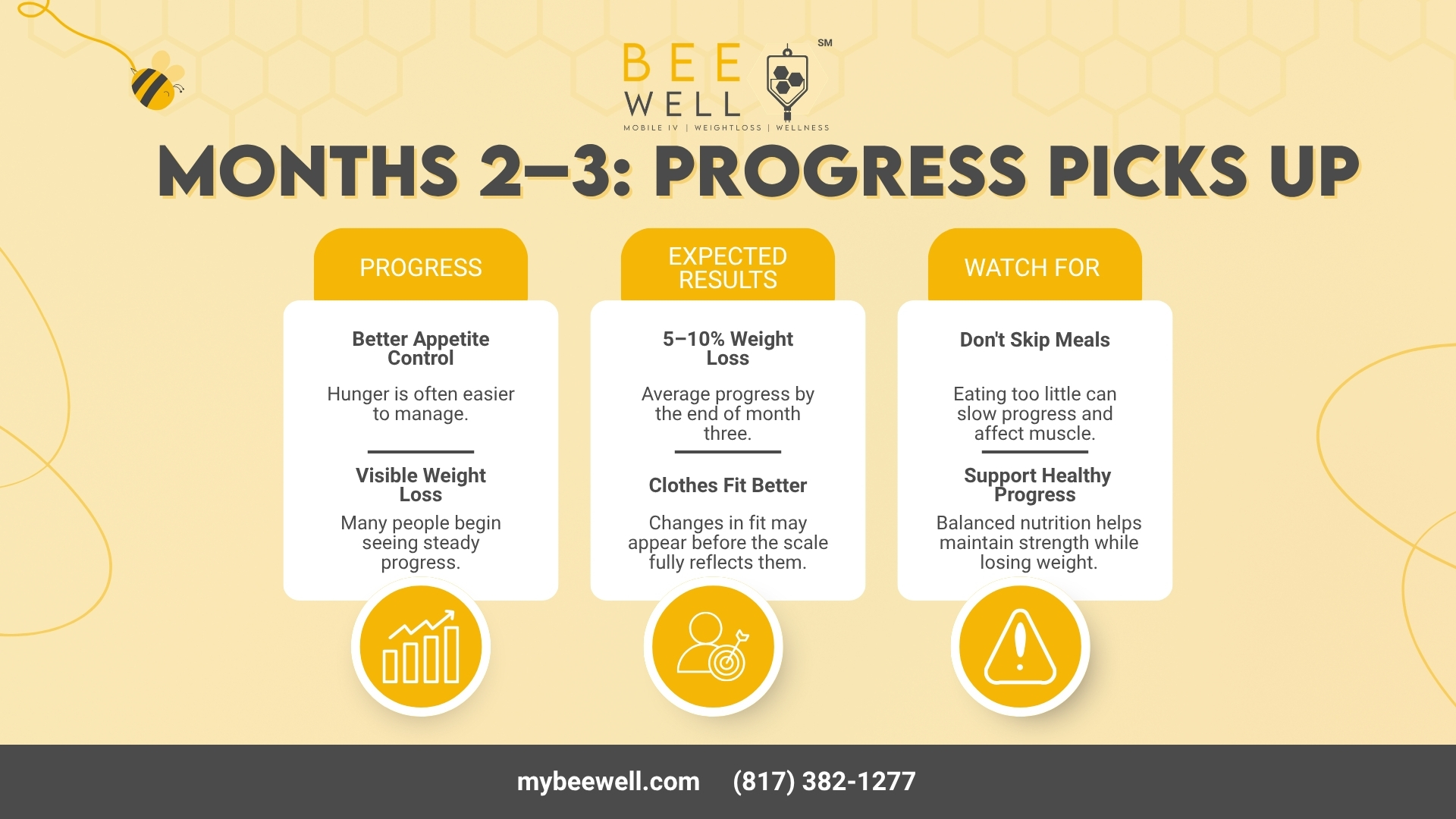
This is usually where progress becomes visible. As the dose reaches a more active range, appetite suppression is clearer, and the scale tends to respond. Published averages suggest many people reach 5 to 10 percent of their starting body weight by the end of month three.
Put in plain terms, someone starting at 220 pounds might see somewhere in the range of 11 to 22 pounds gone by the three-month mark. That is a wide range on purpose. Metabolism, activity, sleep, starting weight, and which medication you are on all pull the number around.
Two things tend to happen in this window that catch people off guard:
- Clothes fit differently before the scale reflects it, because early loss includes water and body composition shifts.
- Appetite can feel almost too suppressed, and some people forget to eat enough, which backfires by slowing progress and costing muscle.
The goal in months two and three is not the biggest possible number. It is a steady, sustainable loss while you actually eat enough protein and keep some strength. A medical weight loss Texas plan built around telehealth check-ins is well suited to catching the “I’m barely eating” problem before it stalls you.
The Plateau Nobody Warns You About: Months Four To Six
Around months four to six, a lot of people hit their first real plateau, and it feels like failure. It usually is not. Your body adapts to a lower weight by lowering its energy needs, a normal metabolic response, not a defect, and not proof that the medication quit.
By month six, reported averages cluster around 10 to 15 percent of starting body weight for consistent users. But the path there is rarely a smooth downward line. Expect a few weeks where nothing moves, then a drop.
Here is the practitioner-level detail that matters: a plateau at months four to six and a medication that has genuinely stopped working are two different situations, and they get handled differently. A normal plateau is managed with protein, strength work, sleep, and patience, sometimes a dose review. A true stall after a long stretch of no change is a separate conversation about dosing or approach. We keep those two apart on purpose because treating a normal adaptive plateau like an emergency leads people to quit right before their body catches up. If you want the deeper breakdown of a genuine stall, that belongs on its own troubleshooting page, not this one.
Why the middle stretch is where most people quit
Motivation runs high in month two when the scale cooperates. It drops in month five when it does not. The people who keep going are usually the ones who understood the plateau was coming and had support checking in. This is the strongest argument for doctor-supervised weight loss over a solo prescription: someone in your corner to say “this is expected, here is what we adjust,” instead of you guessing alone.
Months Six To Twelve: Slower Loss, Bigger Habits
After six months, weight loss generally slows down. Many people keep losing, just at a gentler pace, often a pound or two a month rather than the faster early drop. Published data suggests maximum loss for semaglutide tends to land near 15 percent on average, somewhere around months twelve to eighteen, with trispartide sometimes higher.
The work in this stretch shifts from “how fast” to “how durable.” The medication is still doing its job, but the habits you build now- protein, strength training, sleep, and a realistic relationship with food- decide what happens if you ever taper off. A second plateau near months nine to twelve is also common and, again, usually a normal adaptation.
Here is a realistic month-by-month view for a doctor-supervised program. Treat every figure as an average range, not a target you are failing to hit:
| Timeframe | What typically happens | Reported average loss (from start) |
| Weeks 1 to 2 | Appetite quiets, dose is low, side effects possible | Little to none |
| Weeks 3 to 4 | Scale often starts to move | Around 1% |
| Months 2 to 3 | Clearest early progress | 5% to 10% |
| Months 4 to 6 | The first plateau is common, then more loss | 10% to 15% |
| Months 6 to 12 | Slower, steadier loss, habits lock in | Up toward 15%+ |
| Months 12 to 18 | Loss levels off for many | Plateau near individual set point |
The numbers above summarize published averages from GLP-1 research and clinics. They are not a guarantee of your result.
What Doctor-Supervised Support Actually Includes
The word “supervised” gets used loosely, so here is what it should mean in practice. In our program, a licensed provider handles the initial evaluation, reviews your history, and sets a plan based on your goals rather than a one-size-fits-all approach. Erin Griffin, MSN, APRN, leads the clinical side for our North Texas patients.
Supervision through the year usually covers:
- Reviewing tolerance before each dose increases instead of following a fixed calendar.
- Checking that you are eating enough protein and not undereating as your appetite drops.
- Naming plateaus as normal when they are, and flagging a real stall when it is not.
- Adjusting the plan around side effects rather than pushing through them.
Because the program runs by telehealth, a 15-minute telehealth consultation connects you with a provider, and prescriptions ship to your door. No pharmacy lines, no waiting-room afternoons. That model fits how most people in DFW actually live. It also means your check-ins happen on a schedule that works around your job, not the clinic’s hours, which is a bigger deal than it sounds when month five hits and you are tempted to skip.
A Few Things That Matter Specifically In North Texas
Living in Dallas, Fort Worth, Frisco, or Denton adds a couple of real wrinkles to a GLP-1 timeline that generic national guides skip. These are the details we see come up again and again with local patients.
Texas summers are the big ones. GLP-1 medications can blunt thirst along with hunger, and a Dallas July that runs well over 100 degrees means you can slide toward dehydration without noticing. We push hydration hard in the warm months, and some patients pair their program with mobile IV hydration on the roughest weeks. Skipping fluids also makes nausea and constipation worse, so it is not a small detail here. If you are already eating less and feeling less thirsty, the two effects stack, and a hot commute or an outdoor weekend can tip you over faster than you would expect.
The at-home, telehealth structure also lands differently in a spread-out metro. Getting from Frisco to a clinic across DFW for a routine check-in is a real-time cost, and that friction is exactly what makes people skip appointments and drift off a plan. Delivering the consult and the medication to your door removes the excuse. For anyone comparing a medical weight loss option to an out-of-state mail-order script, the local, licensed, at-home model keeps supervision close without the drive.
Practical local notes worth knowing
One more practical Texas point: FSA and HSA funds are accepted, and insurance is not required to start, which lowers the barrier for a lot of people who assumed a supervised program was out of reach. That matters because cost uncertainty is one of the top reasons people delay starting, and a plan you can begin without an insurance fight tends to actually get started.
A few other things regulars ask about. Muscle loss is a real concern with any fast weight loss, so we lean on protein targets and strength work rather than cardio alone, especially for anyone over 40, where muscle is harder to keep. Alcohol tolerance often shifts on GLP-1 medications, which surprises people heading into a Texas summer of patios and events. And if you travel for work, the shipped-to-your-door model means you are not scrambling to refill across state lines. None of these show up in a generic national timeline, but they are the questions our North Texas patients actually ask.
Where to go from here
A GLP-1 timeline is a range, not a schedule, and the first year rewards patience more than speed. Knowing that the early weeks are slow, that months two and three usually deliver, and that plateaus are part of the process, not a failure, keeps you in it long enough to see results. If you are weighing whether a supervised program is right for you, Bee Well℠ offers a telehealth consult and an at-home model built for North Texas, so you can start with a real provider instead of guessing alone. Talk it through, ask your questions, and go in with realistic expectations.