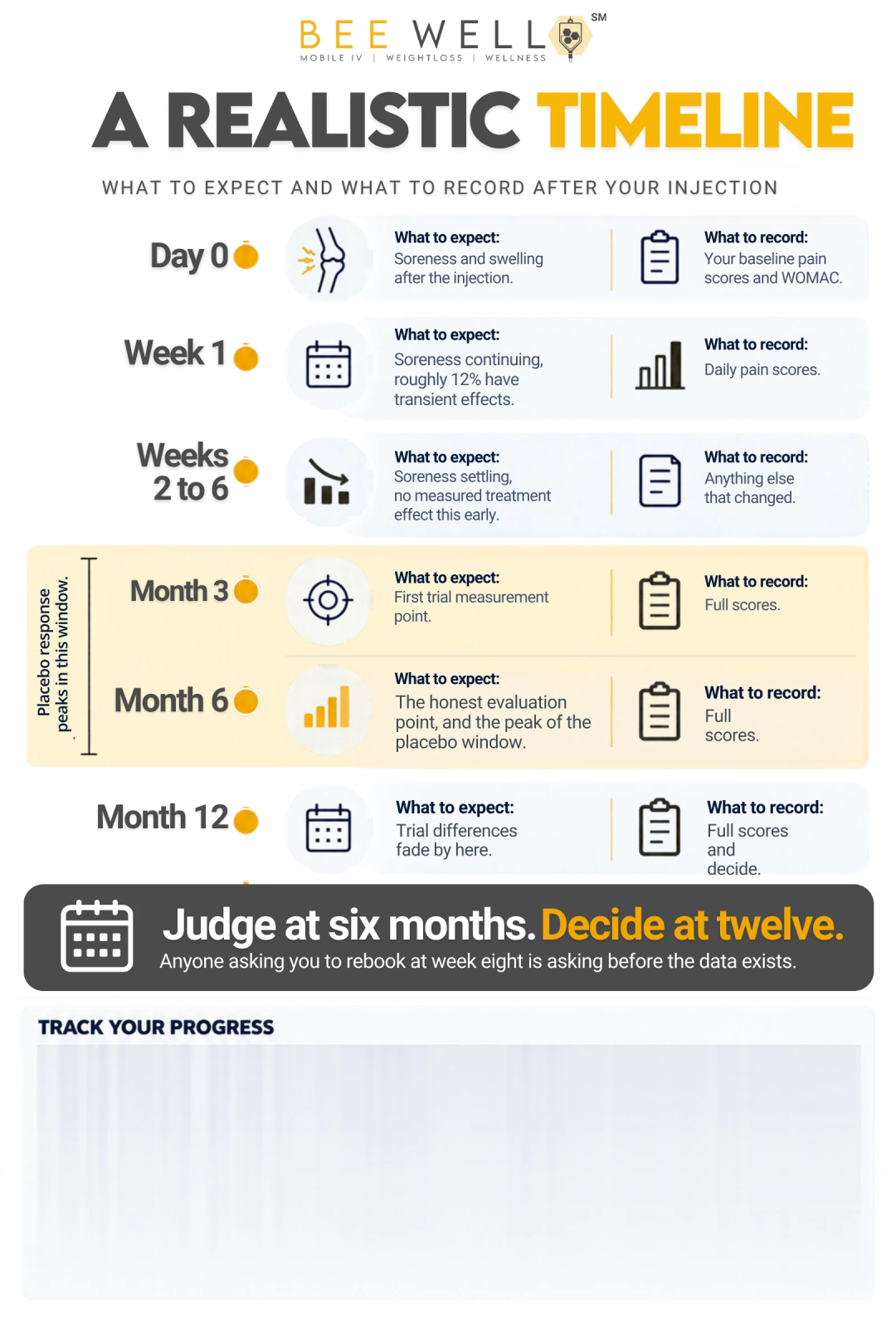
- Most people feel nothing dramatic on day one, and that is expected. Trial outcomes are measured in months, not hours.
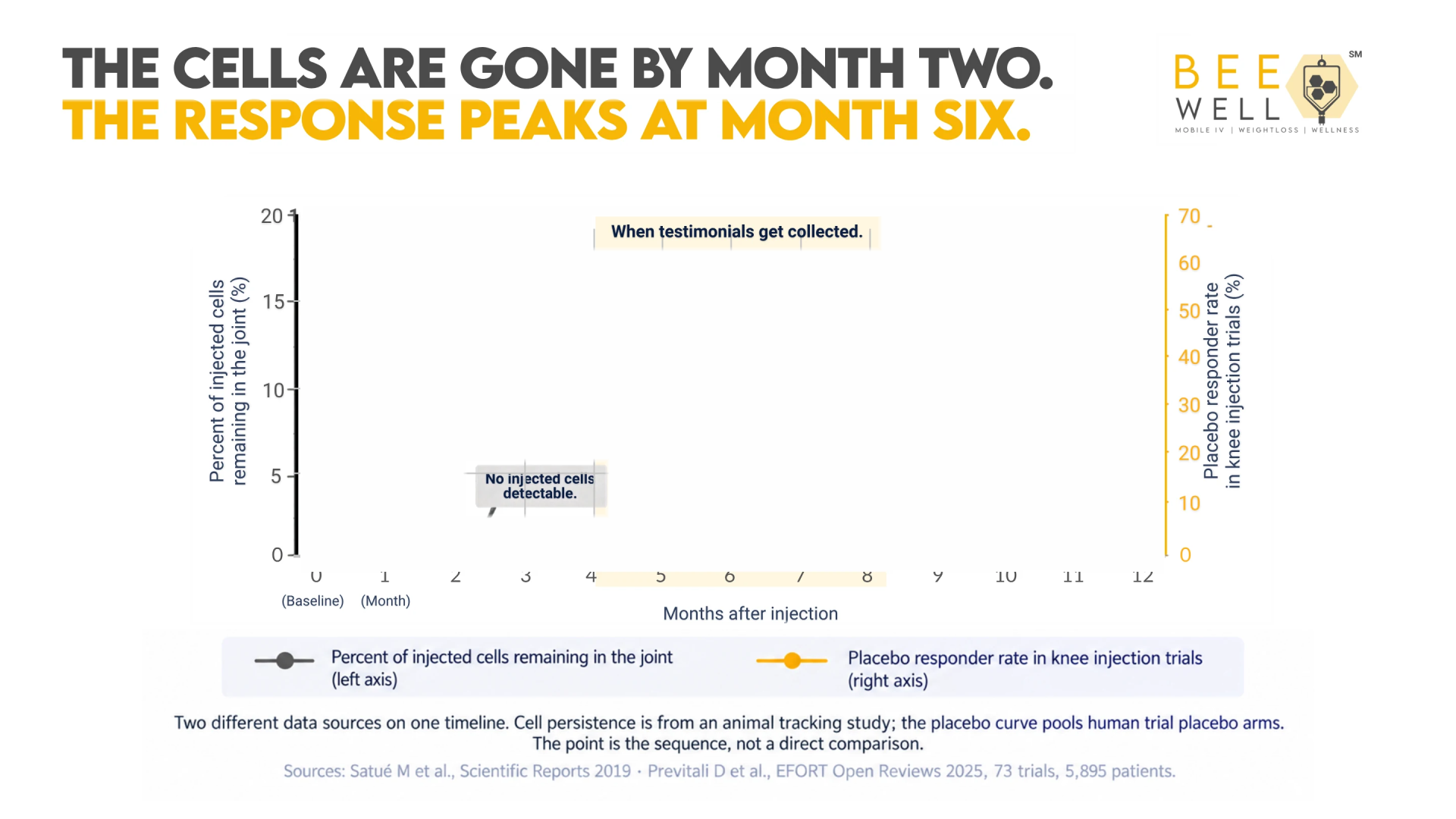
- The cells do not stay. In tracking work, about 83 percent of injected cells were gone from the joint cavity within 24 hours and roughly 98.5 percent within a week. By two months none were detectable.
- Whatever produces a benefit at six or twelve months is not cells sitting in your knee building cartilage. The leading hypothesis is a short-lived signaling and anti-inflammatory effect.
- If the treatment is given intravenously, 50 to 80 percent of the cells are mechanically trapped in the lungs, and viable cells were undetectable there by 72 hours in animal work.
- The placebo response to a knee injection peaks between four and eight months, with more than half of saline-injected patients meeting responder criteria. That is the same window in which testimonials get collected.
- Expect swelling and injection-site soreness for up to four weeks. Roughly 12 percent of patients across 1,924 cases in one review had transient adverse events.
Most people notice nothing in the first few days beyond soreness at the injection site. Trials that found any effect measured it at three, six, and twelve months. If you are looking for a change next week, the literature does not support that expectation and neither should your provider.
There is a harder version of this answer, and we are going to give you that too, because you will find it eventually and it is better coming from someone willing to say it plainly.
A meaningful share of what people experience in the first six months after any joint injection is not attributable to what was in the syringe. It is the injection ritual, natural fluctuation in arthritis symptoms, and regression to the mean. That is not a slight against anyone who felt better. It is what the placebo-controlled trials show.
So this article covers three timelines at once: what happens to the cells, what happens to your symptoms, and what the evidence says about the relationship between the two.
What actually happens to the cells
This is the section that changes how people think about the whole procedure, and almost no clinic page includes it.
A 2019 study in Scientific Reports tracked labeled mesenchymal cells after intra-articular injection over six months. The results:
| Time after injection | Still in the joint cavity | In the cartilage lesion |
|---|---|---|
| 1 day | 16.9 percent | 3.1 percent |
| 1 week | 1.5 percent | 2.3 percent |
| 1 month | 1.2 percent | 5.1 percent |
| 2 to 6 months | None detectable | None detectable |
By the end of the first day, roughly 83 percent of the injected cells are already gone from the joint. By one week, about 98.5 percent. By two months, the researchers could not find any.
Their own words at the two to six month mark: no labeled cells were present in the cartilage lesion area or in the knee cavity.
Hold that next to the sentence you have probably been told: the cells go in and rebuild your joint over the following year. Whatever is producing an effect at month six, it is not cells still sitting there working.
What the mechanism appears to be instead
The mainstream position is that these cells act as short-lived signaling agents. They secrete cytokines, growth factors, and vesicles that shift local immune cells from an inflammatory to an anti-inflammatory state, and then they are cleared.
The strongest evidence for that view is indirect and rather elegant: cell-free vesicle preparations, containing no cells at all, reproduce similar effects in laboratory and early clinical work. If the mechanism required the cells to stay and build tissue, that would not happen.
This is a real mechanism and a plausible one. It also implies something about duration that the marketing does not: a signaling effect from an agent cleared within weeks is not a permanent structural change.
If your treatment is given intravenously
This section applies to anyone who has been offered an IV infusion for a joint, a systemic condition, or general wellness. It is the most important science in the article for that group.
Mesenchymal cells are large, roughly 20 to 30 micrometers across, which is bigger than the pulmonary capillaries they have to pass through. The result is mechanical trapping, and it has a name in the literature: the pulmonary first-pass effect.
Review evidence puts the figure at 50 to 80 percent of intravenously administered cells localizing to the lungs. That the mechanism is mechanical rather than biological was confirmed by the observation that administering a vasodilator reduces the number of trapped cells.
How long do they survive there? A 2012 study tracked labeled cells in mice. At one hour, the majority of the label was in the lungs. At 24 hours, viable cells were still present but strongly reduced. At 72 hours, no viable cells were detected in the lungs.
Viable donor cells were not detected in blood, liver, spleen, kidneys, or bone marrow at any timepoint. Label that appeared in the liver by 24 hours appears to have been cell debris being cleared, not living cells relocating.
There is a genuine discrepancy in this literature worth acknowledging: one group using bioluminescence reported signal in the lungs out to 28 days. Both findings are published, and the honest summary is that persistence beyond a few days is contested.
WHAT THIS MEANS FOR AN IV INFUSION AIMED AT A KNEE
There is no published evidence that meaningful numbers of intravenously administered cells reach and remain in an arthritic joint.
Most of the dose is trapped in the lungs by size, and viable cells were undetectable there by 72 hours in the cleanest animal data available.
Any benefit would have to be systemic and short-lived rather than local joint repair. That is a different claim from the one usually made, and it is worth asking a provider to make it explicitly.
This is also the route the FDA singled out for enforcement priority when it set out how it would approach unapproved regenerative products, alongside inhalation, intraocular, and central nervous system administration.
The symptom timeline, from the trials
Here is what actually got measured, and when.
Days 1 to 7
Expect soreness. A systematic review specifically on complications, covering 48 studies and 1,924 patients, found an overall 12.3 percent rate of transient adverse events, most commonly swelling and pain at the injection site, characterized as lasting less than four weeks.
That review found no infections, fat embolism, sepsis, neoplasm, or deaths across all 1,924 patients, which is reassuring within the trial setting.
Rates differed by cell source, with umbilical cord-derived preparations showing the highest rate of transient events at 51.7 percent and cultured adipose preparations at 29.5 percent. If you are told to expect nothing at all, that is not what the data shows.
Weeks 2 to 6
Soreness settles. Nothing in the trial literature suggests a meaningful measured effect this early. If you feel notably better in week three, that is worth being pleased about and it is too early to attribute.
Months 3 to 6
This is the first timepoint where trials measured anything, and it is where the largest effects appear. It is also where the placebo response is climbing toward its peak.
The most rigorous meta-analysis found pain improvement of 0.74 cm on a 10 cm scale at three to six months, against a threshold of 1.5 cm for a difference a patient would notice. Cochrane described the improvement over placebo at up to six months as slight, at low certainty.
Months 6 to 12
At twelve months the same meta-analysis found a pain difference of 0.73 cm that was no longer statistically significant. Function at twelve months had a confidence interval crossing zero.
Meanwhile the placebo response is fading. The pooled analysis of 73 placebo-controlled injection trials found that by twelve months the placebo response had declined and was no longer clinically significant for some measures.
Both curves are coming down. That is why the month-twelve conversation with patients is so different from the month-six one.
Beyond one year
Long-term data is thin. One trial with 60-month follow-up in a small cohort reported benefit that faded back toward baseline. A four-year follow-up of a 30-patient trial reported sustained effects in its high-dose arm. Neither is large enough to settle the question.
Anyone quoting you a durability figure of two, three, or five years is extrapolating well past the evidence.
Why early improvement is hard to interpret
Three things are happening at once in those first six months, and only one of them is the treatment.
The placebo response, which is unusually large here
A 2025 systematic review pooled placebo arms from 73 double-blind trials of knee injections, covering 5,895 patients. It found statistically and clinically significant improvement at one, three, and six months, with responder rates exceeding 50 percent at each point.
More than half of people who received salt water met responder criteria. The effect peaked between four and eight months.
An analysis specific to stem cell trials calculated that roughly 63 percent of six-month pain reduction and 61 percent of functional improvement were contextual rather than attributable to the cells.
Regression to the mean
Nobody books a joint injection during a good month. People seek treatment when symptoms are at their worst, and symptoms that are at their worst tend to move back toward average regardless of what happens next.
That is not a psychological effect. It is arithmetic, and it applies to every intervention measured from a bad baseline.
Natural fluctuation
Osteoarthritis symptoms wax and wane substantially on their own, with weather, activity, sleep, and factors nobody has identified. A six-week good stretch happens to people who receive no treatment at all.
Put those three together and you have a plausible explanation for a great many enthusiastic testimonials that has nothing to do with what was injected. It is also why placebo-controlled trials exist, and why the trials that used saline controls found so much less than the uncontrolled studies did.
How to track your own result properly
If you are going to spend the money, measure the outcome. Memory over six months is unreliable in both directions, and a number written down in month zero is worth more than any recollection in month six.
Use a validated scale
Two are standard in the literature and both are free.
- A 0 to 10 pain scale. Record it in the morning, after your most demanding daily activity, and at night. Three numbers, same times each day. The minimal difference considered meaningful in trials is about 1.5 points.
- WOMAC or KOOS. These are questionnaires covering pain, stiffness, and function that take about ten minutes. WOMAC’s minimal important change sits around 7 to 8 points on a 100-point scale. Any physical therapist can supply one, and they are freely available.
Record a baseline before treatment, then at one month, three months, six months, and twelve months. Those are the trial timepoints, which makes your data comparable to the literature.
Also record what else changed
Did you start walking more because you were hopeful? Did you begin physical therapy at the same time? Did you lose weight, change medications, or come out of a bad flare?
Every one of those is a plausible cause of improvement, and if you do not write them down, the injection will get the credit by default.
Treatment day, hour by hour
Since almost nobody describes this concretely, here is the shape of the day for a joint injection. Details vary by product and route, and your provider should give you their own version in advance.
- Before you start. Confirm the product, the lot number, and who is administering it. Record your baseline pain scores. If you are on an anticoagulant or antiplatelet, that conversation should already have happened with your prescribing physician, not on the day.
- Preparation, 20 to 45 minutes. For autologous products this includes a draw and processing time. For allogeneic products it includes thaw and preparation. Ask how long the product sits after thawing.
- The injection itself, a few minutes. Ultrasound or fluoroscopic guidance is standard practice for joint injections and is worth asking about. Guided injections place the material where it was intended to go, which sounds obvious and is not universal.
- Immediately after, 15 to 30 minutes. Sitting, observation, and instructions. Expect the joint to feel full or tight.
- The rest of the day. Soreness building over several hours is common and expected. Plan not to drive far, not to work a physical shift, and not to test the joint to see whether it worked.
The instruction people ignore most often is the last one. Testing a joint on day one tells you nothing, and it is the most common cause of an unnecessarily painful week two.
Three things people do that undermine their own result
Stopping the exercise program
This is the big one, and it is common enough that we raise it at every consultation.
People who have been doing physical therapy or a structured exercise routine often stop after a procedure, either because they were told to rest or because they are waiting for the injection to work. Structured exercise has better guideline support for knee osteoarthritis than anything discussed in this article. Trading it for an injection is trading the stronger intervention for the weaker one.
Follow the short activity restriction your provider gives you, then get back to the program.
Changing three things at once
People frequently start a supplement, begin walking daily, and lose a few pounds in the same month they get injected, because motivation is high right after spending money.
All of that is good for your knee. It also makes the result uninterpretable. If you are going to change other things, write down what and when, so you have a chance of knowing what did what.
Deciding at week eight
Trials did not measure anything before month three, and the largest effects appeared at three to six months. Concluding at week eight that it did not work, or that it did, is concluding before there is anything to conclude from.
The corollary applies to providers. A practice that asks you to rebook or add a second round at week eight is asking before the evidence for the first round exists.
When to call, and when to go in
Most post-injection soreness resolves on its own. A small number of presentations need attention the same day, and knowing which is which is the most practically useful thing in this article.
| What you notice | What to do |
|---|---|
| Soreness and swelling that peak in the first 48 hours and then improve | Expected. Ice, rest, and let your provider know at your check-in. |
| Pain that is worse on day four than on day two | Call your provider the same day. |
| Fever, chills, or feeling systemically unwell | Seek care immediately. Do not wait for the clinic to open. |
| Spreading redness or warmth around the joint | Seek care immediately. |
| Inability to bear weight, or a joint that will not move | Seek care immediately. |
| Numbness, weakness, or new back pain after a spinal injection | Emergency care. This is not a wait-and-see presentation. |
The Cochrane review notes what applies regardless of what was injected: all invasive joint procedures carry a small risk of septic arthritis. It is uncommon and it is time-sensitive.
When you go in, tell whoever sees you exactly what you received, from whom, and when. If you have the lot number, bring it. Documented cases in this field have taken weeks to diagnose partly because the treating physician did not know what had been injected.
Call 911 for a medical emergency.
Aftercare, and an honest note about it
Most clinics hand you an aftercare sheet. Ours does too. You should know that the evidence base underneath those sheets is thin.
There is no established, evidence-based post-procedure protocol for these injections. Recommendations to avoid anti-inflammatories for a period, to limit high-impact activity for a few weeks, or to follow a specific loading progression are largely clinic convention and mechanistic reasoning rather than trial findings. Different practices give different instructions, and the differences are not resolved by data.
What is reasonable and low-risk:
- Expect soreness and swelling for up to four weeks and plan around it rather than being surprised by it.
- Avoid high-impact activity for the first couple of weeks, on general post-injection principles rather than on evidence specific to cell therapy.
- Keep doing your physical therapy or exercise program. That has better evidence than the injection does, and stopping it because you had a procedure is the most common self-inflicted mistake we see.
- Call immediately for fever, spreading redness, escalating pain rather than settling pain, or inability to bear weight. All joint injections carry a small risk of septic arthritis, and that is the presentation.
If a provider gives you a detailed aftercare protocol, ask what it is based on. A good answer is that it is conventional and cautious. A bad answer is a claim of evidence that does not exist.
Does a second round help?
You will likely be offered one, usually around the six or twelve month mark, and the honest answer is that we do not know.
There is very little trial evidence comparing single against repeat administration, and no established protocol for retreatment intervals.
On dose, which is the adjacent question, there is more. A meta-analysis focused specifically on dosing found that doses at or below 25 million cells were associated with improvement, that higher doses conferred no additional benefit, and that meta-regression confirmed no dose-response relationship.
That last point is worth sitting with. The absence of a dose-response relationship is itself evidence against a specific biological mechanism. If more cells do not produce more effect, the effect may not be scaling with the thing being measured.
Practically: if you are being asked to pay for a second round, ask what the first round is judged to have accomplished, measured how, and what would constitute a failure. If there is no answer to the third question, there is no way to fail, which means there is no way to evaluate.
How this compares to the other injections
Timing expectations differ substantially between the options, and knowing the shape of each helps you interpret your own.
| Injection | When people typically notice something | How long it is described as lasting |
|---|---|---|
| Corticosteroid | Days. Often within the first week. | Short-term. Both the ACR and AAOS describe the benefit as short-term rather than durable, and repeated quarterly use over two years was associated with greater cartilage loss without sustained pain benefit. |
| Hyaluronic acid | Weeks. | Contested. AAOS does not recommend routine use; ACR conditionally recommends against for the knee. |
| Platelet-rich plasma | Weeks to a few months. | Contested. AAOS says it may reduce pain at limited strength of recommendation; ACR strongly recommends against. |
| Stem cell injection | Months. Trials measured at three to six. | Trial differences from placebo were no longer statistically significant at twelve months in the most rigorous meta-analysis. Long-term data is thin. |
| Saline placebo | Weeks to months. | Responder rates above 50 percent, peaking at four to eight months, declining by twelve. |
That last row is not a joke and it is not there to be provocative. It is in the table because it is the comparison that makes the others interpretable, and because more than half of the people who received it in 73 pooled trials met responder criteria.
Notice also that the fastest-acting option on this list is the cheapest one and the one with the strongest guideline support for short-term relief. If what you need is to get through a specific event or season, that is worth knowing before you commit to a months-long timeline.
Why the recovery window is easier at home
This is where our own service comes in, and we will be direct that it is a convenience argument rather than a clinical one.
There is no evidence that a regenerative injection works better because it was delivered in your living room. What changes is the day around it.
Research on ambulatory medical visits in the United States measured an average total time cost of 121 minutes per visit, of which 37 minutes is travel and 84 is time at the clinic, against roughly 20 minutes of face-to-face clinical time. More than 80 percent of visit time goes to something other than care. The calculated opportunity cost averaged $43 per visit, which exceeded the average out-of-pocket payment.
For a treatment whose most common early effect is a sore, swollen joint for up to four weeks, not driving home afterward is a real benefit. For patients whose mobility is the reason they are seeking treatment in the first place, it is a larger one.
That is the honest scope of the claim. Same treatment, same evidence base, easier day.
What we tell patients at Bee Well℠
We deliver regenerative wellness services at homes and offices across Dallas, Fort Worth, Frisco, Denton, Southern Oklahoma, and California, administered by licensed nurses under Texas-licensed physician oversight.
The timeline conversation we have before treatment is roughly this article. Nothing dramatic in week one. Soreness for a few weeks. Nothing meaningful to judge before month three. The real evaluation at month six, with the knowledge that much of what is felt at that point may be contextual. A decision about anything further at month twelve.
We also tell people what would count as it not having worked, before they start, because a treatment with no defined failure condition is a treatment that can never be evaluated.
And we say the part that costs us bookings: no stem cell product is FDA-approved for osteoarthritis, the major rheumatology and orthopedic societies currently recommend against these injections, and the strongest evidence puts the average effect below what most patients would notice. We would rather you hear that from us at the consultation than find it yourself at month seven.
References
- Whittle SL, Johnston RV, McDonald S, et al. Stem cell injections for osteoarthritis of the knee. Cochrane Database of Systematic Reviews. 2025;4(4):CD013342.
- Sadeghirad B, Rehman Y, Khosravirad A, et al. Mesenchymal stem cells for chronic knee pain secondary to osteoarthritis. Osteoarthritis and Cartilage. 2024;32(10):1207-1219.
- Satué M, Schüler C, Ginner N, Erben RG. Intra-articularly injected mesenchymal stem cells promote cartilage regeneration, but do not permanently engraft in distant organs. Sci Rep. 2019;9:10153.
- Eggenhofer E, Benseler V, Kroemer A, et al. Mesenchymal stem cells are short-lived and do not migrate beyond the lungs after intravenous infusion. Front Immunol. 2012;3:297.
- Ferrini E, Stellari FF, Franceschi V, et al. Persistency of Mesenchymal Stromal/Stem Cells in Lungs. Front Cell Dev Biol. 2021;9:709225.
- Fischer UM, Harting MT, Jimenez F, et al. Pulmonary Passage is a Major Obstacle for Intravenous Stem Cell Delivery: The Pulmonary First-Pass Effect. Stem Cells Dev. 2009;18(5):683-692.
- Previtali D, Boffa A, Di Laura Frattura G, Merli G, Filardo G. Placebo response to intra-articular injections in knee osteoarthritis: magnitude, evolution over time, and influencing factors. EFORT Open Rev. 2025;10(10):782-795.
- Yin F, Wu H, Tong D, et al. Contextual effects of mesenchymal stem cell injections for knee osteoarthritis. Front Med. 2025;12:1636181.
- Riggle C, McLellan M, Bohlen H, Wang D. Complications of Stem Cell-Based Injections for Knee Osteoarthritis: A Systematic Review. HSS J. 2025;21(3):476-484.
- Rahmadian R, Ariliusra Z, Kusuma KRA, et al. Efficacy of a single intra-articular injection of mesenchymal stem cells for knee osteoarthritis: a dose-focused meta-analysis of randomized controlled trials. J Orthop Surg Res. 2025;20(1):812.
- Silva MDC, Perriman DM, Fearon AM, Couldrick JM, Scarvell JM. Minimal important change and difference for knee osteoarthritis outcome measurement tools after non-surgical interventions: a systematic review. BMJ Open. 2023;13(5):e063026.
- Figueroa-Valdés AI, Luz-Crawford P, Herrera-Luna Y, et al. Clinical-grade extracellular vesicles derived from umbilical cord mesenchymal stromal cells. J Nanobiotechnology. 2025;23:13.
- Ray KN, Chari AV, Engberg J, et al. Opportunity Costs of Ambulatory Medical Care in the United States. Am J Manag Care. 2015.
- U.S. Food and Drug Administration. Important Patient and Consumer Information About Regenerative Medicine Therapies. Content current as of April 8, 2024.
DISCLAIMER
This content is for educational purposes only and does not constitute medical advice. It is not a substitute for consultation with a qualified healthcare provider. No exosome product is approved by the U.S. Food and Drug Administration, and individual results cannot be predicted or guaranteed.
If you develop fever, spreading redness, worsening pain, or difficulty breathing after any injection or infusion, seek emergency care immediately rather than waiting to reach the practice that treated you. Call 911 for a medical emergency.