



Key Takeaways
- The 2025 Cochrane review of 25 trials and 1,341 patients concluded stem cell injections may slightly improve pain and function for up to six months, at low certainty, with suspected publication bias because up to three larger trials were withdrawn before reporting results.
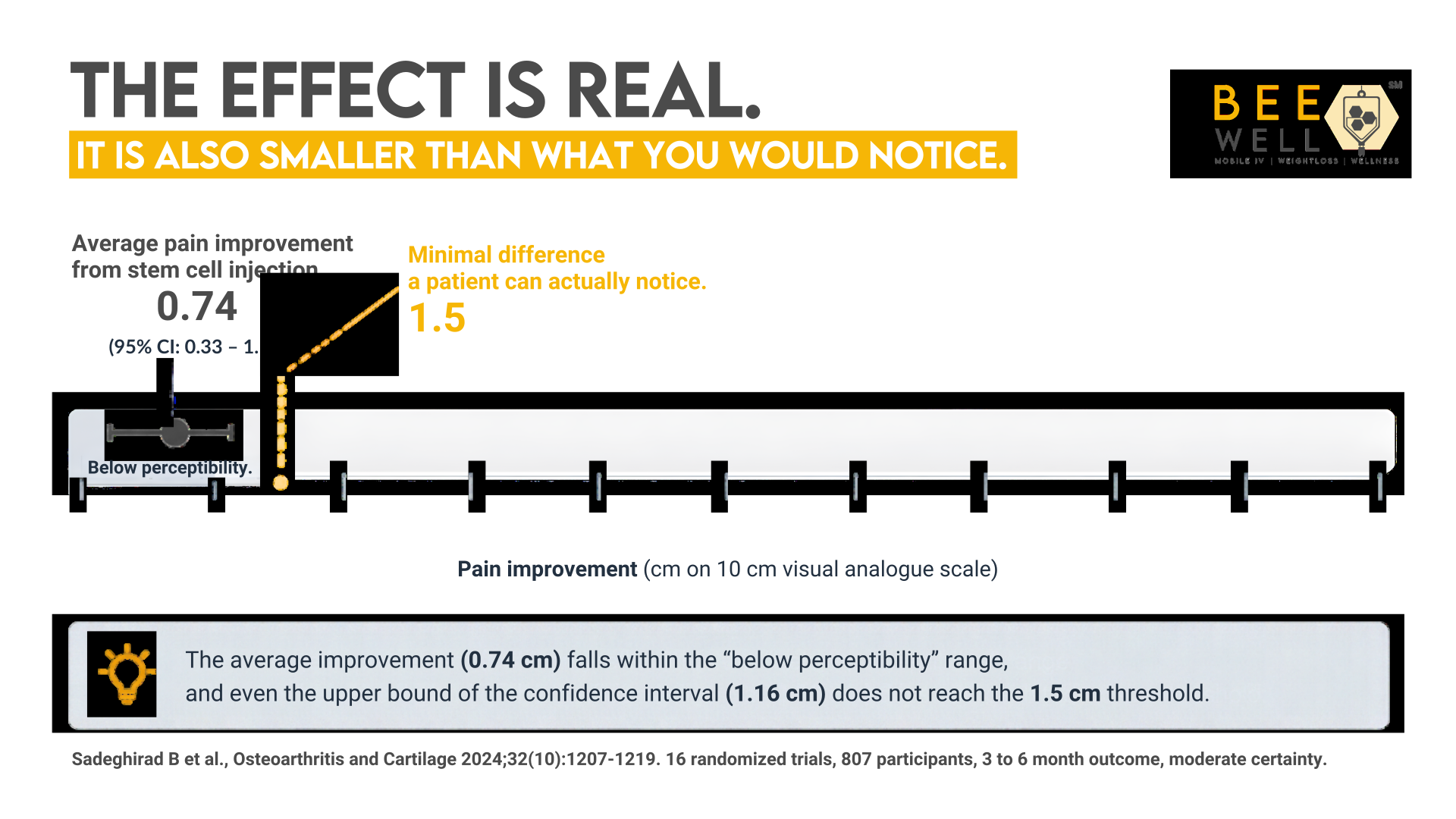
- The most methodologically rigorous meta-analysis found a pain improvement of 0.74 cm on a 10 cm scale against a minimal important difference of 1.5 cm. The effect is real, statistically, and smaller than what a patient can feel.
- The largest placebo-controlled trial, ADIPOA2, found 47.3 percent responders on cells versus 54.8 percent on saline. Placebo was numerically ahead.
- A 480-patient trial comparing bone marrow, adipose, and umbilical cord products against a corticosteroid shot found none superior to another or to the steroid at one year.
- An analysis restricted to placebo-controlled trials attributed roughly 63 percent of six-month pain improvement to contextual effects rather than the cells.
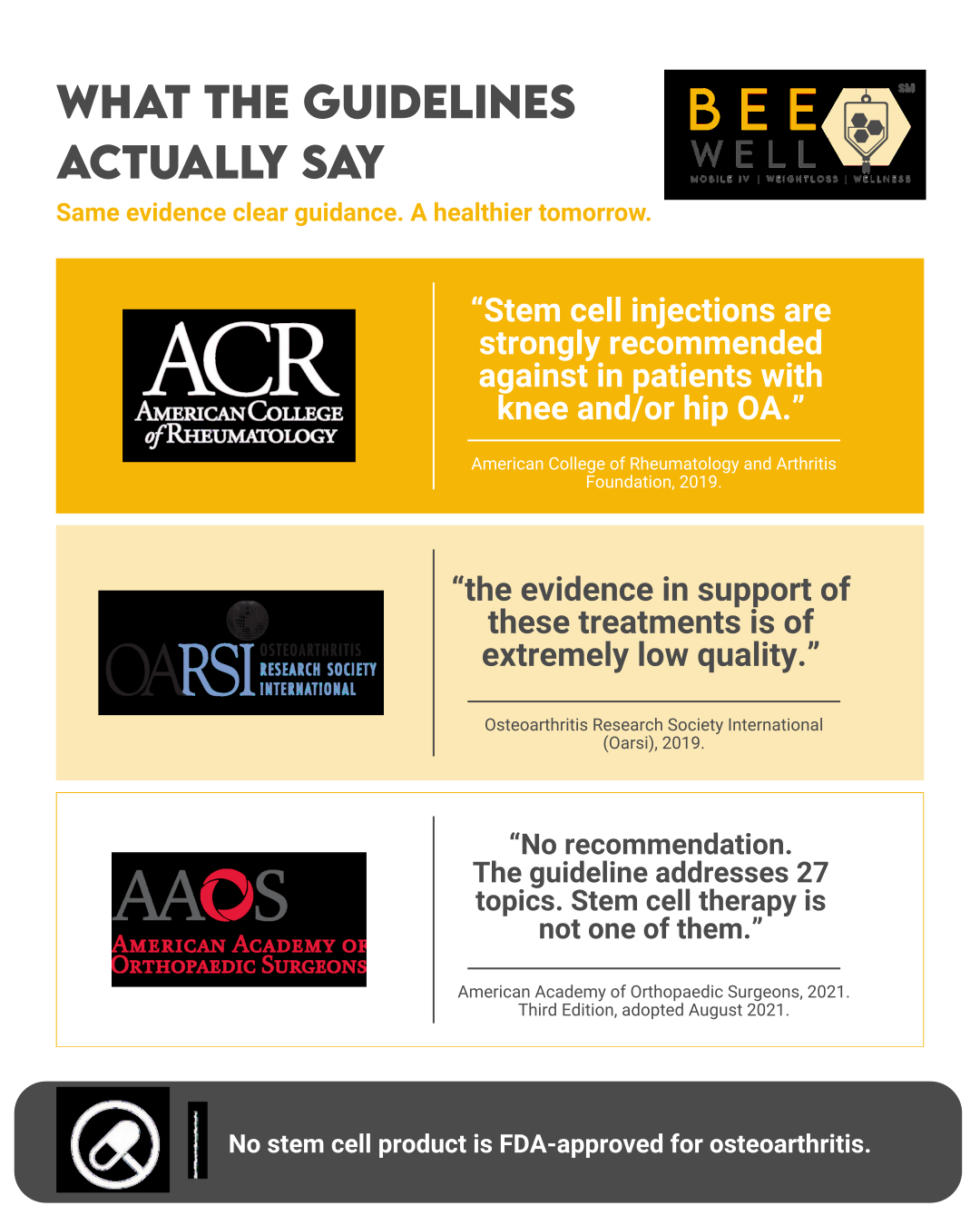
- The American College of Rheumatology and OARSI both strongly recommend against these injections. The AAOS knee guideline contains no recommendation at all, because it did not find enough evidence to make one.
We provide regenerative wellness services. This article is going to tell you that the evidence for stem cell injections in knee osteoarthritis is weaker than almost any clinic in Dallas-Fort Worth will tell you, because that is what the literature says and you are about to spend several thousand dollars of your own money.
You will not find these numbers on a competitor’s page. We checked.
None of what follows means these treatments do nothing or that people who felt better are imagining it. It means the honest description of what is known is more complicated and less flattering than the marketing, and you deserve to make this decision with the real version in front of you.
Start with the number that matters most
In 2024 a research methods group at McMaster University published a systematic review and meta-analysis of mesenchymal stem cells for chronic knee pain from osteoarthritis in Osteoarthritis and Cartilage. Sixteen randomized trials, 807 participants, GRADE certainty applied to every outcome, and minimal important differences specified in advance.
That last detail is what makes it the most useful paper in the field. Most reviews report whether a difference is statistically significant. This one reported whether the difference was large enough for a patient to notice.
At three to six months, pain improved by 0.74 cm on a 10 cm scale. The minimal important difference they specified was 1.5 cm.
Half the threshold of perceptibility.
Physical function improved by 2.23 points on a 100-point scale against a minimal important difference of 10 points, and that result was not statistically significant. At twelve months the pain difference was 0.73 cm and no longer statistically significant.
The authors’ conclusion, verbatim: “Intra-articular injection of MSCs for chronic knee pain associated with OA probably provides little to no improvement in pain or physical function.”
What Cochrane concluded
The Cochrane Collaboration published its review of stem cell injections for knee osteoarthritis in April 2025. Twenty-five randomized trials, 1,341 participants.
Its headline finding, verbatim: “Compared with placebo injection, stem cell injection may slightly improve pain and function up to six months after treatment.”
Note the hedging. That is Cochrane language for low certainty, and the review says so directly. The evidence was downgraded for indirectness, because the source, preparation method, and dose of stem cells varied across studies, and for suspected publication bias.
The publication bias note deserves its own sentence, because it is unusual to see stated this plainly: up to three larger randomized trials have been conducted and withdrawn prior to reporting of results.
Three larger trials, run to some degree of completion, never published. In a literature this small, that is not a footnote.
Two more findings from the same review. Radiographic progression was not assessed in any of the included studies, meaning no trial in the review looked at whether the joint itself changed. And on safety, in the authors’ words: “The risk of other important harms, including potential concerns related to the use of a therapy with the theoretical capacity to promote cell growth, or to the use of allogeneic cells, remains unknown.”
The two biggest trials, and what they found
ADIPOA2: cells versus saline
This is the trial that matters most, and it is the one no clinic page mentions.
ADIPOA2 was a European academic consortium trial funded under Horizon 2020, run across Montpellier, Ulm, Galway, Cambridge, Sorbonne, Rizzoli, and Radboud. Double-blind, three arms, 135 patients randomized between 2016 and 2022, published in Annals of the Rheumatic Diseases in December 2025.
Patients received a single injection of their own culture-expanded adipose-derived cells at either 2 million or 10 million cells, or saline placebo. The primary endpoint was the rate of strict responders at six months using a validated international definition.
Result: 47.3 percent of cell-treated patients were strict responders, against 54.8 percent on saline. Relative risk 0.86, p equals 0.46.
Placebo was numerically ahead. Secondary outcomes including pain, function, quality of life, and MRI cartilage thickness showed no significant group differences.
The authors’ conclusion, verbatim: “a single intra-articular injection of 2 × 10⁶ or 10 × 10⁶ autologous ADSC compared with injection of saline placebo did not significantly improve pain and function.”
Autologous. Culture-expanded. Adipose-derived. Two dose levels. Saline control. That is precisely the intervention sold in US clinics, tested rigorously, and it did not beat salt water.
MILES: three cell products versus a steroid shot
In 2023 Nature Medicine published a four-arm trial of 480 patients across Emory, Duke, Sanford, and UC San Diego. Patients received autologous bone marrow aspirate concentrate, autologous adipose stromal vascular fraction, allogeneic umbilical cord tissue-derived cells, or a corticosteroid injection.
At one year, in the authors’ words, “none of the three orthobiologic injections was superior to another, or to the CSI control.” None of the four groups showed significant change on MRI osteoarthritis score from baseline.
Read that once more. Three different cell products, each costing thousands of dollars, performed no better than a corticosteroid injection that costs a small fraction of that.
No procedure-related serious adverse events were reported, which is genuinely reassuring on safety and does not change the efficacy finding.
How much of the improvement is the injection ritual
This is the uncomfortable part, and it explains why testimonials and trial results diverge so sharply.
A 2025 analysis in Frontiers in Medicine looked only at trials that compared stem cell injection against an inert placebo, then calculated how much of the observed improvement was attributable to contextual effects rather than to the cells.
At six months, roughly 63 percent of pain reduction and 61 percent of functional improvement were contextual. At twelve months, about 50 percent of pain relief and 66 percent of functional gains. Heterogeneity across trials was near zero, meaning the estimate was consistent.
Its conclusion, verbatim: “the majority of symptomatic improvement following intra-articular MSC injections is attributable to contextual (placebo) effects, whereas the MSCs themselves confer only a modest incremental benefit.”
And the placebo response to a knee injection is large
A 2025 systematic review pooled the placebo arms of 73 double-blind injection trials covering 5,895 patients. It found statistically and clinically significant improvement at one, three, and six months, with responder rates exceeding 50 percent at each of those timepoints.
More than half of people injected with salt water met responder criteria. The effect peaked between four and eight months and declined by twelve.
That window, four to eight months, is exactly when clinics collect their testimonials.
WHAT THIS DOES NOT MEAN
It does not mean people are lying about feeling better. The improvement is real and measurable. The question is what caused it.
It does not mean placebo effects are worthless. Reduced pain is reduced pain, however it arrives.
It does mean that paying five thousand dollars for a contextual effect is a different transaction than the one being described to you, and that a saline injection produces a similar effect at a fraction of the cost.
Does cartilage actually regrow?
Short answer: the controlled evidence says no, or at most slowed loss rather than regrowth.
Every large, blinded, placebo-controlled trial that measured joint structure found nothing. ADIPOA2 measured MRI cartilage thickness and found no significant group differences. The 480-patient MILES trial found no significant change in MRI osteoarthritis score in any of its four groups. A meta-analysis of 28 trials reported that MRI-based structural scores were non-significant, indicating no consistent structural benefit.
The Cochrane review, as noted, found that radiographic progression was not assessed in any of its 25 included trials.
Positive structural findings do exist, and they are worth naming fairly. A 2025 placebo-controlled trial reported cartilage volume increase and absence of worsening in the treated arm at two years. A 30-patient Spanish trial found joint damage decreased in its high-dose arm, in the authors’ own word, slightly. A 24-patient trial found the cartilage defect unchanged in the treated group while it increased in controls, which is prevention of progression rather than regeneration.
Every one of those comes from a small trial, an unblinded trial, an active-comparator trial, or a manufacturer-sponsored trial. There is currently no independently replicated evidence that these injections regrow articular cartilage in human knees.
The most defensible positive claim available is that cartilage loss may be slowed. That is a meaningfully different claim from regeneration, and regeneration is what gets sold.
What the mechanism appears to actually be
The field’s own reviews point toward a signaling and anti-inflammatory effect rather than engraftment and tissue building. One dose-escalation trial found synovitis and inflammatory markers fell while cartilage morphology did not change. A 2026 meta-analysis concluded that these therapies serve a primarily symptom-modifying rather than structure-modifying role.
That is a real mechanism and a plausible one. It is not the mechanism described when someone tells you the cells will rebuild your knee.
Why the positive reviews are positive
You will find meta-analyses with encouraging results, and a clinic may hand you one. They are real papers and they say what they say. Understanding why they differ from the ones above is the most useful analytical skill in this whole category, and it comes down to three structural choices.
What they compared against
A frequently cited 2025 review of eight trials and 502 patients found improvements in pain and function that reached statistical significance. Its control groups were described as regular medication or placebo, and that description explicitly includes hyaluronic acid.
That is not a placebo-controlled estimate. Comparing cells against hyaluronic acid, a treatment the AAOS says is not recommended for routine use and the ACR conditionally recommends against, produces a different number than comparing cells against saline.
What they pooled
A 2025 dose-focused meta-analysis reported a large effect size, and reading the methods explains it. The analysis pooled treatment arms rather than between-group contrasts, meaning it measured change from baseline within treated patients.
That design cannot separate the treatment from natural history, regression to the mean, or the placebo response. All three are substantial in knee osteoarthritis, which is why the resulting effect size sits so far above placebo-controlled estimates.
Whether they asked if the effect was noticeable
Most reviews report statistical significance. Very few specify a minimal important difference in advance and then check the result against it.
The 2025 review above never discusses a minimal clinically important difference anywhere in the paper, and does not specify which version of the WOMAC scale its pooled figure uses, which makes the comparison indeterminate. Its heterogeneity ran between 67 and 77 percent on three of four primary outcomes, and its twelve-month confidence interval had a lower bound of 0.96, which is statistically fragile.
None of that makes it a bad paper. It makes it a paper answering a narrower question than the one you are asking.
FOUR QUESTIONS TO ASK ABOUT ANY STUDY A CLINIC SHOWS YOU
- What was the control group? Saline is a real control. Hyaluronic acid, a different injection, or no treatment at all are not.
- Was it blinded? Unblinded trials with subjective pain endpoints are the weakest design in this field, and several of the positive results come from them.
- Did they compare the result against a minimal important difference? If not, statistical significance tells you nothing about whether a patient would notice.
- Who funded it and who wrote it? Several positive structural findings come from manufacturer-affiliated groups. That does not make them wrong. It does mean they need independent replication before they carry weight.
Does the cell source matter?
You will be told that one source is superior: bone marrow, adipose, umbilical cord, culture-expanded, same-day. There are network meta-analyses attempting to rank them.
They disagree with each other.
At least four exist, and they reach different conclusions about which source ranks highest. All of them are built on small, heterogeneous trials with varying comparators. The differences between sources are almost certainly smaller than the noise in the underlying data.
The 480-patient head-to-head trial remains the most informative thing available on this question, because it tested three sources directly against each other and against a steroid. None was superior to another.
One safety signal is worth carrying, with appropriate caution. A network meta-analysis of safety ranked placebo as the safer option, with adipose-derived preparations ranking least favorably, and a separate review found high-dose adipose preparations induced more adverse events. A dedicated complications review found the highest rate of transient adverse events with umbilical cord-derived preparations at 51.7 percent.
So when a clinic tells you their source is better, the honest response is that no established hierarchy exists, the trials disagree, and the largest direct comparison found no winner.
What the professional societies say
Three bodies have looked at this. Their positions are unambiguous and almost never quoted in clinic marketing.
American College of Rheumatology and Arthritis Foundation, 2019
Strongly recommended against is the ACR’s most emphatic negative category. The accompanying note cites concern regarding heterogeneity and lack of standardization in available preparations and techniques.
The comparison worth making: the same guideline gives hyaluronic acid, a treatment most guidelines disfavor, only the weaker conditionally recommended against for the knee. The ACR treats stem cell injections as less well supported than hyaluronic acid.
OARSI, 2019
Extremely low quality is the guideline authors’ own characterization.
American Academy of Orthopaedic Surgeons, 2021
This one is the most interesting, and getting it right matters.
The AAOS clinical practice guideline for non-arthroplasty management of knee osteoarthritis contains no recommendation on stem cell or cell-based therapy at all. Not a negative one. None. We searched the full 126-page document; the phrase appears only in the literature search strategy appendices and the reference list.
The guideline issues recommendations on 27 topics, including hyaluronic acid, corticosteroids, and platelet-rich plasma. There is no stem cell section and no strength-of-evidence rating.
AAOS searched for the evidence and did not find enough to say anything. That is arguably a more damning signal than a negative recommendation, and if you see a page claiming AAOS gave stem cells a limited rating, that page is wrong.
How it compares to what else is available
| Option | What the guidelines say | Cost order of magnitude |
|---|---|---|
| Structured exercise and physical therapy | Strongest guideline support across ACR, OARSI, and AAOS for knee osteoarthritis | Covered by most insurance |
| Weight management where relevant | Guideline supported, with better evidence for knee pain than any injection discussed here | Low |
| Corticosteroid injection | ACR strongly recommends. AAOS: short-term relief, moderate strength | Typically covered; low out of pocket |
| Hyaluronic acid | AAOS: not recommended for routine use. ACR: conditionally recommends against for the knee | Variable coverage |
| Platelet-rich plasma | AAOS: may reduce pain, limited strength. ACR: strongly recommends against. The guidelines genuinely disagree | Several hundred to low thousands, out of pocket |
| Stem cell injection | ACR and OARSI both strongly recommend against. AAOS makes no recommendation | Roughly $4,000 to $12,000 per knee, out of pocket |
| Total knee replacement | Established for advanced disease with functional limitation. 96 percent ten-year implant survival, and roughly one in five patients dissatisfied | Covered; Medicare reimburses the Dallas surgeon about $1,387 |
Corticosteroid injection
The ACR strongly recommends it, based on short-term efficacy. AAOS describes it as providing short-term relief.
There is an important caveat that cuts against long-term repeated use. A two-year randomized placebo-controlled trial in JAMA gave 140 patients either triamcinolone or saline every twelve weeks for two years. The steroid group lost significantly more cartilage volume, and there was no significant difference in pain. Saline was numerically ahead on pain.
The honest synthesis: a corticosteroid injection provides short-term relief, and repeated quarterly injections over years accelerate cartilage loss without sustained pain benefit. It is a bridge, not a program.
Hyaluronic acid
AAOS states it is not recommended for routine use. ACR conditionally recommends against it for the knee, noting that apparent benefits in earlier reviews were restricted to studies at higher risk of bias.
Platelet-rich plasma
AAOS says PRP may reduce pain and improve function, at limited strength of recommendation. ACR strongly recommends against it, alongside stem cells. The two guidelines genuinely disagree, and anyone telling you PRP is settled in either direction is overstating.
Knee replacement
This is the comparison most people are actually making, and it deserves real numbers in both directions.
Registry data covering 54,276 knee replacements found ten-year implant survival of 96.1 percent and twenty-year survival of 89.7 percent. Lifetime revision risk for someone operated after age 70 is about 5 percent. For a man in his early fifties it rises to about 35 percent, which is the real argument for waiting when you are young.
It is also not a guaranteed result. About one in five patients is not satisfied with the outcome. Systematic review evidence puts unfavorable long-term pain outcomes at roughly 20 percent after knee replacement. The strongest predictor of dissatisfaction was expectations not met, carrying nearly eleven times the risk.
Both of those facts belong in front of you. Knee replacement works well for most people and not for all of them, and neither half of that sentence should be hidden by whoever is recommending the alternative.
What it costs, and what the market claims
The only peer-reviewed US pricing study for knee specifically is now nine years old, and its method was elegant: researchers contacted 317 centers offering direct-to-consumer stem cell therapy, posing as a 57-year-old man with knee osteoarthritis.
Of 273 centers successfully contacted, 65 disclosed a price. The mean was $5,156 for a unilateral same-day injection.
Only 24 percent would state a price at all, which is itself a finding.
The part that matters most is what those centers claimed about results. Thirty-six of them reported a figure for clinical efficacy. The mean claimed rate of good results or symptomatic improvement was 82 percent.
Now place that next to the placebo data. More than half of patients injected with saline meet responder criteria at six months. The clinics’ own claimed success rate is roughly the placebo response rate.
The study authors put it carefully: the claims denote a gap between what is documented in the published literature and the marketing claims.
No contemporary independent price survey exists. Advertised figures in the current market commonly run $4,000 to $12,000 per knee, and one Dallas physician who performs the procedure publishes his own price at just under $4,000 while noting that because there is no insurance coverage, clinicians are free to charge whatever they want, and that paying more may not mean a better result.
Nothing in this category is covered by insurance. No stem cell product is FDA-approved for osteoarthritis.
The safety picture, stated fairly
Serious adverse events are uncommon in trials. Minor ones are not.
The McMaster meta-analysis found the risk of any adverse event roughly 2.7 times higher than control, and knee pain and swelling about 1.6 times higher, both at low certainty. A 28-trial meta-analysis found injection-site pain about twice as likely and joint swelling about 3.4 times as likely. A dedicated complications review of 48 studies and 1,924 patients found a 12.3 percent rate of transient adverse events, mostly swelling and injection-site pain lasting under four weeks, with no infections, embolism, sepsis, tumors, or deaths reported across the whole set.
One network meta-analysis found placebo ranked as the safer option on its safety analysis, with adipose-derived preparations ranking least favorably.
Outside of trials the picture is different, because the products differ. The CDC investigation of contaminated umbilical cord blood products documented 20 patients across eight states hospitalized with bacterial infections, eight of them in Texas. Sixty-five percent of unopened undistributed vials tested were contaminated.
Long-term oncologic safety is untested rather than established. No trial in this literature reported a tumor, and follow-up is mostly six to twenty-four months.
What would change this answer
An article that only argues one direction is not an assessment, it is a position paper. So here is what would move us, and some of it may arrive within a few years.
The withdrawn trials
The Cochrane review noted that up to three larger randomized trials were conducted and withdrawn prior to reporting results. Nobody outside those studies knows what they found.
There are innocent explanations, including funding collapse and enrollment failure. There is also a well-documented pattern across medicine in which trials that fail to publish are disproportionately negative. If those three publish and are positive, the picture changes materially. If they publish and are negative, the current estimate is generous.
Either way, three unpublished trials in a literature of 25 is a large unknown, and Cochrane flagged it as suspected publication bias for a reason.
A large independent placebo-controlled trial
ADIPOA2 was academic and publicly funded, which is exactly the design that carries weight, and it was negative at 135 patients. A larger version, or one testing a different source or protocol with the same rigor, would be genuinely informative in either direction.
A subgroup that reliably responds
There is one hypothesis-generating signal worth watching. A 2025 trial of umbilical cord cells was null in its overall population but reported significant benefit in patients whose osteoarthritis included synovitis, particularly those with moderate to severe pain.
That is a post-hoc-flavored subgroup finding in a trial whose primary endpoint was safety, so it proves nothing. It is also biologically coherent, given that the leading proposed mechanism is anti-inflammatory. If a prospectively designed trial enrolled only inflammatory-phenotype patients and found a real effect, that would be a meaningful development and it would narrow who should be treated rather than widen it.
A validated potency assay
Part of why this literature is so heterogeneous is that nobody can say what a therapeutic dose is. There is no validated assay linking a product’s properties to a clinical outcome, no standardization across manufacturers, and no dose-response relationship in the pooled data.
Until that exists, every trial is testing a slightly different thing under the same name, which is precisely the reason Cochrane downgraded the evidence for indirectness.
This article carries a date. If you are reading it well after 2026, check whether any of the above has happened before relying on it.
So what should you actually do about your knee
We are not going to end a five-thousand-word article on the evidence by pretending we have not formed a view.
If you have knee osteoarthritis and you have not yet done a structured exercise program with a physical therapist, that is the intervention with the best guideline support and it is the one most commonly skipped. If weight loss is relevant to you, it has better-established evidence for knee pain than anything discussed in this article.
If you need shorter-term relief to get through a season or a trip, a corticosteroid injection is inexpensive, guideline-supported for short-term use, and available from an orthopedist this month.
If your knee is bone-on-bone and function is genuinely limited, a surgical consultation is the appointment that will tell you the most, and getting one costs you nothing but time.
And if after all of that you are still considering a cell injection, go in knowing what the evidence supports. The plausible upside is a modest symptomatic effect, most of which may be contextual, lasting months rather than years, with no demonstrated structural change. That is a real thing that some people will still reasonably choose. It is not what most of the market is describing.
What would change our view: those three withdrawn trials being published, or a large independently funded placebo-controlled trial with a clear positive result. The field is not standing still, and this article carries a date for a reason.
How Bee Well℠ handles knee inquiries
We deliver regenerative wellness services at homes and offices across Dallas, Fort Worth, Frisco, Denton, Southern Oklahoma, and California, under Texas-licensed physician oversight.
When someone calls us about a knee, this article is roughly the conversation. We ask what you have tried, we ask to see your imaging, and we tell you what the guidelines say including the parts that argue against us.
A significant share of those calls end with us recommending physical therapy, an orthopedic consultation, or a corticosteroid injection from a physician who can do it next week for a fraction of the cost. We are comfortable with that. A practice that cannot say those words is a practice you should not trust with a joint.
If you want a straight read on where your knee actually sits, call us. Consultations are free and there is no obligation to book anything.
References
- Whittle SL, Johnston RV, McDonald S, et al. Stem cell injections for osteoarthritis of the knee. Cochrane Database of Systematic Reviews. 2025;4(4):CD013342.
- Sadeghirad B, Rehman Y, Khosravirad A, et al. Mesenchymal stem cells for chronic knee pain secondary to osteoarthritis: A systematic review and meta-analysis of randomized trials. Osteoarthritis and Cartilage. 2024;32(10):1207-1219.
- Pers YM, Schrezenmeier H, Fleury-Cappellesso S, et al. Effect of intra-articular adipose-derived mesenchymal stromal cell versus placebo injection on pain and function in patients with knee osteoarthritis: the ADIPOA2 phase 2b randomised clinical trial. Ann Rheum Dis. 2025;84(12):2103-2114.
- Mautner K, Gottschalk M, Boden SD, et al. Cell-based versus corticosteroid injections for knee pain in osteoarthritis: a randomized phase 3 trial. Nat Med. 2023;29(12):3120-3126.
- Yin F, Wu H, Tong D, et al. Contextual effects of mesenchymal stem cell injections for knee osteoarthritis: systematic review and meta-analysis of randomized controlled trials. Front Med. 2025;12:1636181.
- Previtali D, Boffa A, Di Laura Frattura G, Merli G, Filardo G. Placebo response to intra-articular injections in knee osteoarthritis. EFORT Open Rev. 2025;10(10):782-795.
- Awad G, Saad JP, Hamyeh A, Boutros M. Efficacy and safety of intra-articular mesenchymal stem cell-based therapies in knee osteoarthritis. Clin Rheumatol. 2026;45(5):2905-2942.
- Kolasinski SL, Neogi T, Hochberg MC, et al. 2019 American College of Rheumatology/Arthritis Foundation Guideline for the Management of Osteoarthritis of the Hand, Hip, and Knee. Arthritis Rheumatol. 2020;72(2):220-233.
- Bannuru RR, Osani MC, Vaysbrot EE, et al. OARSI guidelines for the non-surgical management of knee, hip, and polyarticular osteoarthritis. Osteoarthritis and Cartilage. 2019;27(11):1578-1589.
- American Academy of Orthopaedic Surgeons. Management of Osteoarthritis of the Knee (Non-Arthroplasty), Evidence-Based Clinical Practice Guideline, Third Edition. Adopted August 31, 2021.
- McAlindon TE, LaValley MP, Harvey WF, et al. Effect of Intra-articular Triamcinolone vs Saline on Knee Cartilage Volume and Pain in Patients With Knee Osteoarthritis. JAMA. 2017;317(19):1967-1975.
- Bayliss LE, Culliford D, Monk AP, et al. The effect of patient age at intervention on risk of implant revision after total replacement of the hip or knee. The Lancet. 2017;389(10077):1424-1430.
- Bourne RB, Chesworth BM, Davis AM, Mahomed NN, Charron KD. Patient satisfaction after total knee arthroplasty. Clin Orthop Relat Res. 2010;468(1):57-63.
- Beswick AD, Wylde V, Gooberman-Hill R, Blom A, Dieppe P. What proportion of patients report long-term pain after total hip or knee replacement for osteoarthritis? BMJ Open. 2012;2(1):e000435.
- Piuzzi NS, Ng M, Chughtai M, et al. The Stem-Cell Market for the Treatment of Knee Osteoarthritis: A Patient Perspective. J Knee Surg. 2018;31(6):551-556.
- Riggle C, McLellan M, Bohlen H, Wang D. Complications of Stem Cell-Based Injections for Knee Osteoarthritis: A Systematic Review. HSS J. 2025;21(3):476-484.
DISCLAIMER
This content is for educational purposes only and does not constitute medical advice. It is not a substitute for consultation with a qualified healthcare provider. No exosome product is approved by the U.S. Food and Drug Administration, and individual results cannot be predicted or guaranteed.
If you develop fever, spreading redness, worsening pain, or difficulty breathing after any injection or infusion, seek emergency care immediately rather than waiting to reach the practice that treated you. Call 911 for a medical emergency.