Key Takeaways
- Exosomes are vesicles that cells release. They are cell-derived material rather than cells, which is why they sit in a different regulatory category from stem cell products and why the quality question falls almost entirely on the manufacturing lab.
- The field’s own consensus standard, MISEV2023, discourages the word “exosome” unless subcellular origin has been demonstrated. Essentially every consumer product on the market uses the one word researchers are told not to use.
- For cord and placental products, the person screened and tested for communicable disease is the birth mother, not the donor infant, within a seven-day window around delivery.
- “FDA registered” is a filing, not a finding. The regulation states that accepting a registration “does not constitute a determination that an establishment is in compliance.”
- A passing sterility report is not proof of sterility. USP says so itself, and in a documented 2018 outbreak a contaminated vial shipped with a passing sterility report attached.
- The International Society for Extracellular Vesicles publishes eight red flags for unproven vesicle therapies. They are reproduced in full in this article.
What an exosome actually is
Cells release small packets wrapped in a lipid membrane that carry proteins, fats, and genetic material to other cells. The umbrella term for those packets is extracellular vesicles. Exosomes are one subtype, formed inside the cell’s endosomal system before release.
The consensus definition, from the field’s own standards document, is precise: extracellular vesicles are “particles that are released from cells, are delimited by a lipid bilayer, and cannot replicate on their own.”
They are a signaling mechanism, part of how cells talk to their neighbors. The research interest in regenerative medicine comes from a reasonable idea: if you can collect and deliver that signaling material, you might influence the tissue environment without transplanting living cells at all.
The naming problem, and why it matters to you
MISEV2023, published in the Journal of Extracellular Vesicles by the International Society for Extracellular Vesicles, is the consensus document researchers work to. On the word “exosome” it is direct:
Its quick-reference table lists “exosome” with a one-word usage note: discouraged, unless subcellular origin can be demonstrated. The reason is practical. Separation techniques do not sort vesicles by how they were made, and there is no universal marker that distinguishes exosomes from other small vesicles.
So virtually every product sold to consumers under the name “exosome” is, by the field’s own standard, a preparation of mixed extracellular vesicles. That is not fraud. It is an industry using a consumer-friendly word the science has moved past. But it tells you something about how much precision to expect from the rest of the marketing.
Are exosomes the same as stem cells?
No, and the distinction drives most of the practical differences.
Stem cells are living cells. Exosome preparations contain material released by cells, with the cells themselves removed during processing. Nothing in the vial is alive, nothing divides, and nothing engrafts.
That changes the handling requirements, which is why exosome products ship frozen and are thawed on site rather than kept in cell-culture conditions. It also changes the regulatory picture in a way we cover in detail in our article on FDA status, and it moves the entire quality question onto the manufacturing lab. With a cell product you can at least ask about viability. With a vesicle preparation you are relying on the documentation.
Which is why this article is mostly about paperwork.
Where the material comes from
There is no peer-reviewed census of US commercial exosome source materials, so anyone quoting you a clean percentage is quoting a market-research vendor. What is defensible comes from the FDA’s own enforcement record, where the agency names products and their stated sources.
| Source material | How it appears in the market |
|---|---|
| Umbilical cord tissue and Wharton’s jelly | The most common source in the US wellness market. Collected after scheduled caesarean deliveries from screened, consenting donors. |
| Placental tissue and amniotic membrane | Frequently combined with cord-derived material in hybrid products. |
| Amniotic fluid | Appears in a smaller set of products. |
| Bone marrow or adipose MSC | More common in research settings and in the one Phase 3 US trial currently enrolling. |
| Plant-derived preparations | Mostly topical skincare. A different category from anything used clinically, though the labeling rarely makes that clear. |
Across the FDA warning letters issued from 2023 through 2025, perinatal tissue dominates. Products cited by name were derived from placental and amniotic material, umbilical cord, Wharton’s jelly, and amniotic fluid.
The reason is economics rather than biology. Perinatal tissue is otherwise medical waste, it is donated at scheduled deliveries, donors are young and pre-screened, one donation yields substantial volume, and the resulting supply can be manufactured in batches and stockpiled. Autologous bone marrow or fat requires a procedure per patient, which does not scale.
Source alone tells you very little about quality. Two products from umbilical tissue can come from labs with completely different testing regimes, and that is the difference that matters.
Plant-derived, human-derived, topical, injectable
Four words that get mixed together in marketing and mean very different things. Sorting them takes two minutes and eliminates most of the confusion in this category.
Plant-derived versus human-derived
Plant cells release vesicles too, and a growing number of products on the market are plant-derived, often from centella, ginseng, or algae. They are considerably cheaper at wholesale, sometimes a tenth the price of a human mesenchymal preparation.
They are also a fundamentally different product. The biological rationale for human-derived vesicles rests on cell-to-cell signaling between human cells. A plant vesicle is not doing that, whatever else it may do. Neither is FDA-approved, and one is not simply the budget version of the other.
This matters because product names often do not distinguish them. If a price seems unusually low, source is the first thing to check, and “exosome” on a label tells you nothing about which one you are getting. Ask directly: is this human-derived or plant-derived, and from what tissue?
Topical versus injectable
Many products sold in aesthetic practice are labeled for topical use, meaning applied to the skin surface, typically after microneedling has created channels. Others are intended for injection.
The distinction is not cosmetic. It determines the sterility and endotoxin standard the product needs to meet, and it is the failure point in the published harm reports. In both 2025 case reports of serious skin reactions, including the granulomatous inflammation series and the tissue necrosis case, the products had been labeled for topical use and were injected instead.
That is worth one plain question at your consultation: is this product labeled for the route you are about to use it by? A practice that has not thought about the answer is a practice that has not read its own product insert.
There is a related regulatory wrinkle. A cosmetic labeled for topical use sits in a different regulatory category than a product intended to treat a condition. Some suppliers use topical labeling as a positioning strategy while marketing the product for clinical effect. The FDA has cited exactly that pattern in its enforcement letters.
Who actually gets screened
Federal regulation sets donor eligibility requirements for human tissue products, and the specifics are more interesting than the summary.
Screening involves a medical record review for HIV, hepatitis B, hepatitis C, human transmissible spongiform encephalopathy including Creutzfeldt-Jakob disease, and Treponema pallidum. Testing requires five agents: HIV type 1, HIV type 2, hepatitis B, hepatitis C, and Treponema pallidum. Products containing viable leukocyte-rich cells add HTLV-I, HTLV-II, and CMV.
Here is the part almost nobody explains. For a donor one month of age or younger, the regulation requires testing “a specimen from the birth mother instead of a specimen from the donor.” The specimen must be collected at recovery or within seven days either side. Testing must use FDA-licensed, approved, or cleared donor screening tests, performed in a laboratory certified under CLIA.
So for a cord or placental product, the person tested is the mother, in a narrow window around delivery, in a certified lab. That is a specific, checkable thing to ask a supplier about, and it is a far better question than “are your donors screened.”
A caveat on whether these rules even apply
These are the requirements for human cells, tissues, and cellular and tissue-based products. Exosome preparations are excluded from that category by regulation, which defines HCT/Ps and then carves out “secreted or extracted human products, such as milk, collagen, and cell factors.”
That produces a real gap. The tissue the material was harvested from falls under donor eligibility rules. The secreted product manufactured from it is regulated as a drug and biological product, and no exosome product has been approved. A reputable supplier will follow donor eligibility standards on the front end because it is the right practice and because the tissue itself is covered. A supplier that does not is not necessarily violating the tissue rule for the vial you receive. Ask, and ask for the documentation.
What “FDA registered” and “AATB accredited” actually cover
FDA registration
Tissue establishments must register with the FDA and list what they manufacture within five days of beginning operations. The FDA assigns each location a permanent registration number and maintains a public database, HCTERS, that anyone can search.
What that number means is spelled out in the regulation itself: “FDA acceptance of an establishment registration and HCT/P listing form does not constitute a determination that an establishment is in compliance with applicable rules and regulations or that the HCT/P is licensed or approved by FDA.”
For exosome products the misuse is doubly wrong. Registration is self-submitted paperwork the agency merely accepts, and an exosome preparation is not an HCT/P in the first place, so a tissue establishment registration does not even cover the product being sold. A company can be truthfully FDA-registered as a tissue establishment while the vial it ships is an unapproved drug.
AATB accreditation
The Association for Advancing Tissue and Biologics accredits over 120 tissue establishments worldwide against its Standards for Tissue Banking, now in its 15th edition. It is a real program with real inspections, covering donor screening and eligibility, recovery, processing, packaging, labeling, storage, and distribution.
Its public accredited-bank search filters by nine tissue types: autologous tissue, birth tissue, cardiac, cellular, musculoskeletal, reproductive, skin, surgical bone, and vascular. There is no exosome or extracellular vesicle category.
So an AATB badge next to an exosome vial tells you something about the donor-tissue front end and nothing about the manufacture of the acellular product. If a supplier claims accreditation, look them up in the public search and check which tissue type and which activities the accreditation actually covers. It takes two minutes and the answer is often narrower than the badge implies.
How a batch should be tested
Sterility
USP General Chapter 71 sets the sterility test method: two culture media, incubation for not less than 14 days, with defined sampling based on batch size.
USP also includes a sentence that should change how you read any certificate:
A sterility test is a small destructive sample from a batch. It is layered on top of a validated process, and without that validated process it carries limited weight. This is exactly what the FDA cited in its 2023 warning letter to one exosome manufacturer, which “failed to validate the aseptic processes” for products that “purport to be sterile and are expected to be sterile.”
Endotoxins
Endotoxin is a heat-stable fragment of bacterial cell wall. Sterile filtration removes live bacteria and does not remove endotoxin, which is why it gets its own test.
USP General Chapter 85 covers it, using Limulus amebocyte lysate methods. The endotoxin limit for parenteral drugs is calculated as K divided by M, where K is the threshold human pyrogenic dose per kilogram and M is the maximum recommended human dose per kilogram per hour. FDA guidance sets K at 5 endotoxin units per kilogram of body weight for most parenteral routes.
Do the arithmetic once and it becomes concrete. For a 70 kilogram adult, that is 350 endotoxin units total per hour. For intrathecal administration the limit drops to 0.2 EU per kilogram, a twenty-five-fold reduction. That matters because clinics do administer these products epidurally and intradiscally, routes for which the acceptable endotoxin load is dramatically lower than for a facial application.
Characterization
MISEV2023 asks for protein markers across at least three categories: transmembrane proteins associated with the membrane and endosomes such as CD9, CD63, and CD81; cytosolic proteins recovered in vesicles such as TSG101, ALIX, and syntenin; and, critically, markers of non-vesicle contaminants such as albumin, apolipoproteins, and immunoglobulins.
That third category is the purity check, and it is the one most often missing. A certificate showing CD9, CD63, and CD81 positive satisfies the first category only. Without a negative-marker result it says nothing about how much of what is in the vial is not a vesicle at all. MISEV2023 also warns that tetraspanin-based methods “are not specific for exosomes as an EV subtype” and that “currently, no generic marker is known to identify all EVs irrespective of source.”
How to read a certificate of analysis
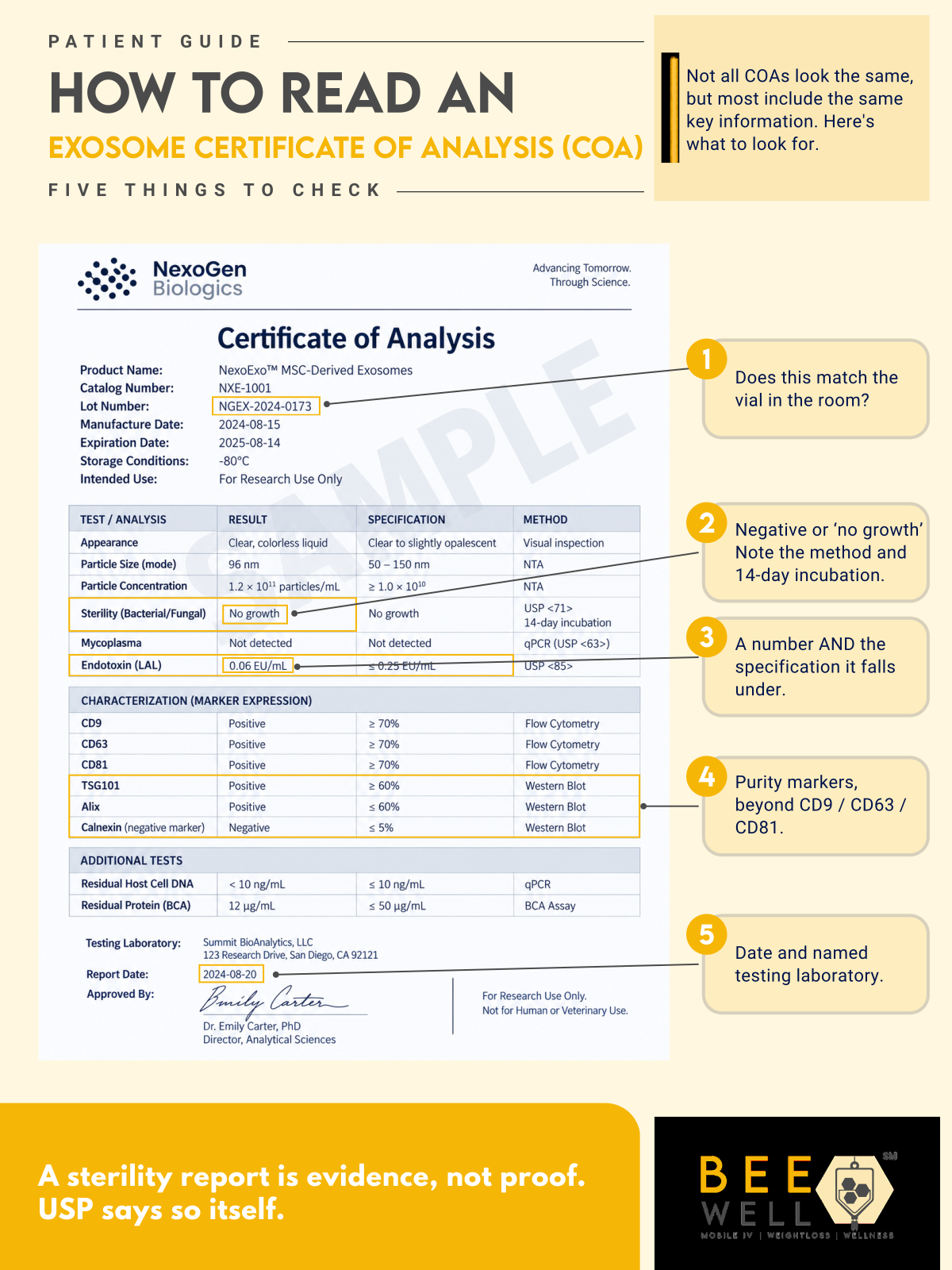
A certificate of analysis is a one or two page document from the manufacturing lab reporting what testing a specific lot passed. You do not need a science background to get value out of it. You need five checks.
- Does the lot number match the vial you are being given? If it does not, nothing else on the page applies to you.
- Is a sterility result present, and does it read negative or “no growth”? Note the method and the incubation period.
- Is an endotoxin figure reported, with a specification it falls under? A number with no limit next to it is not a result.
- Is there any purity or negative-marker data? Category 3 markers, or a statement about co-isolated protein.
- Is the document dated, and does it name the testing laboratory? An undated certificate from an unnamed lab is a letterhead.
What you are really testing is whether the paperwork exists and whether the practice had it on hand. A provider who has to call the supplier to find out has told you how closely they have been paying attention to what they inject.
What has gone wrong when the paperwork was wrong
The most thoroughly documented failure in this field involved cord blood products rather than exosomes, and it remains the clearest picture available of what happens when manufacturing controls slip.
A 2021 investigation in JAMA Network Open documented 20 patients across eight states with culture-confirmed bacterial infections after receiving umbilical cord blood-derived products marketed as stem cell therapy. Texas had the largest group at eight. Nineteen of 20 were hospitalized, for a median of nine days and as long as 58. Infections included bloodstream infections, septic arthritis, and epidural abscesses. Fourteen patients grew E. coli, and ten had polymicrobial infections.
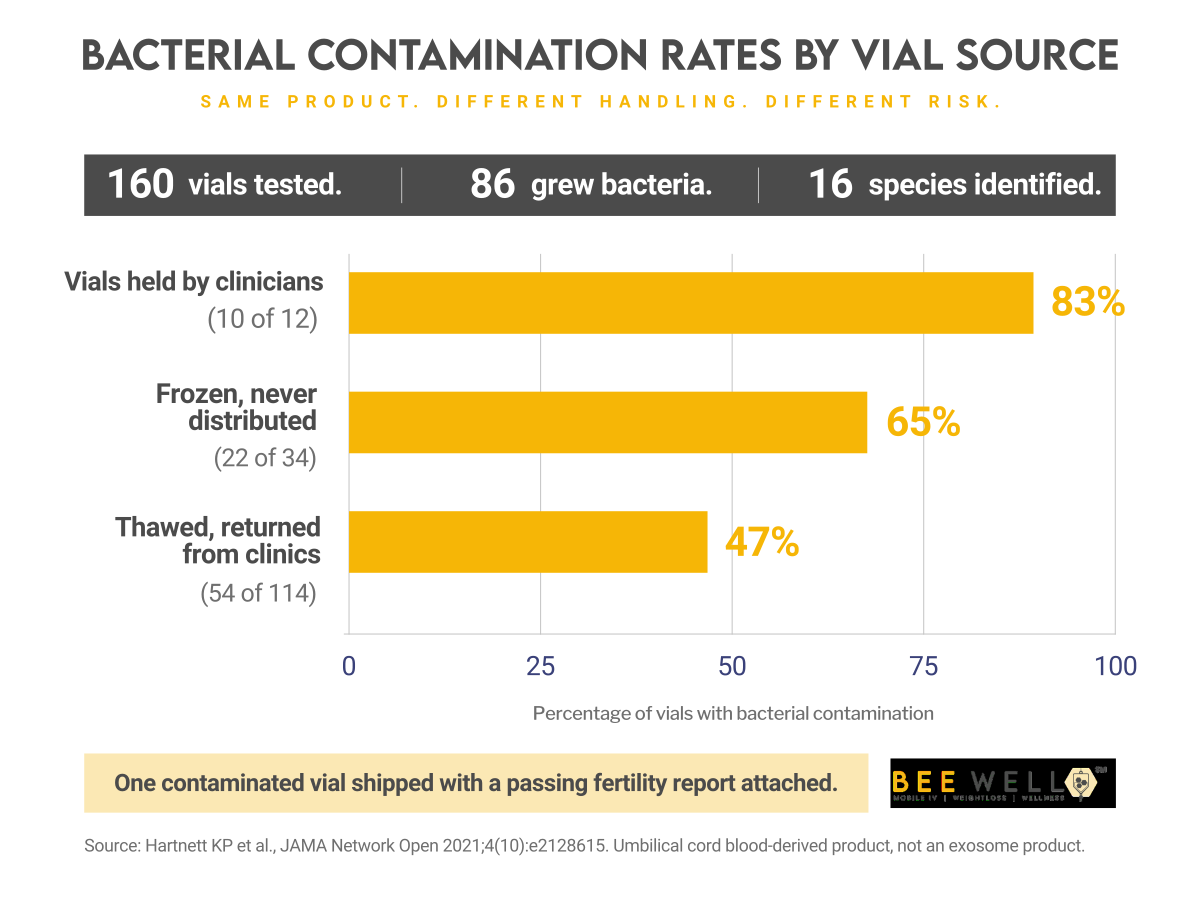
Investigators then cultured the product itself. Of 160 vials tested, 86 grew bacteria. Sixteen different bacterial species were identified across the batch, and molecular typing linked patient isolates to undistributed product.
The FDA’s inspection found the manufacturer “did not adequately clean the processing environment or equipment between the manufacture of batches” and identified “insufficient donor testing and screening practices.” The Texas Department of State Health Services recommended that everyone who received the product get a full medical assessment including HIV and hepatitis testing.
The MMWR report added a line worth remembering when anyone tells you a product is filtered or treated: “Umbilical cord blood cannot be decontaminated after collection because there are currently no validated processes for sterilization, so manufacture of derived products must be highly controlled to prevent distribution of contaminated products.”
And on the exosome side
In December 2019 the FDA issued a safety notification after “multiple recent reports of serious adverse events experienced by patients in Nebraska who were treated with unapproved products marketed as containing exosomes.” The Nebraska health advisory described patients who became ill after receiving “a product derived from C-section placentas, a subset of whom became bacteremic,” naming E. coli and Enterobacter cloacae.
No federal or state agency ever published a case count, a product name, a manufacturer, or a clinic name. Trade reporting at the time cited state officials describing fewer than five cases. If you encounter an article citing a specific number for Nebraska, that number was never published.
Two 2025 case reports fill in the individual picture. A case series described four women with persistent redness, nodules, granulomatous inflammation, and scarring after intradermal injection of exosome products in a nonclinical setting, all with incomplete resolution and residual scarring. A separate report described ischemic necrosis of both cheeks in a 38-year-old man three days after exosome injection for acne scars. In both, the products had been intended for topical use and were injected instead.
The six things the field itself says are unsolved
A 2026 paper on the regulatory science of extracellular vesicles organized the open problems into six categories. It is the most useful summary we have found of what “early” actually means in this field, and it doubles as a list of things to ask about.
| Bottleneck | What it means in practice |
|---|---|
| Identity | There is no universal marker that identifies all extracellular vesicles regardless of source, and no marker that distinguishes exosomes from other small vesicles. What is in the vial is a mixed population. |
| Purity | Most separation methods co-isolate non-vesicle material. Lipoproteins and protein complexes cannot be fully separated from vesicles by size or density alone. |
| Potency | There are no validated potency assays linking a dose to a clinical outcome. Nobody can tell you what an effective dose is because no assay defines one. |
| Measurement comparability | Particle counts differ substantially between instruments, methods, and laboratories. Numbers from two suppliers are not comparable. |
| Manufacturing control | Cell source, culture conditions, and isolation method all vary between manufacturers and affect consistency. |
| Safety | Adverse event reporting for these products is known to be incomplete, which means the published safety record understates what has occurred. |
None of that means the science is going nowhere. Extracellular vesicle biology is a serious, well-funded research field with real clinical programs. It means the gap between the research and a vial sold in a wellness setting is wider than the marketing implies, and the six items above are exactly the gap.
Why nobody can standardize a dose yet
This is worth understanding because it explains the strange numbers on product sheets.
MISEV2023 asks that every preparation be defined by quantitative measures of its source, that the abundance of vesicles be approximated by particle number, protein, or lipid content, and that the degree of non-vesicular co-isolated material be established. Those are three separate measurements, and consumer products typically report only the first.
Even that first one is unreliable. The consensus document states that particle number concentration “is often unreliable, since many techniques lack specificity for EVs and sensitivity for all EVs,” notes that reported vesicle concentration in blood plasma “spans six orders of magnitude depending on the measurement method,” and observes that “currently, there is no method to derive a traceable LOD for nanoparticle tracking analysis.”
Protein content as a substitute is explicitly discouraged: “Protein concentration as a surrogate of EV concentration should be used with caution and is generally not recommended.”
There is also a field-practice finding that puts it in perspective. A survey of more than 600 extracellular vesicle researchers found that “most EV researchers still do not perform sample quality controls before or after isolation of EVs.” If the research community struggles with this, a product sheet promising a precise particle count is promising something the field cannot reliably deliver.
The National Institute of Standards and Technology is actively developing reference materials for extracellular vesicles, precisely because none currently exist. Until they do, no particle count in this category is traceable to a standard.
One boundary that is currently being litigated
For completeness, and because you may hear it cited: the line between tissue products and drugs is under active legal challenge.
In early 2026 a federal district court in Missouri held that the FDA’s interpretation of “minimal manipulation” was unlawful as applied to a specific umbilical cord tissue product, vacated the agency’s decision, and remanded.
That case concerns a cord tissue sheet, not exosomes, and it does not touch the regulation that excludes secreted products from the tissue category. So it does not create a pathway for exosome products, and any clinic citing it as though it did is overreading it substantially.
We mention it because it is real, it is recent, and the honest position is that a boundary in this field is being argued in court while the exosome question specifically is not.
Cold chain, and what happens when it slips
These preparations ship frozen, and how they are handled between the lab and your appointment is a real variable.
A 2024 systematic review of 50 studies on extracellular vesicle storage found that rapid freezing and constant subzero temperatures, optimally negative 80 degrees Celsius, best preserved quantity and cargo. Its central finding on handling:
“Subjecting EVs to multiple freeze-thaw cycles decreased particle concentrations, RNA content, impaired bioactivity, and increased EV size and aggregation.”
Reported figures from that literature include losses of roughly 23 to 36 percent of vesicles after a single freeze-thaw cycle and 37 to 43 percent after three, with substantial degradation of vesicle RNA after even one cycle. Electron microscopy showed vesicle enlargement, fusion, and membrane deformation under substandard storage.
MISEV2023 is more cautious, noting “conflicting evidence on the effects of freeze-thaw cycles on EV properties,” and both sources agree that stabilizers such as trehalose and human albumin improve stability.
The practical question for a patient is short: how is product stored at this practice, how many times has this vial been thawed, and how long does it sit after thawing before it goes into me? A practice that has thought about its cold chain will answer immediately.
The eight red flags, from the researchers themselves
In 2020 the Regulatory Affairs Task Force of the International Society for Extracellular Vesicles, representing more than 1,500 scientists and clinicians who study these particles for a living, published a patient safety notice. It included a checklist. We are reproducing it in full because it is better than anything we would write.
Be cautious of a therapy if any of the following apply:
- It is marketed as a cure-all
- It is marketed online or in media only
- It is supported by patient testimonials only
- It claims that there are no risks
- Your doctor doesn’t know about it
- It is experimental but not being offered to you in a clinical trial
- It is experimental but you do not get an informative document about expected effects and potential risks to help you decide if you should take the treatment
- It has not been tested for your condition in clinical trials
The same notice explains why purity is the crux, in language aimed at patients rather than researchers: “While some clinics may claim that they are using ‘conditioned media containing extracellular vesicles’ or that the extracellular vesicles are ‘purified’ before administering them to patients, this may very well not be the case. As such, there may be significant safety issues and risk of adverse reactions without having any beneficial effect on your condition.”
One note on currency. That notice is date-stamped June 2020, and it states that no approved vesicle-based therapies existed worldwide at that time. That remains accurate as of 2026 in the United States, but the document should be read as a 2020 statement rather than a current one.
What Bee Well℠ will provide on request
We will name our manufacturer. We will provide the certificate of analysis for the lot being used in your appointment, before the appointment rather than after. We will tell you how the product is stored, how it is handled, and how long it sits after thawing. If you want to read the documentation before you decide, ask at the consultation and we will send it.
Our nurses are licensed, our services run under Texas-licensed physician oversight, and we hold LegitScript Healthcare Merchant Certification, which involves independent review of licensure and operating practices.
We are also clear about what nobody knows. The human evidence base for exosome applications is early, no product is FDA-approved, and we cannot tell you what your result will be. We would rather say that at the consultation than let a brochure imply otherwise.
If another provider will not produce a certificate of analysis for the lot they intend to use on you, that is the whole answer. You do not need to know what a tetraspanin is to act on it.
References
- Welsh JA, Goberdhan DCI, O’Driscoll L, et al. Minimal information for studies of extracellular vesicles (MISEV2023): From basic to advanced approaches. J Extracell Vesicles. 2024;13(2):e12404.
- International Society for Extracellular Vesicles, Regulatory Affairs Task Force. Patient information and safety notice: extracellular vesicles/exosomes and unproven therapies. August 8, 2020. isev.org
- 21 CFR 1271.3(d)(3); 21 CFR 1271.10(a); 21 CFR 1271.27(b); 21 CFR 1271.45, 1271.75, 1271.80, 1271.85. ecfr.gov
- Association for Advancing Tissue and Biologics. Standards for Tissue Banking, 15th edition, effective January 2025; Accredited Bank Search. aatb.org
- United States Pharmacopeia. General Chapter <71> Sterility Tests; General Chapter <85> Bacterial Endotoxins Test.
- U.S. Food and Drug Administration. Pyrogen and Endotoxins Testing: Questions and Answers, Edition 2. March 2026. fda.gov
- Hartnett KP, Powell KM, Rankin D, et al. Investigation of Bacterial Infections Among Patients Treated With Umbilical Cord Blood-Derived Products Marketed as Stem Cell Therapies. JAMA Netw Open. 2021;4(10):e2128615.
- Perkins KM, Spoto S, Rankin DA, et al. Notes from the Field: Infections After Receipt of Bacterially Contaminated Umbilical Cord Blood-Derived Stem Cell Products. MMWR. 2018;67(50):1397-1399.
- U.S. Food and Drug Administration. Public Safety Notification on Exosome Products. December 6, 2019; Warning Letter, Kimera Labs Inc. September 1, 2023. fda.gov
- Nebraska Department of Health and Human Services. Health Advisory. December 6, 2019.
- Park KY. Adverse Reactions Following Intradermal Injection of Exosome-Based Formulations: A Case Series. J Cosmet Dermatol. 2025;24(10):e70520.
- AlBargawi S. Necrosis Following Dermal Injection of Lyophilized Exosomes: A Case Report. J Cosmet Dermatol. 2025;24(8):e70387.
- Ahmadian S, Jafari N, Tamadon A, et al. Different storage and freezing protocols for extracellular vesicles: a systematic review. Stem Cell Res Ther. 2024;15(1):453.
- Vestad B, Llorente A, Neurauter A, et al. Size and concentration analyses of extracellular vesicles by nanoparticle tracking analysis: a variation study. J Extracell Vesicles. 2017;6(1):1344087.
DISCLAIMER
This content is for educational purposes only and does not constitute medical advice. It is not a substitute for consultation with a qualified healthcare provider. No exosome product is approved by the U.S. Food and Drug Administration, and individual results cannot be predicted or guaranteed.
If you develop fever, spreading redness, worsening pain, or difficulty breathing after any injection or infusion, seek emergency care immediately rather than waiting to reach the practice that treated you. Call 911 for a medical emergency.