Key Takeaways
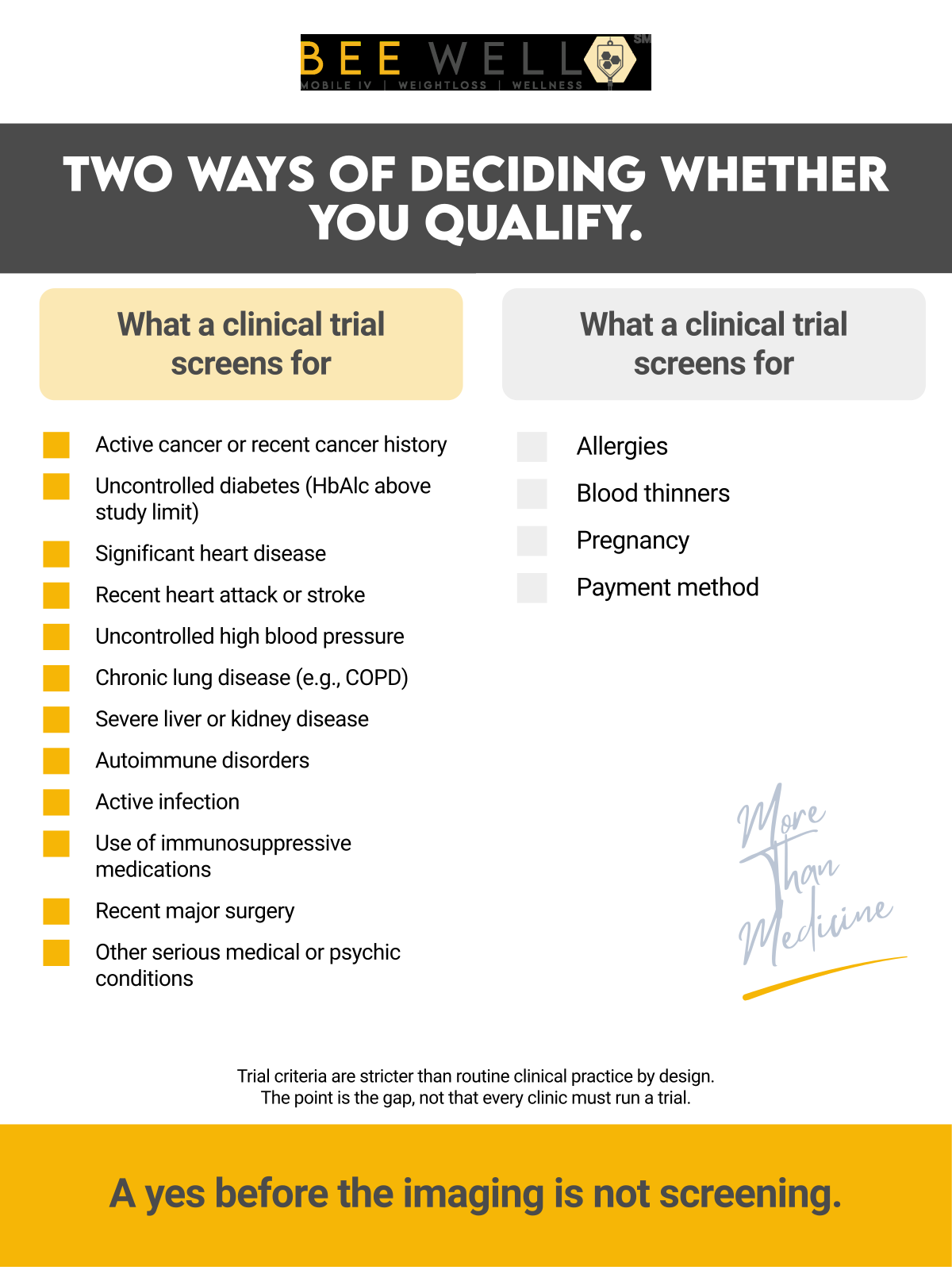
- Every clinic website publishes who is a good candidate. Almost none publish the inverse, so we built it from the exclusion criteria that serious clinical trials actually use.
- The recurring exclusions across major trials are consistent: recent or active malignancy, active infection, immunosuppression, pregnancy or breastfeeding, uncontrolled diabetes, bleeding disorders or anticoagulation, high BMI, joint instability or malalignment, and end-stage arthritis.
- Malignancy is the exclusion with the most substance behind it. Mesenchymal cells promoted breast cancer metastasis in a landmark 2007 mouse study, and the mechanism remains unresolved. Trials exclude cancer patients, which means the trials cannot reassure you.
- Uncontrolled diabetes is worth its own conversation. In animal work, even healthy donor cells failed in diabetic hosts because of the environment they were injected into.
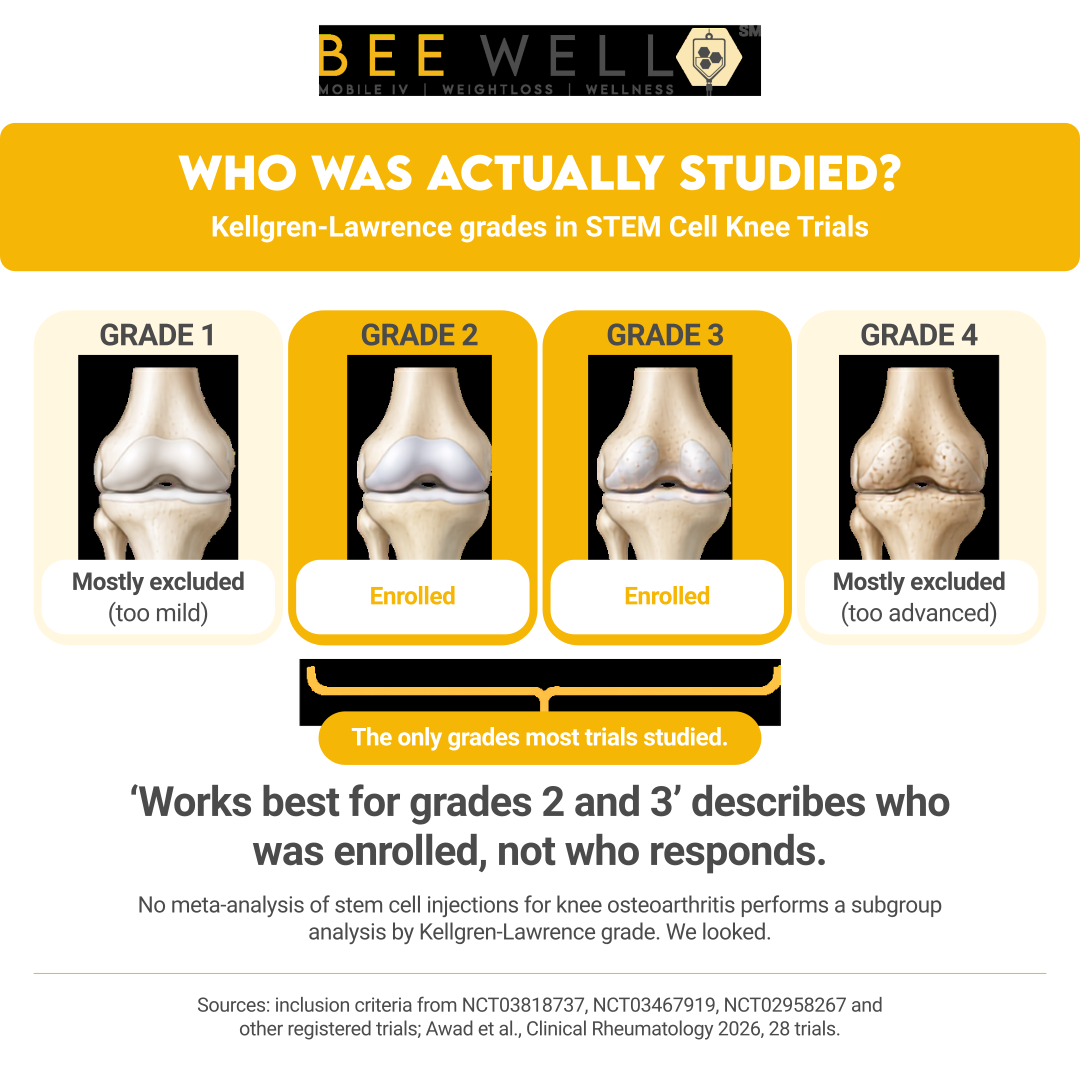
- The claim that stem cells work best for grade 2 and 3 arthritis is not a finding. It is an artifact of trials mostly excluding grade 4 patients.
- If a provider says yes before reviewing your imaging, your history, and your medications, they are not screening you. They are selling to you.
Search for stem cell candidacy and you will find dozens of pages titled who is a good candidate. Nearly all of them say the same thing: adults with mild to moderate joint pain who want to avoid surgery. That description covers most of the adult population over fifty, which is presumably the point.
Almost nobody publishes the inverse, and the inverse is where the useful information lives.
So we built it from a source that cannot be accused of marketing: the exclusion criteria that real, registered clinical trials use when deciding who they will and will not enroll. Those criteria were written by investigators with an interest in the treatment succeeding, and they still exclude a great many people. That tells you something.
We sell regenerative services. Publishing this costs us consultations. We think it is the right document to have on the internet anyway.
What serious trials actually exclude
We pulled the exclusion criteria directly from the registry records of several major mesenchymal stem cell trials, including the largest US knee osteoarthritis trial, a Stanford Phase 3 trial, a Phase 2 trial in Ohio, and systemic trials of licensed cell therapies.
The overlap is striking. These are independent research groups on three continents, and they converge on the same list.
| Exclusion | How it appears in trial protocols |
|---|---|
| Recent or active malignancy | “History of malignancy in the previous 5 years” · “History of malignancy within 2 years prior to screening” · “Malignant tumour or patients with a prior history of any malignant tumour” |
| Active or suspected infection | “Active, suspected, or prior infection to the joint in the targeted knee” · “uncontrolled infection” · active infection at the aspiration or injection site |
| Immunosuppression or immunodeficiency | “Immunosuppressive states” · “Congenital or acquired immunodeficiencies” · “Currently undergoing immunomodulatory therapy” |
| Pregnancy or breastfeeding | Excluded across every trial reviewed. One trial required contraception for 12 months after injection. |
| Uncontrolled diabetes | “Uncontrolled diabetes” · “poorly controlled diabetes (HgA1C >7.0)” · “Uncontrolled endocrine disorder” |
| Bleeding disorders or anticoagulation | “History of bleeding disorders” · “Coagulopathy or anticoagulant treatment” · “Severe bleeding diathesis” |
| High BMI | “BMI >35” · “body mass index greater than 30.5” · one trial required BMI under 30 |
| Inflammatory arthropathy | Rheumatoid arthritis, gout, pseudogout, lupus, crystalline arthropathy, chondrocalcinosis |
| Joint instability or malalignment | Cruciate or collateral ligament instability · “varus or valgus malalignment >5 degrees” · “Significant valgus/varus deformities” |
| End-stage arthritis | “Grade 4 knee osteoarthritis according to the Kellgren-Lawrence scale” excluded outright in several trials |
| Chronic opioid use | “Daily opioid use for the past three months” · “Chronic pain involving multiple body parts or opioid medication management” |
| Active smoking | “Current cigarette smoker” appears as an explicit exclusion in at least one knee trial |
Compare that against the intake form at most cash-pay clinics, which typically asks about allergies, blood thinners, and whether you are pregnant.
Cancer, and the exclusion with the most substance behind it
This is the section where precision matters most, so here is the structure up front. The preclinical concern is real. Clinical evidence that mesenchymal cells have caused human tumors is absent. Documented tumor formation after stem cell treatment has involved different cell types. And because trials exclude cancer patients, the trials cannot reassure you either way.
What is established
In 2007 a team at the Whitehead Institute published a paper in Nature showing that bone marrow-derived human mesenchymal stem cells, mixed with weakly metastatic human breast carcinoma cells, caused the cancer cells to greatly increase their metastatic potency in a mouse model. The mechanism involved a chemokine the mesenchymal cells secreted in response to the tumor.
That paper is the reason every malignancy exclusion criterion exists.
Later work has described the relationship as bidirectional and unresolved, documenting both tumor-promoting mechanisms and tumor-suppressive findings. One review’s conclusion is the honest summary: a sustained effort to understand when these cells promote or suppress tumor development is needed before planning therapy.
What is not established
No trial in the knee osteoarthritis evidence base has reported a tumor. That is genuinely reassuring as far as it goes, and it does not go far. Follow-up in these trials is mostly six to twenty-four months. The longest is five years in twenty-one patients.
The Cochrane review published in 2025 put it in language worth quoting exactly: “The risk of other important harms, including potential concerns related to the use of a therapy with the theoretical capacity to promote cell growth, or to the use of allogeneic cells, remains unknown.”
Unknown is not the same as safe. It is also not the same as dangerous. It is unknown.
The documented tumor cases involved different cells
Two published cases of tumor formation after stem cell treatment are frequently cited, and both involved fetal or neural stem cells rather than the mesenchymal cells used for joints. One was a 2016 New England Journal of Medicine report of a spinal cord lesion in a man who had sought treatment in China, Argentina, and Mexico. The other was a 2009 case of a donor-derived brain tumor in a boy who received fetal neural stem cell transplants in Moscow.
We are being precise about that distinction because conflating them would be unfair. The relevant lesson from those cases is not the cell type. It is the latency. In the 2009 case, four years passed between the first injection and detection.
WHAT THIS MEANS FOR YOU PRACTICALLY
If you have had cancer within the past two to five years, every serious trial protocol we reviewed would exclude you. That is the standard a provider should be applying.
If you have an active malignancy, this is not a close call.
If your cancer history is older than that, it is a conversation to have with your oncologist rather than with a wellness clinic, and it should happen before a consultation rather than during one.
A clinic that does not ask about cancer history at all has told you how carefully it is screening for anything else.
Infection, immune status, and why they compound
Active infection
Universally exclusionary across every protocol reviewed, including infection at the aspiration site, the injection site, or in the target joint.
The Cochrane review notes what applies to every joint injection regardless of what is in the syringe: all invasive joint procedures carry a small risk of septic arthritis.
The real-world evidence on this is not theoretical. A CDC investigation published in JAMA Network Open documented 20 patients across eight states, aged 2 to 89, who developed bacterial infections after receiving umbilical cord blood-derived products marketed as stem cell therapy for pain, osteoarthritis, rheumatoid arthritis, and injury. All but one required hospitalization. Of unopened, undistributed vials sampled for testing, 65 percent were contaminated.
Its conclusion: unapproved stem cell products can expose patients to serious risks without proven benefit.
Immunosuppression
Excluded across the board, and the reason is mechanistic rather than precautionary. Mesenchymal cells are themselves immunosuppressive. That is their primary demonstrated mechanism of action. Introducing an immunosuppressive agent into an already immunosuppressed host compounds infection risk in a way that is entirely predictable.
If you take a biologic for rheumatoid arthritis or psoriasis, chronic steroids, or any transplant-related immunosuppressant, this is the section that applies to you.
Inflammatory arthritis is not osteoarthritis
Rheumatoid arthritis, gout, pseudogout, lupus-related arthritis, and crystalline arthropathies are excluded from these trials, and they are a different disease process from osteoarthritis. The pain can feel identical. The mechanism is not.
If you have not had this distinction confirmed with imaging and bloodwork, that is the first thing to do, and it is far cheaper than an injection.
Uncontrolled diabetes, and the finding nobody writes about
Trials exclude it with a hard number. One Stanford protocol excludes poorly controlled diabetes defined as HbA1c above 7.0.
The interesting part is why, and it goes beyond infection risk.
Research on mesenchymal cells in diabetes has found that long-term exposure to a hyperglycemic environment leaves the cells themselves functionally compromised. One 2017 review put it directly: functionally compromised cells may be therapeutically ineffective, and their impairment may itself contribute to disease progression.
A 2025 animal study went further. In diabetic rats, even healthy donor cells failed to improve bone repair, which the authors attributed to a hostile environment created by hyperglycemia that compromised the cells’ ability to induce bone formation.
Read that carefully, because it changes the conversation. In an uncontrolled diabetic host, good cells did not work. The problem was not the product. It was where the product landed.
If your A1c is above 7 and you are considering a regenerative procedure, getting that number down is not a delay to treatment. It may be the treatment that determines whether anything else works.
The structural disqualifiers
These are the ones a physical exam and a standing X-ray will find in about ten minutes, and they are the most commonly skipped.
Malalignment
Trials exclude varus or valgus deformity beyond about five to ten degrees. The reasoning is mechanical rather than biological. If your leg alignment is loading one compartment of the knee disproportionately, no injection changes that load. Whatever is placed in the joint is working against a force that will still be there next year.
This requires a four-foot standing radiograph to assess properly. A short film of the knee alone will not show it.
Ligament and meniscal instability
Excluded across multiple protocols: complete cruciate or collateral tears, posterolateral corner injury, meniscal instability, and prior subtotal meniscectomy. A joint that moves in ways it should not is a mechanical problem, and mechanical problems have mechanical solutions.
End-stage arthritis, and a claim worth correcting
You will hear that stem cells work best for grade 2 and grade 3 arthritis and are not appropriate for grade 4. The first half of that sentence is not supported by evidence and the second half is true for a reason nobody explains.
We looked for a subgroup analysis by Kellgren-Lawrence grade in the major reviews. The largest, covering 28 randomized trials, ran subgroups by preparation, cell source, comparator, follow-up duration, age, and injection guidance. Not by radiographic grade. No meta-analysis we found performs one, and targeted searches returned nothing.
The reason is that grade 4 patients were mostly excluded from the trials in the first place. The major protocols enrolled mild-to-moderate disease, grades 2 and 3.
So the statement “it works best for grades 2 and 3” is not a finding about who responds better. It is a description of who was studied. An absence of evidence has been converted into a selection criterion and then sold as a clinical insight.
What that means for you: if your knee is bone-on-bone, the honest answer is that this has not been shown to help you, and a surgical consultation is the more useful appointment.
Age, weight, and smoking
Age
There is no evidence-based age cutoff, but trials draw practical lines. Enrollment ranges in the protocols we reviewed run from 18 to 80, with several capping at 70 or 75.
Age has not been shown to predict response in the knee literature, and the honest reason is that the trials were not designed to answer it. If a clinic tells you that you are too old or reassures you that age does not matter, both statements are running ahead of the data.
BMI
Trials exclude at BMI thresholds of 30, 30.5, and 35 depending on the protocol. Weight increases mechanical load on a weight-bearing joint, and it is associated with a systemic inflammatory state that works against what these treatments are hypothesized to do.
We raise this carefully, because it is the exclusion most likely to land as a judgment rather than as information. It is not a moral point. Weight loss of even modest degree has better-established evidence for knee osteoarthritis pain than anything discussed in this article, and that is worth saying out loud in a piece about regenerative services.
Smoking
At least one knee trial excludes current cigarette smokers outright. Nicotine impairs healing through well-established vascular mechanisms, and a procedure premised on a healing response is a poor bet in someone actively suppressing one.
Bleeding, blood thinners, and pregnancy
Anticoagulation
Trials exclude coagulopathy and anticoagulant treatment. One protocol excludes patients who cannot hold antiplatelet therapy before the procedure, on the judgment of the treating provider.
Both halves of that are the point. An injection into a joint in someone fully anticoagulated carries bleeding risk, including hemarthrosis. Stopping anticoagulation to accommodate an elective, unapproved procedure carries its own risk, and that risk belongs to the physician who prescribed it rather than to a wellness clinic.
If you take warfarin, a direct oral anticoagulant, or dual antiplatelet therapy after a stent, this is not a decision to make at a consultation. It is a call to your cardiologist.
Pregnancy and breastfeeding
Excluded from every protocol reviewed, without exception. Federal human subjects rules classify pregnant and breastfeeding women as a vulnerable population, and one trial required contraception for twelve months following injection.
Twelve months is longer than most people would guess for a treatment often described as natural. It reflects genuine uncertainty about what a biological product does over time rather than a specific known hazard, and that uncertainty is the reason.
Chronic opioid use
Trials exclude daily opioid use over the preceding three months, and one excludes chronic pain involving multiple body parts or ongoing opioid management.
The reason is partly measurement. If pain is being managed pharmacologically across several sites, a change at one joint is difficult to attribute. But there is a clinical reason too: widespread pain with central sensitization behaves differently from mechanical joint pain, and an intra-articular injection is aimed at a problem that may not be the main driver.
That is not a moral judgment about pain management. It is a statement that the intervention is aimed at the wrong target.
What a real consent document contains
Consent is where the honesty of a practice becomes a document, and it is worth reading before your appointment rather than during it.
A defensible consent form for an unapproved regenerative treatment covers, at minimum:
- What the product is, including the source tissue, whether it is your own or a donor’s, and the manufacturer.
- That it is not approved by the FDA for your condition, stated plainly rather than buried. Texas requires this language in the one context it directly regulates.
- The known risks, including infection, bleeding, and the transient pain and swelling documented in roughly 12 percent of patients across published series.
- The unknowns, including that long-term safety is untested rather than established and that the Cochrane review describes the risk of other important harms as unknown.
- What the evidence actually shows, including that professional societies currently recommend against these injections for knee and hip osteoarthritis.
- The alternatives, including doing nothing.
- The full cost, what happens to unused sessions, and who provides and pays for care if a complication occurs.
Take it home. Read it somewhere other than a treatment room. If a practice will not send it in advance, that is the answer to a question you did not have to ask.
The harm nobody counts
There is a category of harm in this field that never appears in an adverse event table, and it may be the most common one.
The FDA names it directly among the risks of unapproved regenerative products: failure of the therapy to work as anticipated when approved treatments are available. Its 2019 safety alert put it as delaying treatment with legitimate and scientifically sound options.
In practical terms that looks like nine months and six thousand dollars spent on injections while a knee that needed a mechanical solution kept getting worse, or an inflammatory arthritis that went undiagnosed while it was treated as osteoarthritis, or a mass that was not imaged because the pain had an assumed explanation.
None of those show up as a complication. All of them are costs.
The specific guard against this is diagnostic rather than procedural. Before an elective regenerative procedure, you should have a diagnosis that somebody arrived at through imaging and examination rather than through your description of the pain, and you should have ruled out the things that look similar and are treated differently.
If a provider is willing to inject a joint they have not imaged, ask yourself what else they are willing to skip.
The expectation mismatch
This is not a medical contraindication and it may be the most common reason people are unhappy afterward.
In a study of 1,703 knee replacements, the strongest predictor of dissatisfaction was not the surgery, the implant, or a complication. It was expectations not met, which carried a nearly eleven-fold greater risk of dissatisfaction. Low function scores and preoperative pain at rest followed well behind.
That finding is about knee replacement, and it transfers. Any intervention sold on a promise produces dissatisfied patients when the promise is not met, independent of whether the intervention did anything.
So the expectation-related reasons to wait or to decline:
- You are expecting cartilage to regrow. The controlled evidence does not support that. The Cochrane review notes that radiographic progression was not assessed in any of its 25 included studies, and the large blinded trials that measured joint structure on MRI found no change.
- You are expecting to avoid a replacement you have already been told you need. There is no trial evidence that these injections prevent or delay arthroplasty in patients who are surgical candidates.
- You want a definite answer by next month. Trial timelines run in months, and much of what is felt early is not attributable to the treatment.
- Someone else is pushing you into it. A family member, a sales conversation, a discount that expires Friday. The ISSCR’s patient guidance specifically warns against being rushed or financially enticed.
What a real screening consultation looks like
If a provider is genuinely screening rather than qualifying you for a purchase, the appointment includes most of this.
- A history that covers cancer, autoimmune disease, diabetes with a recent A1c, anticoagulation, immunosuppressants, and current infections. Not a checkbox. A conversation.
- Current imaging, reviewed with you. For a knee, a weight-bearing radiograph at minimum. Someone should tell you your Kellgren-Lawrence grade and what it means.
- A physical examination that assesses alignment, stability, and range of motion.
- A discussion of what has already been tried, including physical therapy, weight management, activity modification, and any injections you have already had.
- An explicit statement of what the evidence supports and does not support, including that no stem cell product is FDA-approved for osteoarthritis and that professional societies currently recommend against these injections.
- A written consent document that describes the product, the route, the known risks, the unknowns, and the absence of approval.
- A named alternative, including the option of doing nothing right now.
The last one is the tell. A provider who cannot articulate a scenario in which you should not proceed has not built the capacity to tell you no.
If the answer is no, what actually helps
Ending an article like this without alternatives would be its own kind of dishonesty.
For knee osteoarthritis specifically, the interventions with the strongest guideline support are unglamorous and well established: structured exercise and physical therapy, weight management where relevant, and appropriate use of analgesics. The American College of Rheumatology strongly recommends intra-articular glucocorticoid injection for short-term relief, and both the ACR and the American Academy of Orthopaedic Surgeons describe that benefit as short-term rather than durable.
Where disease is advanced and function is genuinely limited, arthroplasty has decades of registry data behind it. Ten-year implant survival is about 96 percent and twenty-year survival about 90 percent. It is also not a small thing: roughly one in five patients reports dissatisfaction, and long-term pain outcomes are unfavorable in about 20 percent. Those numbers deserve to be in front of you alongside the alternative, not hidden behind it.
Sometimes the right answer is to wait. Osteoarthritis symptoms fluctuate substantially on their own, and a decision made during a bad flare is a decision made on the worst available data.
If the answer is yes, what should happen next
Suppose you clear every exclusion in this article. You have no cancer history, no active infection, no immunosuppression, controlled diabetes, no anticoagulation, a BMI within range, a stable and reasonably aligned joint, and grade 2 or 3 arthritis on a recent weight-bearing film.
You are, by the standards of the trials, an eligible patient. Here is what should happen before anyone injects anything.
- Someone tells you what the evidence actually shows for a patient like you, including that professional societies currently recommend against these injections and that the average measured effect in the best meta-analysis sits below what most patients notice.
- You get a written quote covering the full protocol, not one session, with refund terms and expiration.
- You record a baseline. Pain scores and a validated function questionnaire, before treatment. Without this you will not be able to tell whether it worked, and neither will your provider.
- You agree in advance on what failure looks like. A defined outcome and a defined timepoint. A treatment with no failure condition cannot be evaluated, and that is a design choice rather than an oversight.
- You know who to call and when, including which symptoms mean same-day care.
- Your other physicians know. Your primary care physician and any specialist involved in your joint should be aware of what you received and when.
Being a candidate is not the same as being obligated. Eligible patients decline treatment for good reasons all the time, most often after seeing the evidence laid out honestly, and that is a legitimate outcome rather than a failed consultation.
How Bee Well℠ screens
We deliver regenerative wellness services at homes and offices across Dallas, Fort Worth, Frisco, Denton, Southern Oklahoma, and California, under Texas-licensed physician oversight, administered by licensed nurses.
Our consultations are free, which means we have no financial reason to say yes at the end of one. We ask about the history above, we ask to see your imaging, we ask what else you have tried, and we tell you what the evidence supports rather than what a brochure says.
A meaningful share of those conversations end with us recommending something other than a regenerative service: an orthopedic consultation, physical therapy, a rheumatology referral, better glycemic control, or simply waiting. We would rather be the practice that told you the truth than the one that took the booking.
If you read this and recognized yourself in one of the exclusion categories, that is the article working. Call us anyway and we will help you figure out what the right next appointment is, even if it is not with us.
References
- Whittle SL, Johnston RV, McDonald S, et al. Stem cell injections for osteoarthritis of the knee. Cochrane Database of Systematic Reviews. 2025;4(4):CD013342.
- ClinicalTrials.gov records NCT03818737 (MILES, Emory University), NCT03467919 (Stanford University), NCT02958267 (OhioHealth), NCT02351011 (Toronto), NCT03943576, NCT01586312.
- Karnoub AE, Dash AB, Vo AP, et al. Mesenchymal stem cells within tumour stroma promote breast cancer metastasis. Nature. 2007;449(7162):557-563.
- Liang W, Chen X, Zhang S, et al. Mesenchymal stem cells as a double-edged sword in tumor growth: focusing on MSC-derived cytokines. Cell Mol Biol Lett. 2021;26(1):3.
- Hmadcha A, Martin-Montalvo A, Gauthier BR, Soria B, Capilla-Gonzalez V. Therapeutic Potential of Mesenchymal Stem Cells for Cancer Therapy. Front Bioeng Biotechnol. 2020;8:43.
- Hartnett KP, Powell KM, Rankin D, et al. Investigation of Bacterial Infections Among Patients Treated With Umbilical Cord Blood-Derived Products Marketed as Stem Cell Therapies. JAMA Netw Open. 2021;4(10):e2128615.
- van de Vyver M. Intrinsic Mesenchymal Stem Cell Dysfunction in Diabetes Mellitus: Implications for Autologous Cell Therapy. Stem Cells Dev. 2017;26(14):1042-1053.
- Souza ATP, Freitas GP, Lopes HB, et al. Diabetes Mellitus Impairs the Bone Regeneration Capacity of Mesenchymal Stromal Cell-Based Therapy. Arch Med Res. 2025;56(6):103234.
- Awad G, Saad JP, Hamyeh A, Boutros M. Efficacy and safety of intra-articular mesenchymal stem cell-based therapies in knee osteoarthritis: a systematic review and meta-analysis of randomized controlled trials. Clin Rheumatol. 2026;45(5):2905-2942.
- Bourne RB, Chesworth BM, Davis AM, Mahomed NN, Charron KD. Patient satisfaction after total knee arthroplasty: who is satisfied and who is not? Clin Orthop Relat Res. 2010;468(1):57-63.
- Kolasinski SL, Neogi T, Hochberg MC, et al. 2019 American College of Rheumatology/Arthritis Foundation Guideline for the Management of Osteoarthritis of the Hand, Hip, and Knee. Arthritis Rheumatol. 2020;72(2):220-233.
- Bayliss LE, Culliford D, Monk AP, et al. The effect of patient age at intervention on risk of implant revision after total replacement of the hip or knee. The Lancet. 2017;389(10077):1424-1430.
- International Society for Stem Cell Research. A Closer Look at Stem Cells: Patient Handbook. February 2024.
- U.S. Food and Drug Administration. Important Patient and Consumer Information About Regenerative Medicine Therapies. Content current as of April 8, 2024.
DISCLAIMER
This content is for educational purposes only and does not constitute medical advice. It is not a substitute for consultation with a qualified healthcare provider. No exosome product is approved by the U.S. Food and Drug Administration, and individual results cannot be predicted or guaranteed.
If you develop fever, spreading redness, worsening pain, or difficulty breathing after any injection or infusion, seek emergency care immediately rather than waiting to reach the practice that treated you. Call 911 for a medical emergency.