Key Takeaways
- Your face changed because you lost the fat that was supporting it. Imaging work published in 2025 measured a median 9 percent drop in midfacial volume among GLP-1 patients, roughly 7 percent per 10 kilograms lost.
- The loss is preferentially superficial fat, which is the opposite of what intrinsic aging does. Aging hits the deep medial cheek hardest. That difference has treatment implications almost nobody discusses.
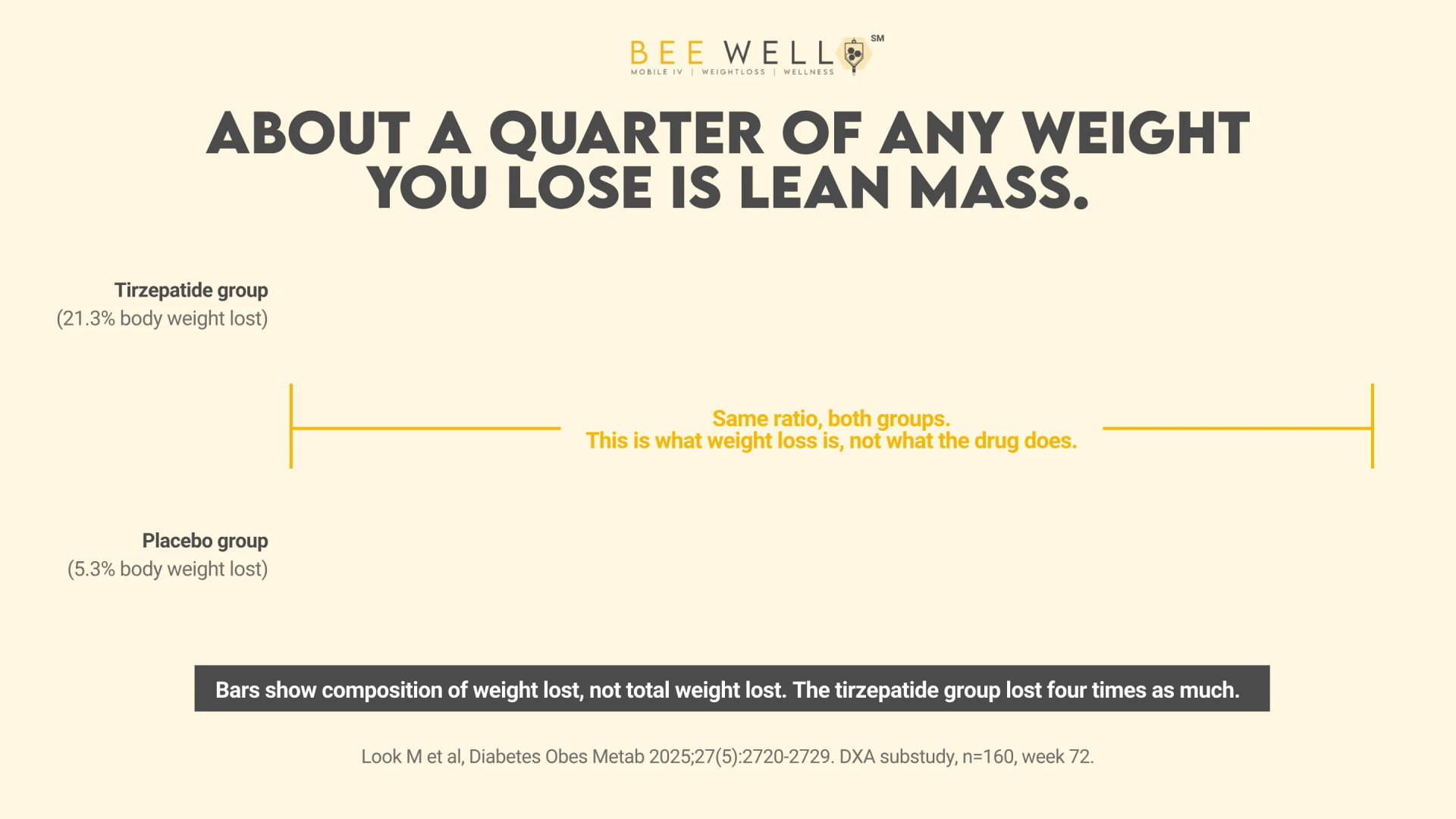
- About 25 percent of the weight you lose is lean mass. In the SURMOUNT-1 body composition substudy that ratio was identical in the placebo group, which means it is a property of weight loss rather than a side effect of the drug.
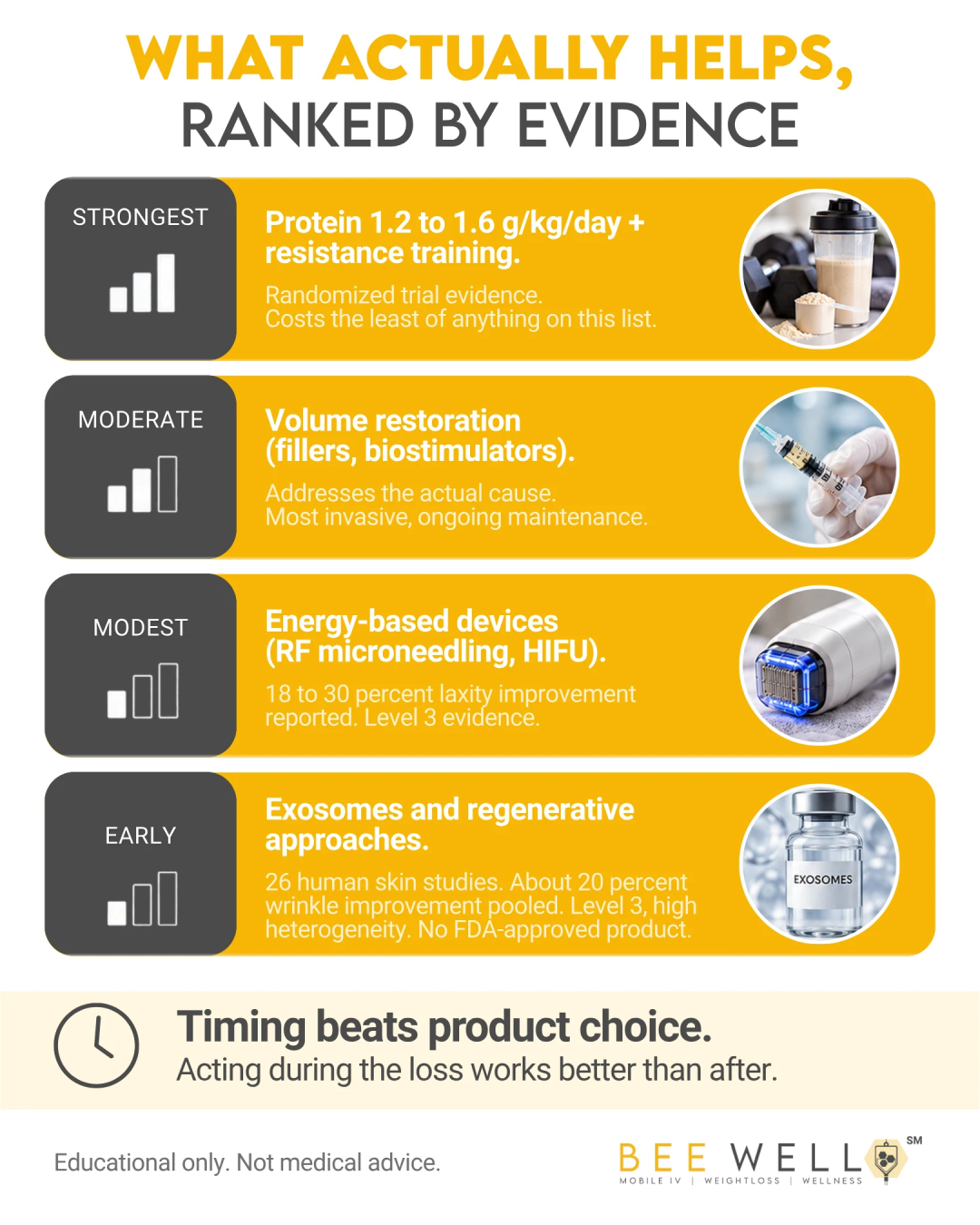
- Protein and resistance training have the strongest evidence for protecting lean mass, and they are the cheapest thing on this list. Target 1.2 to 1.6 grams of protein per kilogram per day.
- Energy-based devices have modest, real evidence. A 2025 systematic review of 45 studies reported laxity improvements of 18 to 30 percent, at Level 3 evidence.
- Exosomes for skin have 26 human studies behind them and pooled wrinkle improvement of about 20 percent, self-graded by its authors as Level 3 with heterogeneity limiting generalizability. That is a supporting role, not an answer to volume loss.
What is actually happening to your face
“Ozempic face” is a nickname, not a diagnosis, and the thing it describes has happened after every form of rapid weight loss for as long as people have been losing weight quickly. What is new is the number of people it is happening to at once.
One correction while we are here, because nearly every article on this gets it backwards. The term was coined by New York dermatologist Paul Jarrod Frank and first appeared in print in Town & Country in November 2022. The New York Times piece that people usually credit ran about eight weeks later, in January 2023.
The mechanism is straightforward. Facial fat sits in discrete compartments beneath the skin and gives the midface its structure. Lose that volume quickly and the skin that was draped over it has nowhere to go.
Someone finally measured it
A 2025 study in Otolaryngology-Head and Neck Surgery took CT and MR imaging from 20 patients before and after GLP-1 treatment and quantified the change. Median age 54, mean treatment duration 321 days, mean weight loss 11 kilograms.
Median total midfacial volume decreased 9 percent. Superficial fat dropped 11 percent. Deep fat dropped 7 percent. The headline figure the authors derived: roughly 7 percent loss of midfacial volume per 10 kilograms of total body weight lost.
Two caveats belong with those numbers. Twenty patients is a small, retrospective, single-center sample of convenience imaging. And the authors themselves describe it as one of the first quantitative assessments of the phenomenon, which is a polite way of saying the literature is thin.
The detail that changes the treatment conversation
Weight loss correlated with superficial fat loss but not with deep fat loss. That is the reverse of intrinsic aging.
Anatomical work going back to Rohrich and Pessa’s 2007 cadaver dissections established that facial fat is partitioned into independent compartments, and that “the face does not age as a confluent or composite mass.” Radiographic aging studies since have shown that aging preferentially deflates the deep medial cheek and shifts volume downward within compartments.
So GLP-1 volume loss and facial aging are not the same process wearing the same face. One thins the superficial layer, the other empties the deep one. A treatment plan built for aging is not automatically the right plan here, and we have not seen a single consumer article make that point.
What this rules out is anything sold as repairing damage the medication caused to your skin. There is no such damage. There is less fat under the skin you already had.
What you actually lost: fat, and some muscle
The muscle question moved from niche to mainstream this year, and it is worth getting the numbers right because both the alarmist and the dismissive versions are circulating.
The cleanest data comes from the SURMOUNT-1 body composition substudy, published in 2025, which ran DXA scans on 160 participants at baseline and week 72. In the tirzepatide group, body weight fell 21.3 percent, fat mass 33.9 percent, and lean mass 10.9 percent.
Of the weight lost, approximately 75 percent was fat mass and 25 percent was lean mass. The finding that matters most: that ratio was the same in the placebo group. It held across sex, age band, and weight-loss tertile.
So losing about a quarter of your weight as lean tissue is not something the medication does to you. It is what weight loss is, and it has always been true. What the medication changes is how much total weight comes off and how fast.
In the semaglutide STEP 1 substudy, total lean body mass fell 9.7 percent while fat mass fell 19.3 percent, and lean mass as a proportion of total body mass increased by 3 percentage points. That substudy was explicitly exploratory, without multiplicity correction or p-values, so treat the commonly circulated “39 percent of weight lost was lean mass” figure with suspicion. It is derived, not reported.
A 2024 review in Diabetes, Obesity and Metabolism gives the honest spread: “In some studies, reductions in lean mass range between 40% and 60% as a proportion of total weight lost, while other studies show lean mass reductions of approximately 15% or less.” It also flags a measurement problem worth knowing, that lean mass on a DXA scan includes organs, bone, and fluid rather than muscle alone.
And a 2026 study in Cell Reports Medicine argued the opposite direction, concluding that weight loss with GLP-1 medicines “does not result in a disproportionate loss of muscle mass or function” in obese mice and humans. This is a live scientific disagreement, not a settled fact, and anyone presenting it as settled is selling something.
Why muscle matters beyond the mirror
One statistic makes the case better than any argument about aesthetics.
Each kilogram of muscle lost reduces resting energy expenditure by roughly 13 kilocalories per day. Each kilogram of fat lost reduces it by about 4. Lose lean tissue and you lower the floor of your own metabolism, which is one reason regain after aggressive weight loss is so common and so hard.
Muscle is also part of the facial story. Losing lean mass across the body does not spare the head and neck.
The 2026 research everyone is citing
In June 2026 a Stanford-led team published work in PNAS on inhibiting an enzyme called 15-PGDH during GLP-1 induced weight loss. It has been widely covered, and it is worth being precise about what it did and did not show.
In mice on a high-fat diet, semaglutide alone caused significant loss of muscle mass while preserving contractile function. After an induced muscle injury, semaglutide reduced one kind of pathological remodeling but produced smaller regenerated muscle fibers. Adding the 15-PGDH inhibitor overcame that regenerative deficit, boosting muscle stem cell function and fiber growth without compromising weight loss.
What it did not show: any human data at all. The benefit was demonstrated in the context of experimental muscle injury rather than ordinary weight loss. No approved drug does this. And it says nothing whatsoever about skin or facial volume. If you see this study cited as relevant to “Ozempic face,” that connection was invented by whoever wrote the article.
What it does confirm is the mechanism people were already worried about, and it strengthens the case for the unglamorous interventions that protect lean mass while you are actually losing.
The interventions, ranked by how much support each has
| Intervention | What it addresses | Evidence | Practical note |
|---|---|---|---|
| Protein 1.2 to 1.6 g/kg/day plus resistance training | Lean mass preservation during active loss | Randomized trial evidence; S-LITE showed lean mass gain with medication plus supervised training | Cheapest item here. Works during the loss, not after. |
| Volume restoration (filler, biostimulator) | The actual cause of midface hollowing | Established aesthetic practice | Most direct answer. Most invasive, requires maintenance. Belongs with an injector. |
| Radiofrequency microneedling | Mild to moderate skin laxity | 42 higher-quality studies reviewed; remodeling continues past 6 months | Slow and progressive. Judge at six months. |
| High-intensity focused ultrasound | Lower face, neck, periorbital laxity | 45 studies, 18 to 30 percent laxity improvement, Level 3 | Protocols are not standardized. Long-term efficacy not established. |
| Exosome-based approaches | Skin quality, not volume | 39 human studies pooled; about 20 percent wrinkle improvement, Level 3 | No FDA-approved product. Supportive role only. |
| Surgical skin removal | True excess skin after major loss | Decades of post-bariatric contouring literature | The only answer where skin is genuinely redundant. |
Protein and resistance training
This is the intervention with the strongest evidence and the least appeal, which is exactly why it gets skipped.
Current clinical guidance for patients on GLP-1 medications converges on 1.2 to 1.6 grams of protein per kilogram of body weight per day, with diminishing returns above that. The International Society of Sports Nutrition position stand recommends 1.4 to 2.0 grams per kilogram per day for building and maintaining muscle mass, with 20 to 40 grams per serving distributed every three to four hours.
One correction worth making, since it circulates constantly: the frequently quoted “2.3 to 3.1 grams per kilogram of fat-free mass” figure is not from the ISSN protein position stand. It comes from natural bodybuilding contest-preparation literature. Do not let anyone hand you that number as a general recommendation during weight loss.
On training, the S-LITE trial found that liraglutide combined with supervised resistance and aerobic exercise produced better weight loss and allowed patients to gain lean mass, an outcome not achieved with medication alone.
There is also a pharmacological proof of concept. In the BELIEVE trial, adding the myostatin inhibitor bimagrumab to semaglutide reduced the lean-mass fraction of total weight lost from roughly 21 percent to about 7 percent. That is not something you can ask for at an appointment today, and it is strong evidence that the lean mass fraction is modifiable rather than fixed.
Energy-based skin treatments
Radiofrequency microneedling, radiofrequency, and focused ultrasound aim at collagen remodeling and have a reasonable record for mild to moderate laxity.
A critical 2021 review in Dermatologic Surgery restricted to randomized, split-body, or blinded studies found 42 higher-quality trials, 14 of them for skin rejuvenation, and concluded the approach is effective, repeatable, and safe including in darker skin phototypes. Its most useful line for setting expectations: “RFMN-induced dermal remodeling and neocollagenesis are slow and progressive but continue to improve even 6 months after treatment.”
A 2025 systematic review of 45 high-intensity focused ultrasound studies reported skin laxity improvements of 18 to 30 percent, particularly in the lower face, neck, and periorbital area, with under 5 percent of patients reporting transient redness, swelling, or discomfort. It was graded Level 3 evidence, and the authors noted that protocol standardization remains a key challenge and long-term efficacy is not established.
Honest summary: real, modest, non-standardized, frequently industry-affiliated, and no evidence that devices substitute for surgery in true excess-skin cases.
Volume restoration
Fillers and biostimulators address the actual cause, which is lost volume. For midface hollowing this is the most direct answer available. It is also the most invasive and the most expensive to maintain. It belongs with an injector, and it is not a service we provide, which is why this section is short and why we refer out.
Topical and nutritional support
Retinoids and consistent sun protection have long records for skin quality. Nutrient status matters too, and rapid weight loss on substantially reduced intake is a common time for gaps to appear, including the iron and vitamin D deficiencies that show up in hair-loss workups.
Is this even a real clinical entity?
Worth pausing on, because there is a genuine argument in the literature and most coverage skips it entirely.
A 2024 paper in the Journal of Drugs in Dermatology asked directly whether “Ozempic face” is “a novel or a natural consequence of rapid weight loss,” and framed the term as a social media phenomenon in need of demystifying. A 2025 systematic review in Aesthetic Surgery Journal Open Forum reviewed 23 articles and analyzed public perceptions, and it drew a published rebuttal in 2026 arguing over whether this is a construct, a consequence, or a clinical entity.
The skeptical case is straightforward. People who lose 40 pounds by any method look different in the face. Naming that after a drug turns an ordinary physiological outcome into a branded pathology, which is convenient for anyone selling a treatment for it.
The case on the other side is the scale and speed. A Google Trends analysis published in 2026 found interest in the term rose about 4,600 percent between late 2021 and the end of 2024. Whatever you call it, a lot of people are experiencing something they did not expect and want addressed.
Our position is that the label does not much matter and the mechanism does. What is happening is volume loss. Treating it as a novel disease invites novel and expensive answers. Treating it as accelerated volume loss points you toward interventions that have been studied for decades.
One note on the consensus guidance that has emerged. A 2025 international Delphi study produced the first global consensus statements on managing aesthetic needs in medication-driven weight loss patients, identifying skin and the superficial and deep fat pads as the layers most affected. It is genuinely useful, and the panel was heavily affiliated with an aesthetics manufacturer, including one author employed by it. Read it, and read the disclosure.
The things that go wrong that nobody talks about
Two practical issues come up repeatedly in our weight loss program and rarely in articles about facial appearance.
Nutrient gaps
When intake drops sharply and appetite disappears, gaps appear. That shows up in skin quality, in hair, in energy, and in how well you tolerate the medication itself. Protein is the one everyone discusses. Iron, vitamin D, and B12 are the ones that show up on labs.
In one review of 2,851 women evaluated for hair shedding, ferritin was low in 46.5 percent of those tested and outright iron deficiency was present in 29.5 percent. Those women were not all on GLP-1 medications, but the pattern of low intake producing measurable deficiency is the same mechanism.
Baseline labs at the start of a protocol and a repeat at three to six months is not an upsell. It is how you find the thing that is actually causing the symptom you are worried about.
Hydration
Reduced appetite tends to reduce fluid intake alongside food, and in a Texas summer that adds up faster than people expect. Dehydration affects skin appearance directly and makes the fatigue that already comes with a caloric deficit considerably worse. It is the least glamorous item in this entire article and one of the more consequential.
This is also where a mobile IV practice has an obvious commercial interest, so take the recommendation for what it is: drink more water, watch your electrolytes if you are sweating, and do not assume an infusion is the fix for a habit problem.
When surgery is the honest answer
There is a point past which no device, injectable, or regenerative service is the right recommendation, and a practice that will not say so is not being straight with you.
Where there is genuine excess skin rather than laxity, particularly on the body after 80 or 100 pounds of loss, the intervention that addresses it is surgical removal. The post-bariatric contouring literature is decades deep on this, and the histology explains why non-surgical approaches underperform there: the collagen architecture has changed, with fewer thick fibers, more thin fibers, and increased elastic fiber density in skin that has been stretched and then emptied.
For the face specifically, deep volume loss in an older patient with reduced elasticity is a plastic surgery or injector conversation rather than a wellness one.
The systematic review evidence on energy-based devices supports this boundary rather than blurring it. Reported laxity improvements of 18 to 30 percent are real and meaningful for mild to moderate cases, and none of that literature demonstrates that devices substitute for surgery in true excess-skin cases. Any practice telling you otherwise is describing a business model, not a result.
We do not perform surgery and we do not inject filler. When those are the right answer, we say so and refer, which is a shorter conversation than the alternative and a better one.
Why timing matters more than product choice
Nearly everyone arrives at this question after the weight is off, which is the harder version of the problem.
Skin has some ability to retract, and that ability declines with age. The commonly repeated claim that you lose about 1 percent of collagen per year after age 20 traces back to a 1975 study of forearm skin thickness and collagen. That study did establish that skin collagen decreases with age and is lower in women at all ages. The specific 1 percent figure is a slope derived from its data rather than a number the paper reports, and every consumer page states it flatly anyway.
What has actually been measured in this population is more interesting. A 2021 study compared epigastric skin from 20 post-bariatric massive weight loss patients against 20 patients with obesity, matched for age. The massive weight loss group showed fewer thick collagen fibers, more thin collagen fibers, and increased elastic fiber density, with no difference in total collagen quantity.
In plain terms, the structural quality of the collagen changed rather than the amount. That helps explain why contouring results after massive weight loss are limited, and why skin that has been stretched and then left unsupported responds less well than skin that was supported during the loss.
If you are three months into a GLP-1 protocol and starting to notice changes in your face, that is the moment for this conversation. Not at month eighteen.
Where exosomes honestly fit
We offer exosome services, so this is the section where we have the most to gain from overselling. Here is the actual evidence.
A systematic review and meta-analysis published in Aesthetic Surgery Journal in 2026 pooled 39 human studies of exosome-based therapies in aesthetic medicine, 26 in skin and 13 in hair. Facial wrinkle reduction averaged 20.2 percent with a confidence interval of 15.3 to 25.2 percent. Other skin outcomes including pigmentation, elasticity, texture, and erythema improved between 14.7 and 23.4 percent.
Those are real, measured, pooled effects, and they are not nothing. They also come with the authors’ own qualifications: study designs were mixed, with randomized trials in the minority, and they wrote that “heterogeneity and nonstandardized protocols limit generalizability.” They graded their own work Level 3 evidence.
A second 2026 systematic review in the same journal was blunter about the state of the field: “Despite compelling preclinical evidence, human clinical studies remain scarce,” and “current human evidence is predominantly based on early-phase trials, case series, and observational studies.” Its meta-analysis pooled 21 preclinical studies in 323 animals rather than human trials.
There is no FDA-approved exosome product in the United States, and nobody can tell you what your result will be.
So the honest placement is supportive. Exosome-based approaches sit alongside skin-quality interventions and do not substitute for protein, resistance training, or volume restoration. Anyone positioning exosomes as the answer to post-weight-loss facial changes is overselling a 20 percent pooled improvement on heterogeneous, largely unblinded scales as though it were a volume treatment. It is not. It cannot restore fat you no longer have.
We include it here because patients ask about it constantly and deserve a straight answer rather than either a sales pitch or a dismissal.
What a realistic result looks like
Expectation setting is most of what determines whether people are satisfied with any of this, so here are the numbers stated as plainly as we can put them.
If you lost 11 kilograms on a GLP-1, the imaging data suggests roughly 7 to 9 percent of your midfacial volume went with it. Nothing on the non-surgical menu restores that volume except filler or a biostimulator, both of which are additive rather than regenerative and both of which require maintenance.
Skin-quality interventions do something different. Energy-based devices report laxity improvements in the 18 to 30 percent range on non-standardized scales, and the collagen remodeling behind that is slow, continuing to improve for at least six months after treatment. Exosome-based approaches report around 20 percent pooled improvement in wrinkles and 15 to 23 percent in pigmentation, elasticity, texture, and erythema, on evidence its own authors graded Level 3.
Those are percentage improvements on rating scales, not percentages of your face. A 20 percent improvement in a wrinkle score is visible to a clinician comparing standardized photographs. It is not the same thing as looking the way you did at your heaviest weight, and no honest provider will tell you otherwise.
Track it the way the studies do
If you are going to spend money on this, set a baseline first. Standardized photographs, same lighting, same distance, same angles, same time of day, taken before you start and again at three and six months. Most people cannot recall their own face accurately across six months, which is why satisfaction with these treatments correlates so poorly with measured change.
There is a useful signal in the hair literature about exactly this gap. In one blinded series, 95 percent of patients perceived improvement, clinical raters saw it in 70 percent, and instrument measurement found it in 50 percent. The further you move from measurement toward impression, the better everything looks.
And the interventions with the best return are still the boring ones
Protein at 1.2 to 1.6 grams per kilogram costs the price of groceries. Resistance training twice a week costs the price of a gym membership or nothing at all. Between them they have better evidence for protecting the tissue you are trying to keep than anything else discussed in this article, and they work during the loss when intervention is most effective.
We sell regenerative services. We are telling you the free things work better. That is not modesty, it is what the evidence says.
If your hair is thinning too
This comes up in most of these conversations, and it deserves its own flag.
A 2026 systematic review found semaglutide and tirzepatide had the highest reported incidence of hair loss among GLP-1 medications, with androgenetic alopecia and telogen effluvium the predominant subtypes. Tirzepatide, which produces the greatest weight loss, was most frequently linked to telogen effluvium. Reported risk with semaglutide appeared dose-dependent, and women appeared disproportionately affected. Causality is not established.
Telogen effluvium usually follows its trigger by about three months and, by definition, the acute form lasts under six months. A meaningful share of GLP-1-associated shedding resolves on its own once the trigger settles.
Which means the right first step is labs, not a treatment package. Thyroid function, complete blood count, iron studies with ferritin, and vitamin D. In one review of 2,851 women with telogen effluvium, ferritin was low in 46.5 percent of those tested.
We wrote a full comparison of the hair treatment options, including what the evidence supports and what it does not, and it is linked below.
How Bee Well℠ approaches this alongside a weight loss protocol
We run a medical weight loss program, which means we usually see this from the front end rather than as a repair job, and that changes what we can do about it.
When someone starts a GLP-1 protocol with us, lean mass protection is part of the plan from week one rather than a conversation at month twelve. Protein targets in the 1.2 to 1.6 grams per kilogram range. Resistance training guidance. Nutrient support where labs indicate it. Hydration, which matters more than people expect when intake drops sharply.
For patients already well into their loss, we talk through what is realistic, what belongs with an injector or a dermatologist rather than with us, and where regenerative services might contribute at the margins. Some of those conversations end with us recommending someone else. That is the correct outcome more often than this industry likes to admit.
Every consultation and every service happens at your home or office across Dallas, Fort Worth, Frisco, Denton, Southern Oklahoma, and California, delivered by licensed nurses under Texas-licensed physician oversight.
References
- Sharma RK, Vittetoe KL, Barna AJ, et al. Radiographic Midfacial Volume Changes in Patients on GLP-1 Agonists. Otolaryngol Head Neck Surg. 2025;173(2):360-366.
- Look M, Dunn JP, Kushner RF, et al. Body composition changes during weight reduction with tirzepatide in the SURMOUNT-1 study. Diabetes Obes Metab. 2025;27(5):2720-2729.
- Wilding JPH, Batterham RL, Calanna S, et al. Once-Weekly Semaglutide in Adults with Overweight or Obesity. N Engl J Med. 2021;384(11):989-1002, and the STEP 1 DXA body composition substudy.
- Neeland IJ, Linge J, Birkenfeld AL. Changes in lean body mass with glucagon-like peptide-1-based therapies and mitigation strategies. Diabetes Obes Metab. 2024;26(Suppl 4):16-27.
- Langer HT, Gilmore NK, Hayden CMT, et al. Weight loss with GLP-1 medicines does not result in a disproportionate loss of muscle mass or function in obese mice and humans. Cell Rep Med. 2026;7(3):102665.
- Nalbandian M, Lone J, Le Moal E, et al. 15-PGDH inhibition promotes muscle repair and strength recovery during GLP-1 receptor agonist-induced weight loss. PNAS. 2026;123(23):e2606533123.
- Shaw ML. GLP-1 Therapies in 2026: Beyond Blood Sugar and the Scale. AJMC. June 9, 2026.
- Jäger R, Kerksick CM, Campbell BI, et al. International Society of Sports Nutrition Position Stand: protein and exercise. J Int Soc Sports Nutr. 2017;14:20.
- Rohrich RJ, Pessa JE. The fat compartments of the face: anatomy and clinical implications for cosmetic surgery. Plast Reconstr Surg. 2007;119(7):2219-2227.
- Gierloff M, Stöhring C, Buder T, et al. Aging changes of the midfacial fat compartments: a computed tomographic study. Plast Reconstr Surg. 2012;129(1):263-273.
- Shuster S, Black MM, McVitie E. The influence of age and sex on skin thickness, skin collagen and density. Br J Dermatol. 1975;93(6):639-643.
- Rocha RI, Junior WC, Modolin MLA, et al. Skin Changes Due to Massive Weight Loss: Histological Changes and the Causes of the Limited Results of Contouring Surgeries. Obes Surg. 2021;31(4):1505-1513.
- Tan MG, Jo CE, Chapas A, Khetarpal S, Dover JS. Radiofrequency Microneedling: A Comprehensive and Critical Review. Dermatol Surg. 2021;47(6):755-761.
- Haykal D, Sattler S, Verner I, Madhumita M, Cartier H. A Systematic Review of High-Intensity Focused Ultrasound in Skin Tightening and Body Contouring. Aesthet Surg J. 2025;45(7):690-698.
- Stack ER, Spongberg C, Braud SC, Stanton WN, Elway M. Clinical Advances in Exosome-Based Therapies for Aesthetic Medicine: A Systematic Review and Meta-analysis of Human Clinical Trials. Aesthet Surg J. 2026;46(12 Suppl 2):S13-S25.
- Gupta AK, Teasell EM, Economopoulos V, Mirmirani P. GLP-1 therapies and hair loss: A systematic review of current evidence and implications for counseling. Science Progress. 2026;109(2).
This content is for educational purposes only and does not constitute medical advice. It is not a substitute for consultation with a qualified healthcare provider. No exosome product is approved by the U.S. Food and Drug Administration, and individual results cannot be predicted or guaranteed.
If you develop fever, spreading redness, worsening pain, or difficulty breathing after any injection or infusion, seek emergency care immediately rather than waiting to reach the practice that treated you. Call 911 for a medical emergency.