TL;DR
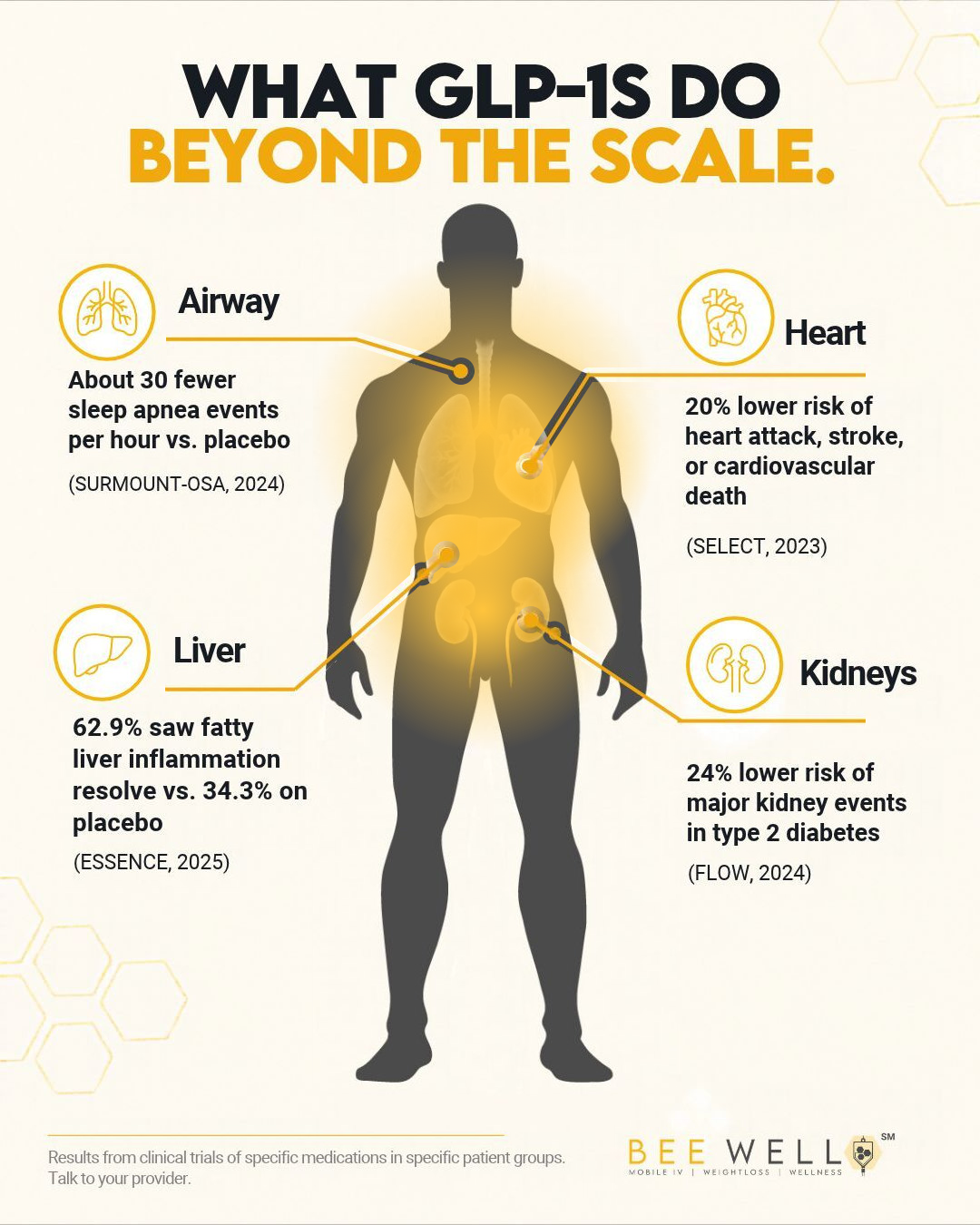
GLP-1 medications have been tested far beyond weight loss. In large trials, semaglutide lowered the risk of heart attack, stroke, and cardiovascular death by 20% in people with heart disease, protected kidney function in people with type 2 diabetes, and cleared liver inflammation in about 63% of people with advanced fatty liver disease. Tirzepatide cut sleep apnea events by about 30 per hour. Each result led to an FDA approval for a specific brand and patient group, so whether any of it applies to you is a conversation for your provider.
Key Takeaways
- The heart benefit of semaglutide showed up whether people lost a lot of weight or very little.
- Waist size predicted heart protection better than total weight lost.
- The kidney trial was stopped early because the results were already clear.
- These approvals cover specific branded drugs, doses, and patients. They don’t transfer automatically to every GLP-1 prescription.
Most people start a GLP-1 because of the number on the scale. That’s a fine reason. But after four large clinical trials and four new FDA approvals since 2024, the scale is starting to look like the least interesting thing these medications affect.
If you stopped your GLP-1 once you hit your goal weight, or never started because you only had a little to lose, this is worth your time.
What does a GLP-1 actually do in the body?
GLP-1 (glucagon-like peptide-1) is a hormone your gut releases after you eat. It tells your pancreas to release insulin, slows how quickly your stomach empties, and signals your brain that you’re full. GLP-1 medications such as semaglutide and tirzepatide copy that hormone and last much longer than the natural version, which your body clears in minutes. Tirzepatide also acts on a second hormone, GIP.
Here’s the part that matters for this article. GLP-1 receptors aren’t limited to the gut and brain. They also show up in tissues including blood vessels, the heart, and the kidneys. That’s one reason researchers suspected these drugs might do more than reduce appetite, and why they spent the last several years testing that idea in trials with thousands of people.
Do GLP-1s lower the risk of heart attack and stroke?
For adults who already have heart disease and carry extra weight, yes. The evidence comes from one of the largest trials ever run on a weight management drug.
SELECT followed 17,604 adults across 41 countries for more than three years. Everyone was 45 or older, had a BMI of at least 27, and had established heart disease: a prior heart attack, a stroke, or peripheral artery disease. Nobody in the trial had diabetes. Half took weekly semaglutide 2.4 mg and half took a placebo, on top of their usual care.
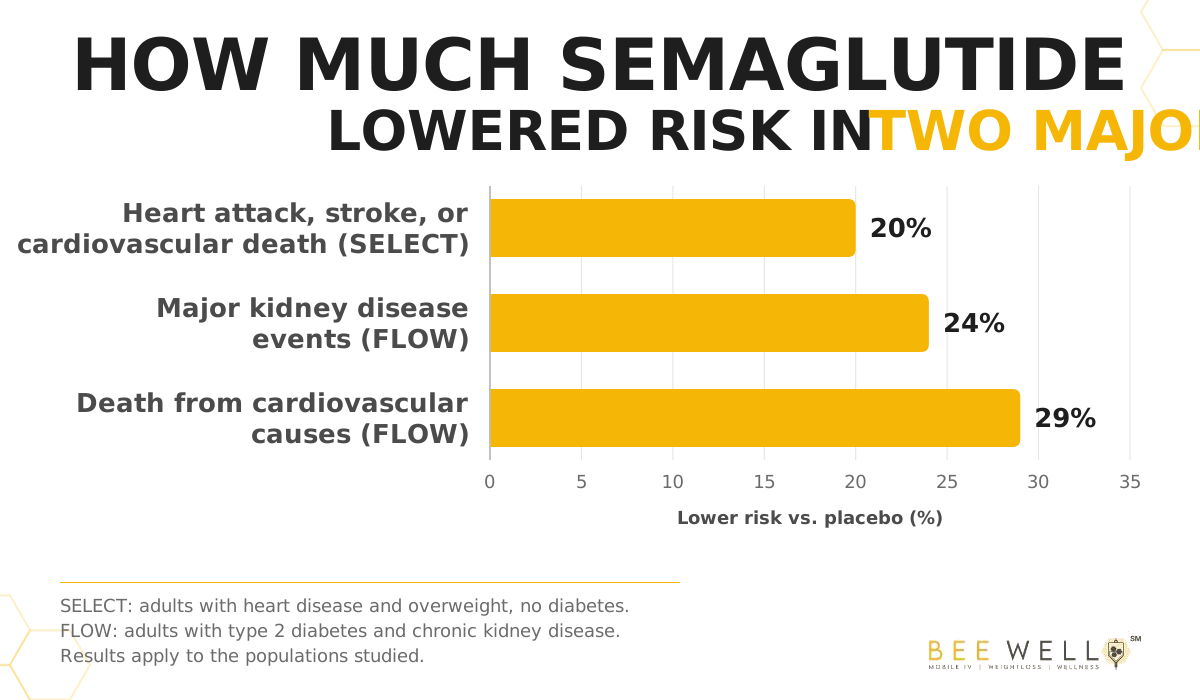
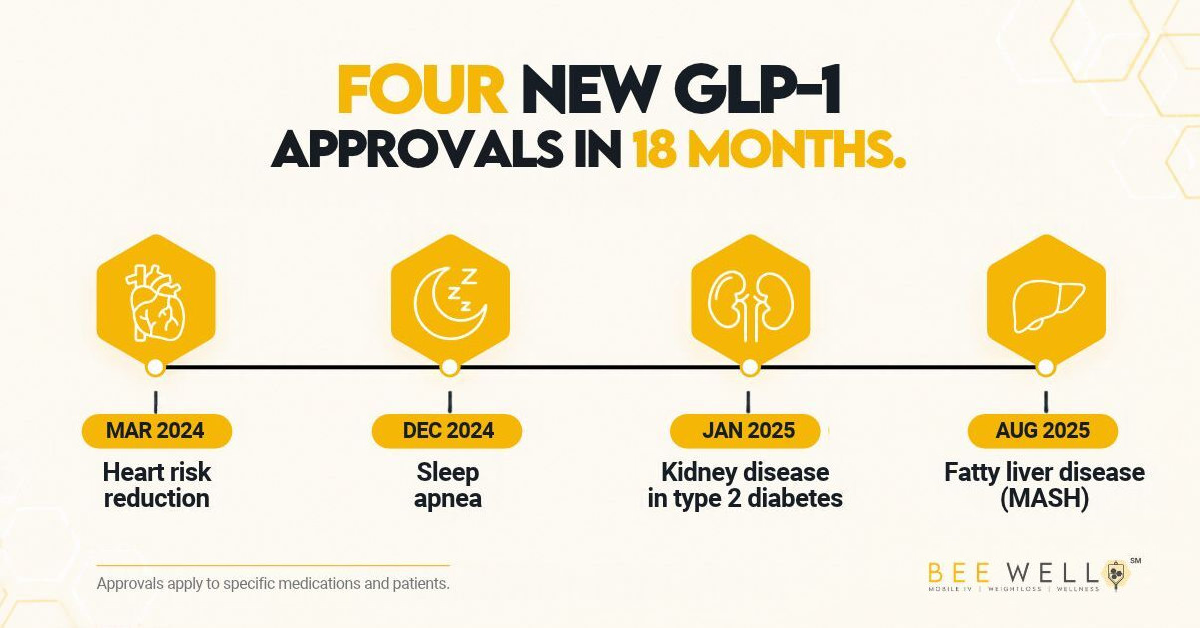
The semaglutide group had 20% fewer major adverse cardiovascular events, the combined count of heart attacks, strokes, and cardiovascular deaths. All three types of events went down. In March 2024, the FDA approved Wegovy to reduce that risk in adults with heart disease and overweight or obesity.
That made it the first medication approved for weight management that also had an approval for preventing heart events.
Why doesn’t weight loss explain the heart benefit?
This is the finding that got cardiologists talking.
The obvious assumption is that semaglutide protects the heart by helping people lose weight. A prespecified analysis of SELECT, published in The Lancet in 2025, tested that assumption directly. Heart protection was about the same at every starting weight. And among people taking semaglutide, how much weight they lost in the first 20 weeks didn’t predict their risk of a later heart event.
One measurement did track with protection: waist size. People whose waists shrank more had lower risk afterward. That points toward visceral fat, the fat packed around your organs, rather than total body weight. Even so, waist reduction accounted for no more than about a third of the benefit. The event curves also started separating early in treatment, before most people had lost much weight.
So what’s doing the rest of the work? Nobody knows for certain. The leading explanations involve lower inflammation inside artery walls, small improvements in blood pressure and cholesterol, and direct effects on blood vessels. In the tirzepatide sleep apnea trials, researchers also saw drops in systolic blood pressure and in hsCRP, a blood marker of inflammation.
Our take: If you’re on a GLP-1 and only tracking your weight, start tracking your waist too. Based on what SELECT found, it tells you more about your heart than the scale does.
Do GLP-1s protect the kidneys?
For people with type 2 diabetes and chronic kidney disease, the evidence is strong.
The FLOW trial enrolled 3,533 people with both conditions and gave them weekly semaglutide 1 mg or a placebo. The trial was stopped early, after a median of 3.4 years, because an interim analysis showed a clear benefit. The semaglutide group had a 24% lower risk of major kidney disease events: kidney failure, a loss of at least half of kidney function, or death from kidney or cardiovascular causes.
Heart outcomes improved in the same trial. Major cardiovascular events were 18% lower and death from any cause was 20% lower. In January 2025, the FDA approved Ozempic to reduce the risk of kidney disease progression, kidney failure, and cardiovascular death in adults with type 2 diabetes and chronic kidney disease.
If you have type 2 diabetes, ask for your eGFR and urine albumin numbers at your next visit, and ask what they mean. Most people have never seen them.
Our take: People with type 2 diabetes whose kidney numbers are slowly changing are the most overlooked group in the GLP-1 conversation. Kidney decline doesn’t hurt until it’s advanced, which is exactly why it gets ignored.
Can GLP-1s help with fatty liver disease?
Fatty liver disease gets mentioned at physicals and then forgotten. In its more serious form, MASH (metabolic dysfunction-associated steatohepatitis, formerly called NASH), the liver becomes inflamed and starts scarring.
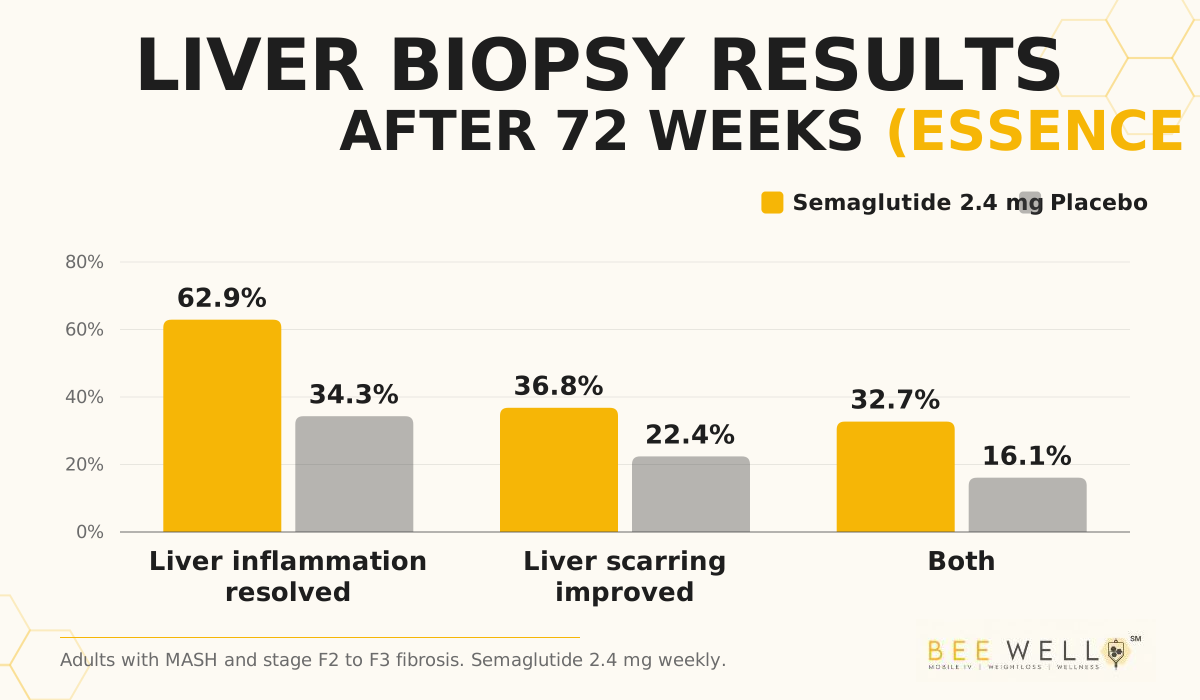
The ESSENCE trial gave 800 adults with MASH and moderate to advanced scarring either weekly semaglutide 2.4 mg or a placebo for 72 weeks, alongside lifestyle counseling. Liver biopsies showed inflammation resolved in 62.9% of the semaglutide group versus 34.3% on placebo. Scarring improved in 36.8% versus 22.4%. About one in three people on semaglutide got both results, twice the placebo rate.
In August 2025, the FDA granted Wegovy accelerated approval for MASH with moderate to advanced fibrosis in adults without cirrhosis. “Accelerated” means the early results were strong enough to approve now, while longer-term outcome data are still being collected.
Can a GLP-1 treat sleep apnea?
Two 52-week trials called SURMOUNT-OSA enrolled 469 adults with obesity and moderate to severe obstructive sleep apnea. One trial included people using a CPAP machine, and one included people who weren’t. Participants took weekly tirzepatide at 10 or 15 mg, or a placebo.
Tirzepatide reduced the apnea-hypopnea index (the number of times breathing stops or gets shallow per hour of sleep) by up to 62.8%, about 30 fewer events per hour than placebo. At the highest dose, 43% and 51.5% of participants in the two trials met the criteria for disease resolution.
In December 2024, the FDA approved Zepbound for moderate to severe obstructive sleep apnea in adults with obesity. It was the first medication ever approved for the condition. Here, unlike with the heart, weight loss probably does most of the work, since extra tissue around the neck and airway is what makes apnea worse.
If someone in your house complains about your snoring, or you wake up tired after a full night in bed, ask about a sleep study. Sleep apnea strains the heart over time, and most people who have it don’t know.
Every FDA-approved GLP-1 use beyond weight loss, in one table
| Medication | Approved use | Approved for | Year |
|---|---|---|---|
| Wegovy (semaglutide 2.4 mg) | Lower risk of heart attack, stroke, and cardiovascular death | Adults with heart disease and overweight or obesity | 2024 |
| Zepbound (tirzepatide) | Treat obstructive sleep apnea | Adults with obesity and moderate to severe OSA | 2024 |
| Ozempic (semaglutide 1 mg) | Slow kidney disease progression, lower cardiovascular death | Adults with type 2 diabetes and chronic kidney disease | 2025 |
| Wegovy (semaglutide 2.4 mg) | Treat MASH (fatty liver with scarring) | Adults with moderate to advanced fibrosis, no cirrhosis | 2025 (accelerated) |
An important note on this table: each approval belongs to a specific brand-name medication at a specific dose, tested in a specific group of people. It doesn’t automatically apply to every GLP-1 prescription, every dose, or every patient. Your provider will look at your history and tell you what fits.
What GLP-1s haven’t been proven to do
You’ll see a lot of claims online. A few to be careful with:
- Addiction and alcohol use. Early research is interesting, but there’s no FDA approval and no large outcome trial yet.
- Peripheral artery disease. GLP-1s are not approved for PAD.
- Heart protection for people without heart disease. SELECT only enrolled people who already had it. Whether the same benefit holds for healthy people with overweight hasn’t been tested the same way.
New trials report every few months. We’ll update this article as the evidence changes.
What side effects should you know about?
Stomach side effects are the most common and are usually worst during dose increases. In the ESSENCE trial, nausea affected 36.3% of people on semaglutide vs. 13.2% on placebo, and diarrhea affected 26.9% vs. 12.2%. Constipation and vomiting were also more common. Only 2.6% of people on semaglutide stopped the trial because of side effects, slightly fewer than on placebo.
Eating smaller meals, stopping before you feel full, and going easy on greasy food tends to help. Tell your provider about severe or ongoing stomach pain, which can signal pancreatitis or gallbladder problems.
What happens if you stop taking a GLP-1?
Every benefit in this article was measured while people kept taking the medication. That matters if you started for weight loss and are thinking about stopping now that you’ve reached your goal.
Weight tends to return after stopping, and there’s no reason to assume heart or kidney benefits would outlast the medication either. Our guide on whether you have to take GLP-1 forever walks through the research and what a realistic plan looks like. If significant weight loss left you with skin changes, our article on skin laxity after rapid weight loss covers that too.
Questions to ask your provider
Bring these to your next appointment:
- Given my history, would a GLP-1 do anything for me beyond weight?
- What are my eGFR and urine albumin numbers, and are they changing?
- Have I ever been screened for fatty liver or sleep apnea?
- Which medication and dose fit my situation, and why?
- If I’m thinking about stopping, what should I watch for?
Who shouldn’t take a GLP-1?
GLP-1 medications aren’t right for everyone. People with a personal or family history of medullary thyroid cancer or multiple endocrine neoplasia type 2 (MEN2), a history of pancreatitis, or who are pregnant, breastfeeding, or planning a pregnancy need a different conversation. Your full medical history should be reviewed before any prescription.
DISCLAIMER
This article is for educational purposes and is not medical advice. Talk to a licensed provider before starting, changing, or stopping any medication.