Dehydration in a Texas summer rarely announces itself. It shows up as afternoon fatigue, a dull headache, brain fog, or a muscle cramp, hours after the fluid deficit was actually built. This guide covers how to recognize dehydration early, how to tell heat exhaustion from heat stroke, how much to drink in Fort Worth, Frisco, and Denton heat, and when rapid rehydration like mobile IV therapy makes sense.
Key Takeaways
- The earliest dehydration signals are fatigue, headache, brain fog, and dark urine. Most people misread them as tiredness.
- Active adults in North Texas heat need roughly 110 to 200+ ounces of fluid daily. The old 64-ounce rule is about half of a Texas summer’s demand.
- Above a 90°F heat index, add 500 to 1,500 mg of sodium during heavy sweating. Plain water alone can leave you feeling worse.
- Heat exhaustion responds to shade, fluids, and rest. Heat stroke (confusion, core temperature above 104°F) is a 911 emergency, never an IV appointment.
- Mobile IV therapy is a rapid-rehydration tool for illness, sports, and event recovery, not a daily habit.
What Are the Signs of Dehydration in the Texas Heat?
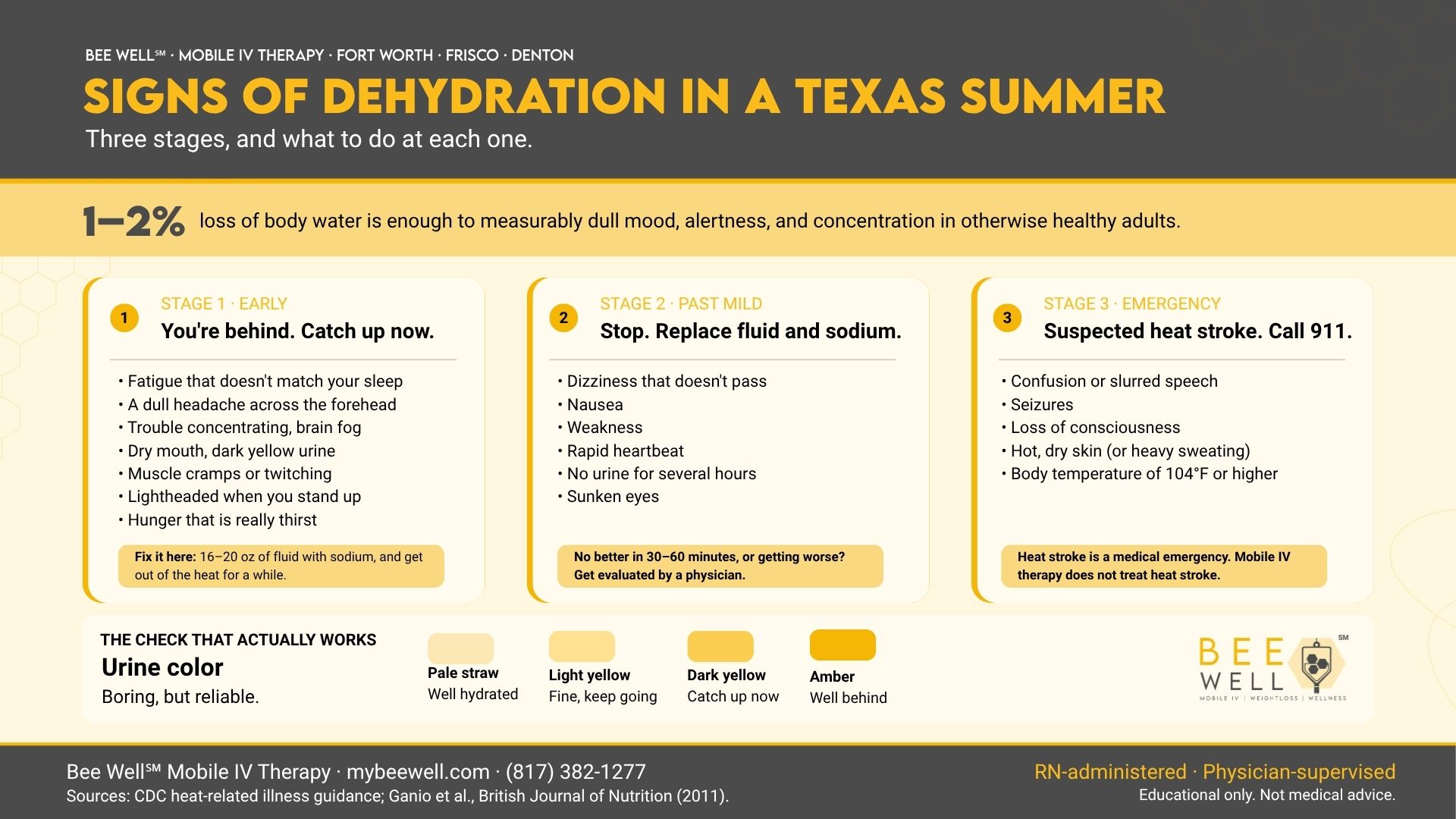
Most people don’t recognize mild dehydration for what it is. They think they’re tired, distracted, or coming down with something. Research suggests that losing as little as 1 to 2 percent of body water can cause measurable declines in mood, alertness, and cognitive performance in healthy adults.¹
Common early signs your body is running short on fluid or electrolytes:
- Fatigue and low energy that don’t match your sleep or caffeine
- Headache, especially a dull frontal pressure
- Difficulty concentrating; brain fog
- Dry mouth or dark yellow urine (pale straw is the target color)
- Muscle cramps or twitches, often an electrolyte issue as much as a fluid one
- Lightheadedness when standing up from sitting
- Feeling unusually hungry (thirst is often misread as hunger)
More significant signs include dizziness, nausea, weakness, rapid heartbeat, no urine for many hours, and sunken eyes. Those mean you’re past the mild stage: stop, get to a cool place, and replace both fluids and electrolytes deliberately. If symptoms don’t improve within 30 to 60 minutes, or they get worse, get evaluated by a physician.
Heat Exhaustion vs. Heat Stroke: How to Tell the Difference
Heat exhaustion is your body struggling to cool itself: heavy sweating, weakness, nausea, cool clammy skin. It responds to shade, fluids, and rest. Heat stroke is cooling failure: confusion, hot skin, a core temperature above 104°F. Heat exhaustion means stop and rehydrate. Heat stroke means call 911.
| Heat exhaustion | Heat stroke | |
|---|---|---|
| Skin | Cool, pale, clammy; heavy sweating | Hot and red; may be dry or still sweating |
| Mental state | Tired, dizzy, irritable | Confused, slurred speech, seizures, unconscious |
| Core temperature | Normal to mildly elevated | 104°F or higher |
| What to do | Shade or AC, fluids with electrolytes, cool cloths, rest | Call 911. Cool aggressively (wet cloths, cold-water immersion) while you wait |
The Centers for Disease Control and Prevention identifies four categories of heat-related illness in increasing severity: heat rash, heat cramps, heat exhaustion, and heat stroke.² The first three respond to rest, cooling, and rehydration. The fourth does not wait.
If you suspect heat stroke, call 911
Heat stroke is a medical emergency, not a hydration problem. Signs include confusion, slurred speech, seizures, loss of consciousness, hot dry skin (or profuse sweating), and a core temperature above 104°F. Move the person to shade or air conditioning, cool them with wet cloths or cold-water immersion, and call 911. Mobile IV therapy does not treat heat stroke. When emergency signs are present, emergency medical care comes first.
What Texas Summer Heat Actually Does to Your Body
From late May through September, most of North Texas averages daytime highs above 90°F, with 30 to 50 days per summer breaking 100°F.³ Dew points routinely climb into the 70s. That combination, high heat plus meaningful humidity, is why hydration in Fort Worth, Frisco, or Denton looks different than hydration in Colorado or California.
When you’re exposed to Texas heat, your body’s primary cooling mechanism is sweat. An adult can lose 1 to 2 liters of sweat per hour during moderate activity in hot weather, and elite athletes have been measured losing up to 3 liters per hour under extreme conditions.⁴ Every ounce of sweat carries fluid volume, sodium, potassium, chloride, magnesium, and small amounts of other minerals out of your body. Replacing only the water, without the sodium and potassium, can leave you feeling worse rather than better, because it dilutes the electrolytes you have left.
How Much Water Is Actually Enough in a Texas Summer?
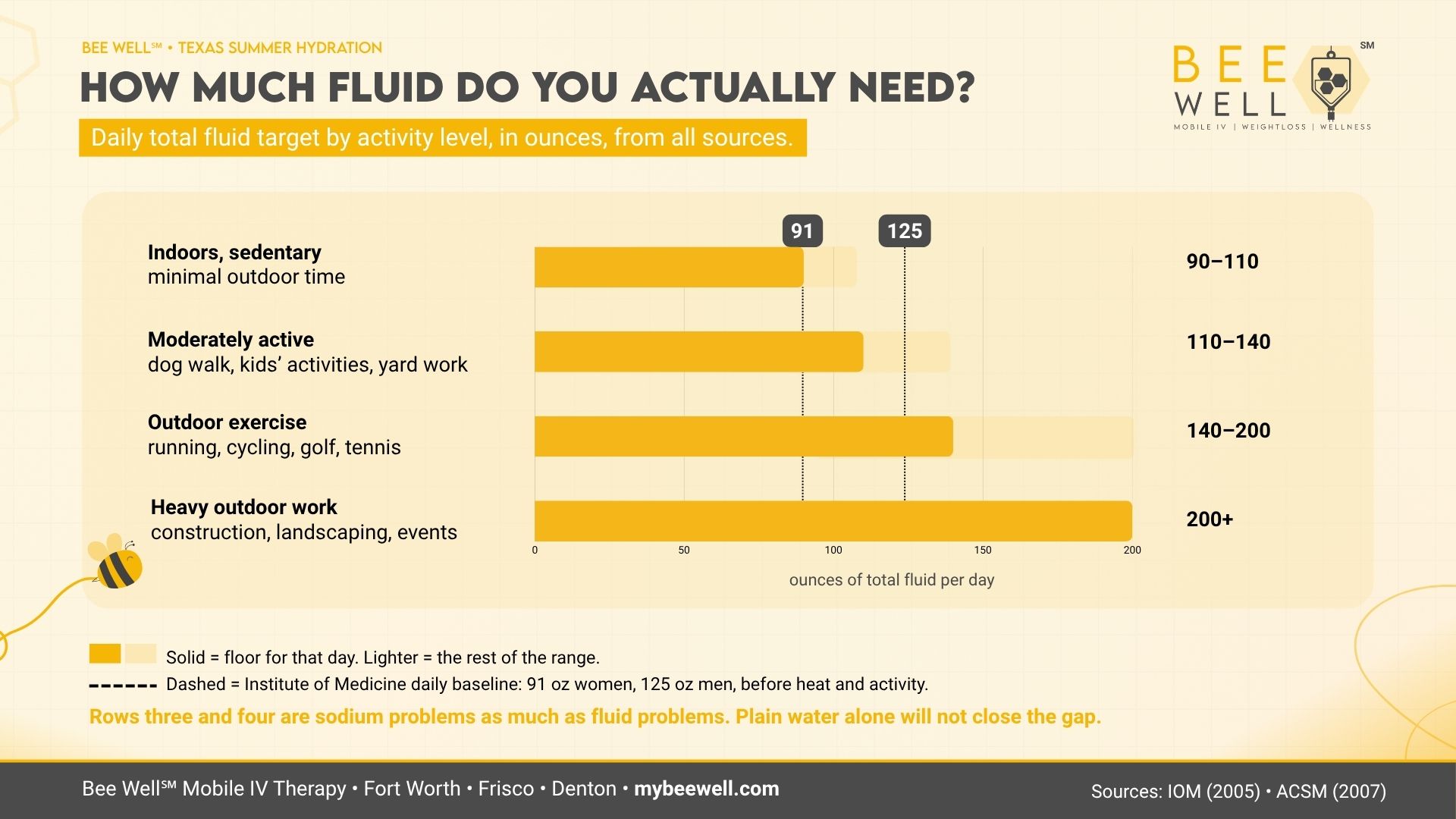
The old “eight 8-ounce glasses” rule (64 ounces) is a starting point, not a Texas-summer answer. The Institute of Medicine’s daily total-water recommendation is roughly 125 ounces (3.7 liters) for adult men and 91 ounces (2.7 liters) for adult women. That figure includes water from food and other beverages, and it’s a baseline: hot weather, heavy exercise, and outdoor exposure push actual needs higher.⁵
| Your day looks like | Daily fluid target | Sodium note |
|---|---|---|
| Sedentary, indoors, minimal outdoor time | 90-110 oz (any fluid source) | Normal diet covers it |
| Moderately active: dog walk, backyard, kids’ activities | 110-140 oz | Add electrolytes on heavy-sweat days |
| Outdoor exercise: running, cycling, golf, tennis | 140-200+ oz, replaced during and after | 500-1,500 mg added sodium |
| Sustained heavy outdoor work: construction, landscaping, events | Often 200+ oz | Mandatory sodium replenishment |
Two useful checks: your urine color (pale straw means well hydrated; dark yellow means catch up), and your weight before and after a workout. If you’re down more than 2 percent of body weight, you didn’t replace enough. Replenish with 20 to 24 ounces of fluid per pound lost, per the American College of Sports Medicine’s guidance.⁶
A note on what counts: coffee and tea count toward fluid intake for most people, since caffeine’s diuretic effect is smaller in habituated drinkers than folklore suggests.⁷ Alcohol does not count; it actively increases urinary water loss. Sugary sodas and sports drinks contribute fluid but bring their own issues at volume.
When Water Isn’t Enough: Electrolytes in a Texas Summer
Drinking large volumes of plain water without replacing electrolytes can, in unusual cases, dilute your blood sodium to dangerously low levels, a condition called exercise-associated hyponatremia. It’s most often seen in endurance athletes, but it can happen to anyone who overdoes plain-water intake during heavy heat exposure without replacing sodium.⁸
The practical takeaway: don’t just chug water. Include sodium and, secondarily, potassium in your fluid strategy on hot days, especially when you’re sweating significantly.
| Option | Sodium level | Best for |
|---|---|---|
| Sports drinks (Gatorade, Powerade) | Moderate | Volume plus sodium during activity; more sugar than daily use needs |
| Electrolyte powders and tablets (LMNT, DripDrop, Liquid IV, Nuun, Skratch) | Varies widely: LMNT and DripDrop run high (500-1,000 mg per serving); Nuun runs low | Heavy sweat days; read the label |
| Coconut water | Low (moderate potassium) | Casual replenishment, not heavy losses |
| Food: pickle juice, olives, salted nuts, savory meals; bananas and potatoes for potassium | Varies | Everyday replenishment alongside meals |
| IV fluids | Clinically dosed | Rapid replenishment after significant loss: heavy dehydration, illness, sustained exertion, event recovery |
How much sodium do you actually need in the heat? For most adults sweating moderately in Texas summer conditions, 500 to 1,500 mg of additional sodium during and after significant sweat loss is a reasonable target. Heavy sweaters and long-duration outdoor athletes need more. Anyone on a low-sodium medical diet should discuss electrolyte strategy with their physician first.
Staying Hydrated During Sports, Training, and Outdoor Activity
Fort Worth, Frisco, and Denton have year-round athletic cultures: TCU and UNT athletics, the Cowtown Marathon in February, the Frisco Half in October, PGA events at Omni PGA Frisco, youth soccer tournaments at Toyota Stadium, and every level of recreational running, cycling, golf, tennis, pickleball, and CrossFit in between. Summer conditions change how athletes should approach hydration.
The American College of Sports Medicine’s hydration guidance for athletes⁶ boils down to four practical steps:
- Start hydrated. Drink 16 to 20 ounces of fluid 2 to 3 hours before exercise, then another 6 to 8 ounces 15 to 30 minutes before starting.
- Drink during activity, roughly every 15 to 20 minutes. Under an hour, water is generally sufficient; over an hour, add electrolytes (and carbohydrates for endurance efforts).
- Replace after activity. Weigh yourself before and after; drink 20 to 24 ounces for every pound lost. Include sodium.
- Adjust for the heat. Heat and humidity can raise sweat rate by 50 percent or more. Test your personal sweat rate on a training day and adjust upward.
Youth sports have their own considerations. Kids sweat less efficiently than adults and are more vulnerable to heat illness. The American Academy of Pediatrics recommends scheduled water breaks every 15 to 20 minutes during hot-weather practice, unlimited water access, and modifying or canceling activity when the heat index reaches high-risk thresholds.⁹
For adult recreational athletes: know your event conditions. A June morning 10K in Fort Worth is a different hydration project than a February half-marathon on the same streets. Practice your strategy during training weeks. Race day is not the day for new products.
When You’re Feeling Rundown, Sick, or Recovering
Some of the hardest days to stay hydrated are the days you already feel bad. Illness reduces appetite and thirst signals right when your body needs fluid and electrolytes most. Travel adds jet lag, dry airplane air, and often alcohol. Post-surgery recovery raises fluid demands while limiting your mobility to get up and drink.
Practical rules for hydration when you’re not feeling great:
- Sip small amounts frequently rather than drinking large volumes at once. Nausea and reduced stomach capacity mean small sips are better tolerated.
- Include electrolytes: broth, oral rehydration solutions (Pedialyte, DripDrop, or the WHO formula of 1 liter water + 1 tsp salt + 6 tsp sugar), diluted juice, or coconut water.
- If you can’t keep fluids down for more than 12 to 24 hours, or you notice significant weakness, dizziness, dark or absent urine, or persistent vomiting, get evaluated by a physician.
- Consider IV rehydration when oral replacement isn’t keeping up. Mobile IV services deliver fluids and electrolytes at home during recovery, without a trip to urgent care for what is often a hydration problem rather than a diagnostic one.
Bee Well℠’s Mobile IV therapy is designed for exactly these situations: an RN comes to your home in Fort Worth, Frisco, or Denton, sets up a sterile IV, monitors vitals, and delivers hydration and vitamin support over about 60 minutes. It’s supportive care, a way to rehydrate rapidly when oral intake isn’t keeping up. It is not a treatment for the underlying illness.
Group Events: Corporate Wellness, Bridal Parties, and Recovery Sessions
Some of Bee Well℠’s most-requested Mobile IV bookings happen in group settings. Texas summer is a peak season for the events that stress hydration hardest:
- Bachelorette weekends in the Fort Worth Stockyards. A Saturday night that stretches long, a Sunday brunch, a Monday flight home – with three-digit temperatures the whole time.
- Bachelor parties and boys’ weekends around the Rangers, at Topgolf, at Colonial Country Club, or in Frisco at Omni PGA Frisco. Golf in July at 105°F is a fluid-loss event; add late nights, and you can arrive at Monday’s meetings underwater.
- Bridal party spa days. A bride wants photos that look like she slept well. Hydration is a big part of that. Group IV sessions the morning of the wedding are a common request.
- Corporate wellness events. Employers running summer team-building events, executive off-sites, or wellness-focused perks are increasingly booking on-site group IV sessions – multiple team members receiving hydration in a conference room or reserved office over lunch.
- Sports team recovery. Youth tournament weekends, adult league playoffs, or masters cycling events can wipe out a team. Group Mobile IV visits let a team recover together.
- Festival and event recovery. Denton’s Arts & Jazz Festival, the North Texas State Fair, race weekends at Texas Motor Speedway, PGA event days – three or more members of a group booking together turn a scattered recovery into a shared, coordinated one.
Group Mobile IV sessions work because they compress logistics. One nurse can serve multiple patients in a single visit – same location, sequential or parallel IVs, one appointment. Cost per person often works out better than individual bookings, and the shared experience turns a hangover morning into a bonding event rather than a scattered one.
If you’re planning a group booking in Fort Worth, Frisco, or Denton, call Bee Well℠ ahead – group visits are booked by appointment based on party size, location, and service selection. See our group Mobile IV information or call (817) 382-1277 to discuss the details.
When Mobile IV Therapy Actually Makes Sense
Mobile IV is a tool, not a lifestyle. Most days, most Texans stay well hydrated through water, food, electrolyte-aware beverages, and paying attention to their body’s signals. IV therapy is worth considering when oral intake isn’t sufficient for what your body needs – or when you want faster replenishment than the digestive system can deliver.
Situations where patients commonly book Bee Well℠ Mobile IV therapy in Fort Worth, Frisco, and Denton:
- After a long weekend of sun, alcohol, or intense activity – when you’re behind on fluids and don’t feel like drinking your way back.
- During or after illness that’s limited oral intake (flu, GI bug, food poisoning).
- After significant athletic effort – a race, tournament weekend, or long training day.
- Before a demanding event (wedding, big presentation, all-day meeting) when you want to arrive fully replenished.
- As part of a group recovery session – bachelorette, corporate, sports team.
- During travel days when hydration is disrupted (arriving in Texas from a cooler climate, or returning home from a hot destination).
Every Bee Well℠ Mobile IV session is administered by a Texas-licensed registered nurse under physician supervision. Sessions take about 60 minutes door to door. Menu pricing is posted transparently before your appointment. HSA and FSA cards are accepted at the time of service.
Learn more about Mobile IV therapy in Fort Worth, Frisco, or Denton, or see the full hydration IV infusions menu, or book by phone at (817) 382-1277.
Practical Daily Habits for a Texas Summer
Sustainable hydration is boring. The people who navigate Texas summers well aren’t tracking milliliters – they’re just consistent. A short list of habits that work in the DFW heat:
- Front-load your fluids. Drink 12–16 ounces of water within 30 minutes of waking up, before coffee. You’ve been fluid-fasting for 8 hours.
- Keep a labeled water bottle with you. Visual reminders work. Aim to finish it 2–3 times through the day.
- Salt your food normally. Texas heat means normal-to-slightly-generous sodium intake is appropriate for most healthy adults. Restrict only if a physician has told you to.
- Pair alcohol with water 1:1, especially in summer. Every cocktail gets a glass of water.
- Watch the second half of your day. Hydration status often deteriorates in the afternoon and evening when you’re focused on other things.
- Check your urine. Boring but reliable. Pale straw = good. Dark yellow = catch up. Clear all day = you might be overdoing it.
- Pre-hydrate before outdoor time. 16–20 ounces of fluid before an afternoon of yard work, a walk with the kids, or an outdoor event. It’s easier to start hydrated than to catch up.
- Prioritize sleep. Poor sleep reduces your body’s ability to regulate temperature and thirst signals. Hydration and sleep compound.
- Pay extra attention on high heat-index days. When the National Weather Service issues a heat advisory for the DFW area (typically a heat index of 105°F or higher), limit outdoor exposure, hydrate deliberately, and check on elderly neighbors and family.
SPECIAL POPULATIONS
Hydration needs vary. Older adults have blunted thirst signals and may need to drink on schedule rather than by thirst. Pregnant and breastfeeding women have higher fluid requirements – discuss with your physician. Children need more frequent water breaks, especially during outdoor activity. Anyone on medications that affect fluid balance (diuretics, ACE inhibitors, some psychiatric medications, GLP-1 medications) should discuss hot-weather hydration with their prescribing physician before making significant changes to their intake or supplementation.
The Bottom Line
Texas summer hydration isn’t complicated. Drink enough water, include some sodium, pay attention to how you feel, and take the extra step when you know you’re behind. Most days that’s all you need.
On the days you need more – after illness, after a hard training session, after a group weekend, or before a big event – Mobile IV therapy is one tool that works fast, delivered where you are. RN-administered, physician-supervised, no clinic visit required.
Stay ahead of it. Fort Worth, Frisco, and Denton summers reward the people who plan their hydration and punish the people who don’t. If we can help you plan the next big weekend, event, or recovery day – that’s why Bee Well℠ exists.
References
- Ganio MS, Armstrong LE, Casa DJ, et al. Mild dehydration impairs cognitive performance and mood of men. British Journal of Nutrition. 2011;106(10):1535–1543.
- Centers for Disease Control and Prevention. About Heat and Your Health. https://www.cdc.gov/heat-health/about/index.html. Accessed 2026.
- National Weather Service, Fort Worth / Dallas Forecast Office. Climate data and heat advisories. https://www.weather.gov/fwd/. Historical DFW summer temperature data cited in this article reflects long-term averages published by NWS Fort Worth.
- Sawka MN, Burke LM, Eichner ER, Maughan RJ, Montain SJ, Stachenfeld NS. American College of Sports Medicine position stand: Exercise and fluid replacement. Medicine & Science in Sports & Exercise. 2007;39(2):377–390.
- Institute of Medicine (IOM). Dietary Reference Intakes for Water, Potassium, Sodium, Chloride, and Sulfate. Washington, DC: National Academies Press; 2005.
- American College of Sports Medicine (ACSM). Selecting and Effectively Using Hydration for Fitness. acsm.org. Athlete hydration guidance.
- Killer SC, Blannin AK, Jeukendrup AE. No evidence of dehydration with moderate daily coffee intake: a counterbalanced cross-over study in a free-living population. PLoS One. 2014;9(1):e84154.
- Hew-Butler T, Rosner MH, Fowkes-Godek S, et al. Statement of the Third International Exercise-Associated Hyponatremia Consensus Development Conference, Carlsbad, California, 2015. British Journal of Sports Medicine. 2015;49(22):1432–1446.
- American Academy of Pediatrics, Council on Sports Medicine and Fitness and Council on School Health. Climatic heat stress and exercising children and adolescents. Pediatrics. 2011;128(3):e741–e747.
- Occupational Safety and Health Administration, water intake guidance for hot environments, osha.gov.